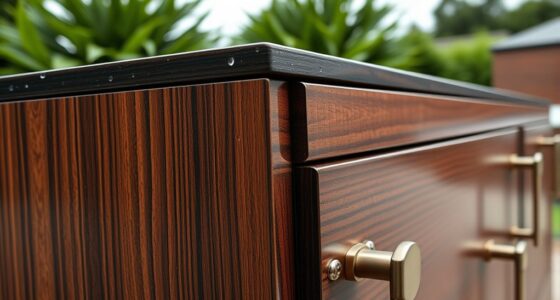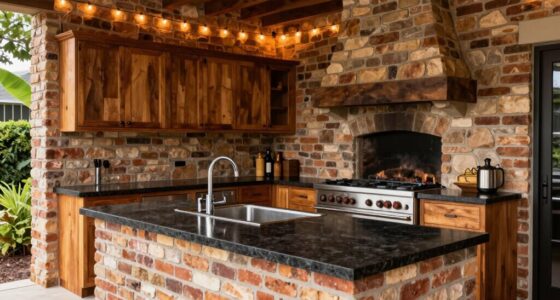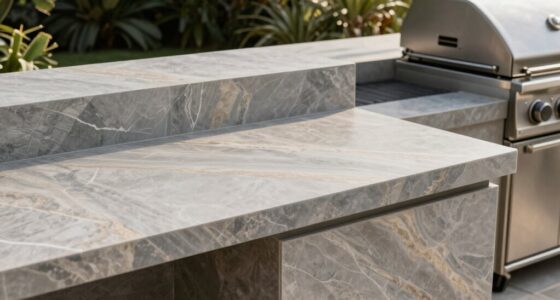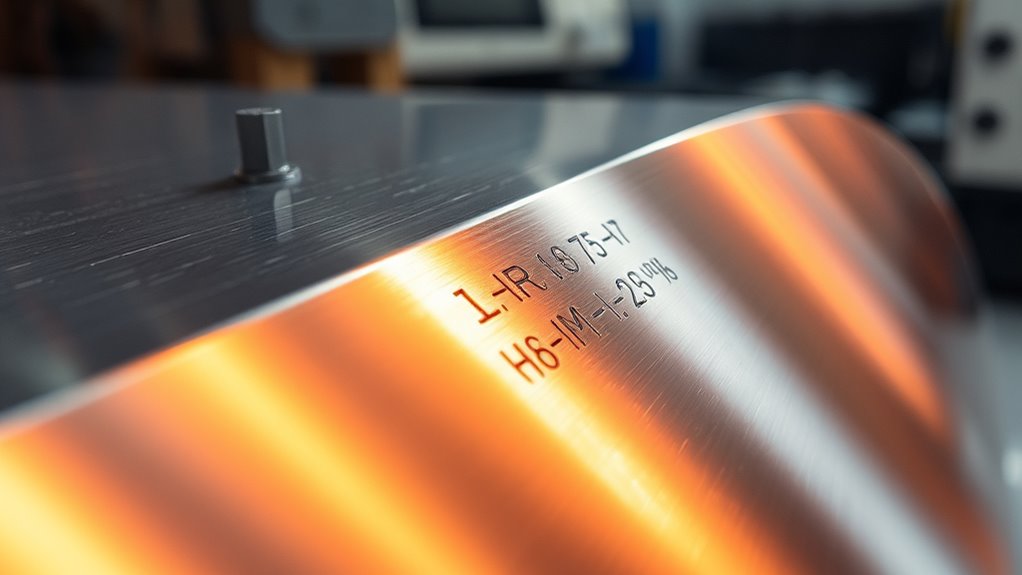

To guarantee your heat-resistant surfaces perform reliably, you need to calculate thermal conductivity and heat transfer rates accurately. Assess maximum operating temperatures and analyze how thermal expansion causes stress and potential failure. Use infrared imaging to map heat flux and spot hotspots. Designing effective insulation and thermal barriers reduces heat penetration. Pay attention to safety margins and failure modes to prevent catastrophic issues. Continuing with these calculations will help you master surface durability under extreme conditions.

Get garden gear delivered free with Prime
- Fast, free delivery on millions of items
- Prime Video, Amazon Music and more included
- Member-only deals all year
Key Takeaways
- Calculate thermal conductivity and heat flux accurately using Fourier’s law and infrared imaging to assess surface heat resistance.
- Analyze temperature gradients and hotspots to optimize surface coatings and thermal emissivity for durability.
- Determine material expansion and internal stresses caused by thermal loads to prevent cracking and warping.
- Evaluate surface roughness effects on heat absorption, reflection, and heat transfer uniformity.
- Establish safety margins by assessing failure modes like thermal fatigue and corrosion to ensure long-term performance.
Thermal Conductivity and Heat Transfer Calculations
Have you ever wondered how heat moves through advanced materials? Understanding thermal conductivity and heat transfer calculations is key. When designing surfaces with specialized surface coatings, you need to know how well they conduct heat. Low thermal conductivity helps prevent heat from passing through, enhancing material durability in high-temperature environments. You’ll want to calculate heat transfer rates accurately to ensure your materials can withstand extreme conditions without degrading. This involves analyzing properties like thermal diffusivity and conductivity, which influence how quickly heat moves across surfaces. By mastering these calculations, you can optimize surface coatings for maximum performance, prolonging the lifespan of your materials. Precise thermal analysis ultimately ensures your surfaces resist heat damage, maintaining their integrity and durability over time. Incorporating thermal properties analysis into your design process is essential for achieving reliable, heat-resistant surfaces.
Maximum Operating Temperature Assessment
Determining the maximum operating temperature of a surface coating is essential for ensuring it performs reliably under extreme conditions. This assessment helps you prevent oxidation and corrosion, which can degrade performance. To evaluate this, consider these key factors:
- Material’s oxidation resistance at high temperatures.
- Thermal stability limits based on manufacturer data.
- Environmental conditions like humidity or exposure to corrosive agents.
- Long-term testing results to verify durability under sustained heat.
– Incorporating insights from AI in Education, such as automation and data analysis, can enhance predictive models for material performance and lifespan.
Material Stress and Strain Analysis Under Thermal Loads
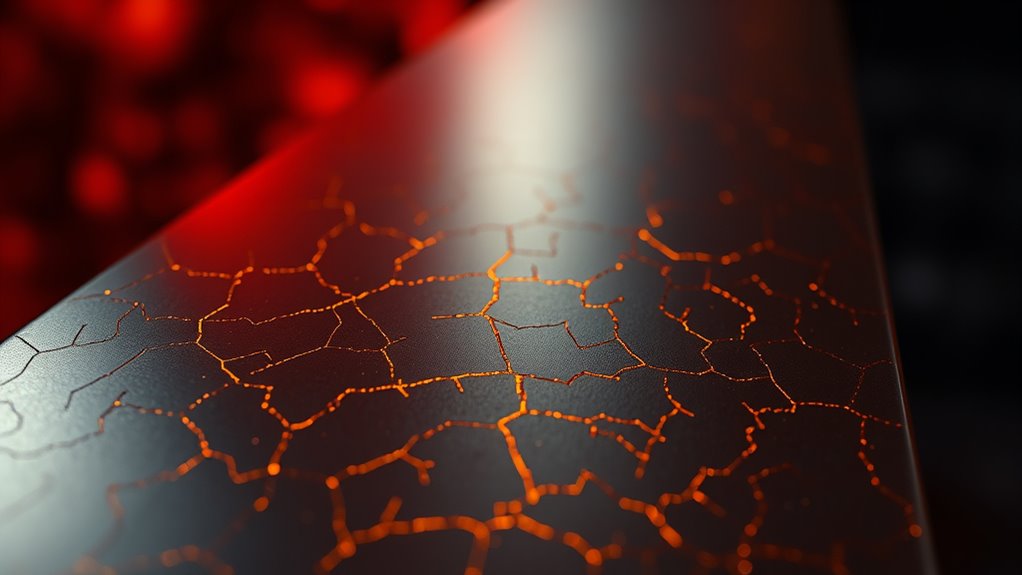
When materials are exposed to thermal loads, they expand, creating internal stresses that can affect their integrity. You need to understand how stress distributes throughout the surface to prevent failures, especially in high-temperature environments. Considering fatigue risks is also vital to guarantee long-term durability under fluctuating thermal conditions. Additionally, assessing the Indoor air quality is essential for ensuring a safe environment, much like evaluating material performance under stress.
Thermal Expansion Effects
Thermal expansion causes materials to change shape and size when exposed to heat, directly affecting their stress and strain levels. This can lead to metal deformation, impacting structural integrity and surface coatings. To understand these effects:
- Recognize how uneven expansion causes internal stress, risking cracks or warping.
- Calculate the thermal strain using the material’s coefficient of expansion.
- Assess how surface coatings react to expansion, preventing delamination or peeling.
- Design components to accommodate expansion, reducing stress concentrations and prolonging lifespan.
- Consider the role of thermal conductivity in managing heat distribution and minimizing uneven expansion effects.
Stress Distribution Patterns
Have you ever wondered how heat causes different parts of a material to experience varying levels of stress? When a material is exposed to thermal loads, stress distribution patterns develop, often influenced by stress concentration points. These are areas where stress intensifies due to geometric features or material discontinuities. Understanding these patterns is essential for deformation analysis, as uneven stress can lead to localized failure. By analyzing how stress spreads across a surface, you can identify potential weak spots and optimize design to mitigate failure risks. Recognizing the distribution pattern helps you predict how different regions will deform under heat, ensuring your heat-resistant surfaces maintain integrity. Accurate stress analysis under thermal conditions is vital for developing reliable, durable materials. Additionally, awareness of regional legal resources can be valuable when addressing compliance and safety standards in material development.
Material Fatigue Risks
Material fatigue risks increase considerably under thermal loads due to the repetitive stress and strain cycles that develop within the structure. Cyclic loading causes micro-cracks to form and propagate over time, weakening the material’s integrity. To mitigate these risks, consider these key factors:
- Understand the stress variation during thermal cycling.
- Analyze the number of load cycles the material can withstand.
- Monitor for signs of crack initiation and growth.
- Select materials with high fatigue resistance for demanding environments.
Additionally, incorporating material testing methods can help predict failure points and improve durability.
Thermal Expansion and Contraction Predictions
Since temperature changes cause materials to expand or contract, accurately predicting these shifts is essential for designing heat-resistant surfaces. If you overlook thermal expansion, coatings may crack or delaminate, compromising durability. To guarantee coating durability, you need precise calculations of how materials will respond to temperature fluctuations. Surface roughness also plays a role; smoother surfaces tend to expand more uniformly, reducing stress concentrations. By understanding the material’s coefficient of thermal expansion, you can anticipate how much a surface will grow or shrink, allowing you to select appropriate materials and design features. Considering material properties is crucial for effective thermal management. This proactive approach minimizes thermal stress, preserves coating integrity, and extends the lifespan of heat-resistant surfaces, even under extreme temperature variations.
Heat Flux and Surface Temperature Distribution
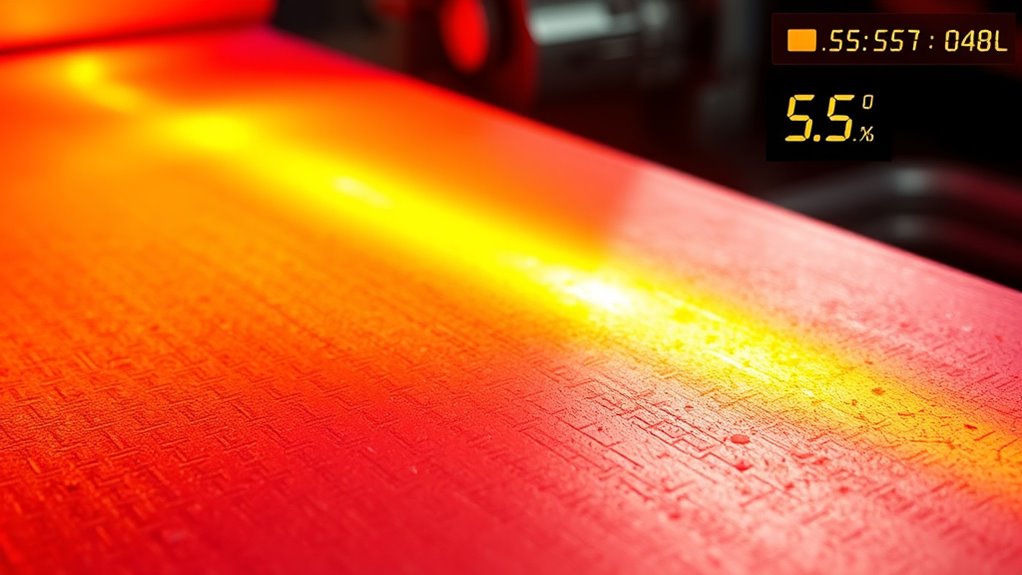
Understanding how heat moves across surfaces starts with calculating heat flux accurately, so you can identify hotspots and thermal stresses. Analyzing temperature gradients helps you see how heat spreads and determines areas needing improved resistance. Mapping surface temperatures provides a clear picture of thermal distribution, guiding your design for better heat management. Incorporating effective insulation techniques further enhances the surface’s ability to withstand heat transfer.
Heat Flux Calculation Methods
Calculating heat flux and surface temperature distribution is essential for designing heat-resistant surfaces that can withstand extreme conditions. To do this effectively, you should consider:
- Using infrared imaging to accurately measure surface temperature variations under operational heat loads.
- Applying Fourier’s law to determine heat flux based on temperature gradients across the surface.
- Incorporating surface coating properties to assess how they influence heat transfer and reflectivity.
- Employing numerical models to simulate heat flux distribution, helping optimize surface design before real-world testing.
- Understanding the impact of color accuracy on heat absorption and reflection to enhance surface resilience under high temperatures.
These methods enable precise control over surface performance, ensuring durability. Understanding heat flux through infrared imaging allows you to detect hot spots. Meanwhile, considering surface coating effects ensures your design maintains its resilience under high temperatures.
Temperature Gradient Analysis
Analyzing temperature gradients across a surface provides direct insight into how heat distributes under operational conditions. You’ll see how surface temperature varies, revealing potential hotspots that can affect coating adhesion. A smoother surface typically promotes uniform heat flow, reducing stress concentrations that weaken coatings. Conversely, increased surface roughness can cause uneven temperature distribution, risking delamination or failure. By examining the temperature gradient, you can identify areas where heat flux concentrates, helping you optimize surface treatments and material choices. This analysis guides you in designing surfaces that maintain consistent temperature profiles, ensuring better coating adherence and durability. Additionally, understanding these gradients can help prevent thermal stress, which often leads to material degradation. Ultimately, understanding these gradients enables you to predict thermal performance more accurately, leading to safer, more reliable heat-resistant surfaces in demanding applications.
Surface Temperature Mapping
Surface temperature mapping involves measuring how heat flux and temperature distribute across a surface to identify areas of concern. This process helps you optimize surface coatings and understand thermal emissivity variations. To effectively map temperatures, consider these key steps:
- Use infrared thermography to visualize hot spots and temperature gradients.
- Incorporate thermal sensors to measure localized surface temperatures accurately.
- Analyze how different surface coatings influence heat flux distribution.
- Adjust surface treatments based on thermal emissivity data to improve heat resistance.
Insulation Effectiveness and Thermal Barrier Design
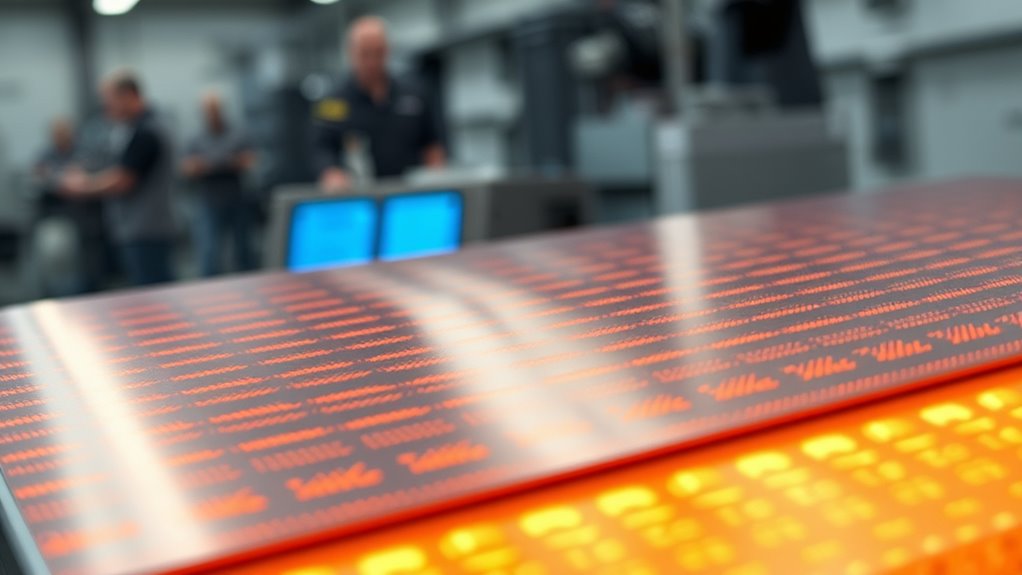
Have you ever wondered how advanced heat-resistant surfaces maintain their effectiveness under extreme conditions? The key lies in insulation effectiveness and thermal barrier design. You need to contemplate coating durability, ensuring the protective layer withstands high temperatures without degrading. Surface roughness plays a critical role in this process; a smoother surface reduces hot spots and minimizes heat transfer, enhancing insulation. Proper thermal barrier design involves selecting materials with low thermal conductivity and optimizing thickness to prevent heat penetration. By controlling surface roughness and ensuring coating durability, you create a reliable barrier that maintains its insulating properties over time. This combination helps prevent thermal fatigue and prolongs the lifespan of heat-resistant surfaces, enabling them to perform effectively even in the most demanding environments.
Safety Margins and Failure Mode Analysis
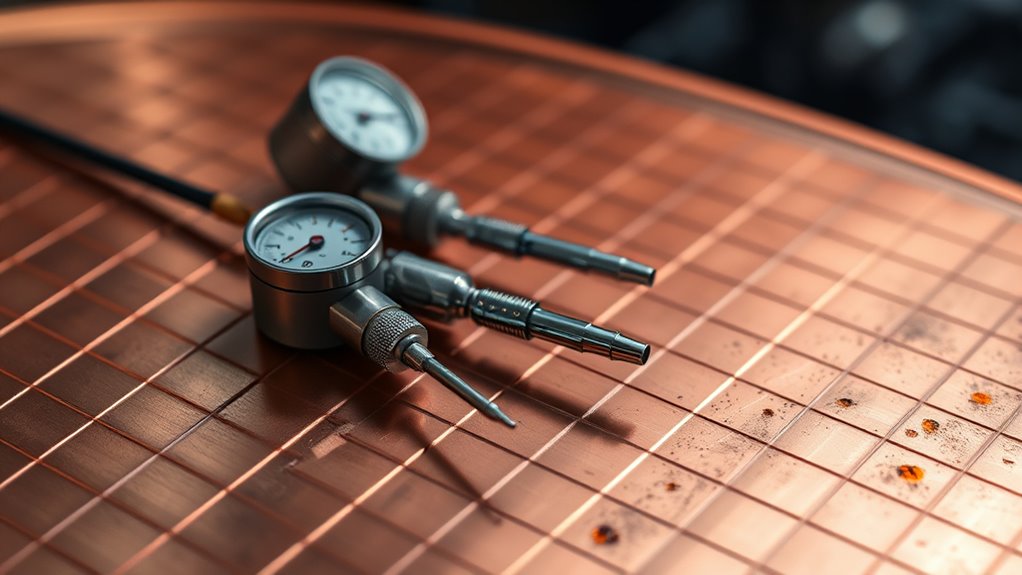
Understanding safety margins and failure mode analysis is essential for ensuring the reliability of heat-resistant surfaces under extreme conditions. These practices help you anticipate potential issues related to material durability and corrosion resistance. To effectively evaluate safety margins, consider these key points:
Prioritize safety margins and failure analysis to ensure heat-resistant surface reliability under extreme conditions.
- Establish maximum operating limits based on material properties.
- Identify critical failure modes like thermal fatigue or corrosion breaches.
- Conduct stress analysis to assess how materials withstand thermal expansion.
- Incorporate redundancy to prevent sudden failures due to corrosion or wear.
Frequently Asked Questions
How Do Surface Coatings Influence Heat Resistance Performance?
Surface coatings substantially enhance heat resistance performance by modifying surface chemistry, which helps resist high temperatures and reduce thermal degradation. You’ll find that durable coatings maintain their protective properties over time, preventing damage and ensuring consistent performance. By choosing coatings with strong adhesion and resistance to wear, you improve the longevity of heat-resistant surfaces, making them more effective in extreme environments while minimizing maintenance costs.
What Are Common Methods to Retrofit Existing Surfaces for Higher Heat Resistance?
A stitch in time saves nine, so upgrading your surface now prevents bigger issues later. To retrofit for higher heat resistance, you can add a thermal barrier coating, which insulates and protects the surface. Surface reinforcement techniques, like applying high-temperature paints or ceramic overlays, also boost durability. These methods improve heat resistance efficiently, helping your equipment withstand extreme conditions and extend its lifespan.
How Does Corrosion Impact Thermal Properties Over Time?
Corrosion degradation and surface erosion profoundly impact thermal properties over time by reducing a material’s heat resistance. As corrosion progresses, it creates microscopic cracks and weakens the surface, decreasing thermal insulation and increasing heat transfer. Surface erosion strips away protective layers, exposing underlying material to higher temperatures and accelerating deterioration. This ongoing damage leads to decreased efficiency, higher maintenance costs, and the need for more frequent surface upgrades to maintain heat resistance.
Can Composite Materials Improve Heat Resistance Beyond Traditional Metals?
Sure, composite innovations can actually beat traditional metals in heat resistance. You might think metals are unbeatable, but these advanced composites are engineered with layered materials and metal enhancements that withstand extreme temperatures better. They’re lightweight, durable, and designed to handle thermal stress, proving that sometimes, mixing things up with composites outperforms classic metals in high-temperature environments. Who knew that combining materials could be so clever?
What Are the Environmental Factors Affecting Long-Term Surface Stability?
Environmental degradation and thermal expansion directly impact your surface’s long-term stability. Exposure to moisture, chemicals, and UV radiation accelerates degradation, weakening the material. Thermal expansion causes repeated stress and potential cracking as temperatures fluctuate. To guarantee durability, you need to take into account these factors in your design. Selecting materials with high resistance to environmental degradation and low thermal expansion can profoundly extend your surface’s lifespan and maintain its heat-resistant properties over time.
Conclusion
Just as Icarus soared too close to the sun, neglecting heat calculations can lead to disaster. By mastering thermal conductivity, stress analysis, and insulation design, you safeguard your surfaces from failure. Don’t let your efforts falter like Icarus’s wings; instead, build with precision and foresight. Remember, every calculation is your shield against the fiery forces of nature, ensuring your surfaces withstand the test of time and temperature.
Halloween Picks
halloween
As an affiliate, we earn on qualifying purchases.