TL;DR

Get garden gear delivered free with Prime
- Fast, free delivery on millions of items
- Prime Video, Amazon Music and more included
- Member-only deals all year
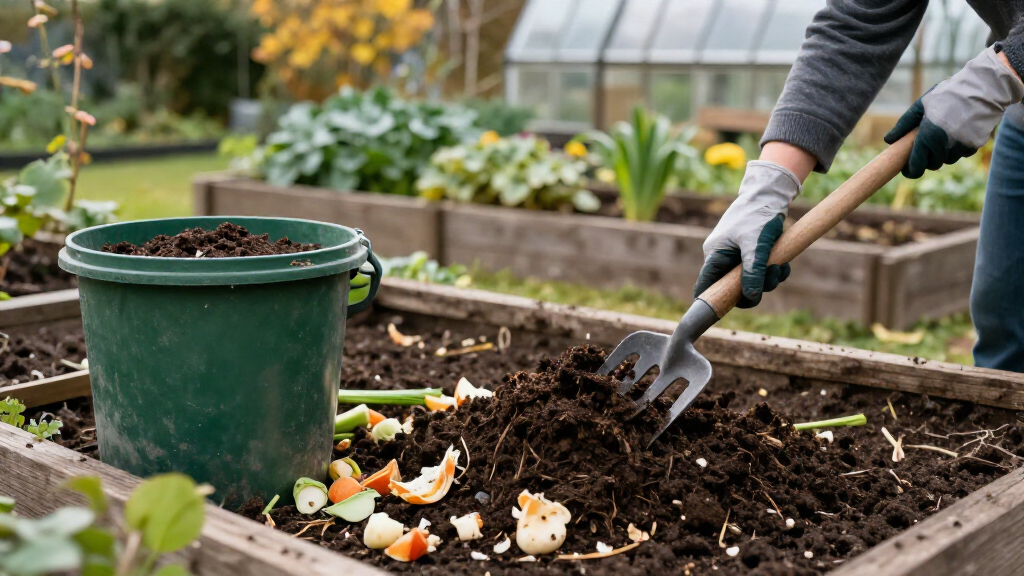
Gardening Know How describes a fall trench-composting method that buries chopped kitchen scraps in empty garden beds, without a compost bin. The contributor’s six-ingredient mix is an informal recipe, not a tested soil formula; she says to cover scraps well, use modest amounts and avoid meat, dairy and oily food.
Gardening Know How has published a contributor’s guide to burying kitchen scraps in empty raised beds during fall, using a six-ingredient mix that does not require a compost bin. The method is intended to let food waste break down in place over winter. The report presents it as a personal soil-improving practice, not a tested formula or a guarantee of improved spring growth.
The contributor’s mix includes fruit and vegetable scraps, used coffee grounds, crushed eggshells, plain rolled oats, cinnamon and leftover flat beer. She describes the ingredients as optional: readers can leave out items they do not have, but she does not recommend substituting other materials. Fruit and vegetable scraps make up most of the mixture; she advises chopping larger pieces to about 1 inch (2.5 centimeters) and avoiding food coated in oil, sauce or dressing.
She says not to add meat, fish, bones or dairy. Her suggested quantities include about one cup of used coffee grounds, shells from a couple of eggs, a quarter-cup of oats, half a teaspoon of cinnamon and a small splash—about half a cup—of flat beer. The report makes clear that some claimed benefits are uncertain: eggshells break down slowly, and the contributor says she does not know whether beer makes a measurable difference to the soil.
For the trench, the contributor recommends digging 12 to 18 inches (30 to 45 centimeters) deep, mixing scraps with some soil, and covering them with at least 6 to 8 inches (15 to 20 centimeters) of soil. As a rough guide, she uses about one gallon (4 liters) of scraps per 4-by-4-foot bed, spread along a short trench. She says to keep the amount modest, avoid disturbing established roots and not bury scraps in beds intended for immediate planting.
A Bin-Free Route for Fall Scraps
The method describes a way to handle some kitchen waste without building or maintaining a compost bin. It places the material directly into a bed that is not being used for immediate planting, where it is intended to break down before the next growing season. The guide is directed at gardeners with unused beds who want to bury suitable kitchen scraps.
The report does not establish that this particular combination performs better than other ways of adding organic matter, and it provides no trial results or measurements of soil change. The quantities and ingredients are presented as one gardener’s approach, rather than a tested recipe. The directions specify small pieces, modest amounts and thorough soil cover; the report does not verify the proposed effects of cinnamon, oats or beer.
As an affiliate, we earn on qualifying purchases.
How the Trench Method Works
The contributor says she collects suitable scraps in a kitchen caddy and empties it into a shallow trench every few days, moving to a new area of an empty bed until the ground freezes. The stated purpose is to let the scraps decompose in place over winter, returning organic matter and some nutrients to the soil ahead of spring planting. The source does not give a publication date, identify a research study or report measured results from the practice.
The report also mentions adding shredded leaves when available, saying they can provide dry material and help keep moist scraps from clumping. The supplied source text ends partway through a discussion of grass clippings, so it does not provide complete guidance on their use. The six named ingredients are the contributor’s recipe; leaves are described as an occasional addition rather than one of those six.
“I don’t know whether it makes a measurable difference to my soil, so I wouldn’t open a bottle specifically.”
— Gardening Know How contributor
As an affiliate, we earn on qualifying purchases.
Benefits and Limits Still Unmeasured
The source provides no controlled test data showing how much the mix changes soil or affects plant growth. It also does not establish that cinnamon buried in a trench acts as a fungicide or pest deterrent, or that oats in this amount stimulate roots. The contributor says she does not rely on eggshells to deter slugs and does not expect them to provide quick calcium because they break down slowly.
Results may depend on conditions and materials that the report does not specify, including soil type, temperature, moisture and the amount of each scrap in a batch. It is also unclear how quickly the buried material will decompose in any particular bed. The source’s discussion of grass clippings is incomplete, and it gives no additional instructions for their use.
As an affiliate, we earn on qualifying purchases.
Use the Method Before Frost
For gardeners following the guide, the instructions are to collect suitable scraps and bury them in an empty bed before the ground freezes, using the report’s depth and cover guidance. The contributor recommends moderate amounts, covering all food waste and avoiding established plants or beds intended for immediate planting.
The source does not announce a follow-up test or provide a schedule for checking the bed in spring. It reports no measured effects of the mix. The contributor says the effect of beer is unknown and advises using only a small leftover amount if available, rather than opening a bottle for that purpose.
As an affiliate, we earn on qualifying purchases.
Key Questions
Does this fall soil method require a compost bin?
No. The trench-composting method buries scraps directly in an empty garden bed, where they are intended to break down over winter.
What are the six ingredients in the contributor’s mix?
The mix lists fruit and vegetable scraps, used coffee grounds, crushed eggshells, plain rolled oats, cinnamon and flat beer. The contributor says readers can leave out ingredients they do not have.
Which food scraps does the report say to avoid?
The contributor says not to use scraps with oil, sauce or dressing, and not to add meat, fish, bones or dairy.
How deep should the trench be?
The guide suggests a trench 12 to 18 inches deep, with at least 6 to 8 inches of soil covering the scraps.
Is the six-ingredient mix proven to improve soil?
The article reports a gardener’s personal method, not measured test results. It does not establish that the mix improves soil or plant growth by a specific amount, and the contributor says the effect of beer is unknown.
Source: rss
Halloween Picks
halloween
As an affiliate, we earn on qualifying purchases.