
TL;DR

Get garden gear delivered free with Prime
- Fast, free delivery on millions of items
- Prime Video, Amazon Music and more included
- Member-only deals all year
Ideal Home has published expert recommendations for five plants that may cope better with windy autumn and winter conditions: hardy geraniums, ornamental grasses, photinia, lavender and hawthorn. Their performance still depends on conditions such as establishment, soil drainage and exposure; the report does not claim any plant is storm-proof.
Ideal Home has published recommendations for five plants suited to windy gardens, citing horticultural experts who say their growth habits can help them cope with gusts better than more vulnerable plants. The list includes hardy geraniums, ornamental grasses, photinia, lavender and hawthorn, but the advice does not suggest any plant is immune to storm damage.
The recommendations are based on the plants’ different physical characteristics. Hardy geraniums grow low to the ground and form dense clumps, which expert Richard Barker says can help shield them from the strongest wind and stabilise the soil around their stems. That contrasts with taller, top-heavy perennials, which may be more prone to snapping or need support.
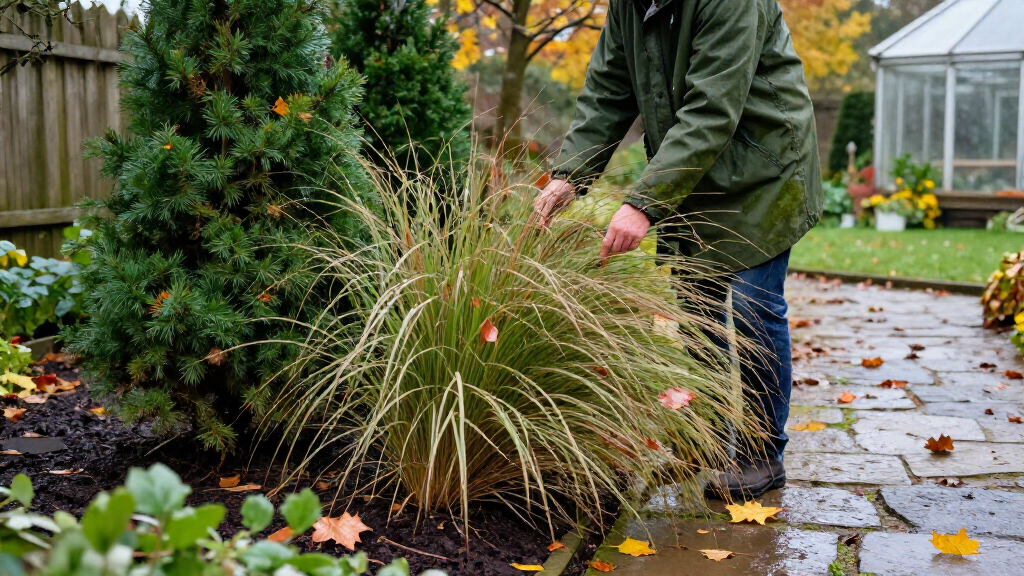
Ornamental grasses are recommended because their stems can move with the wind. Stephanie Harrod, founder of Harrod Horticultural, cited Calamagrostis ‘Karl Foerster’ as a variety that can suit exposed borders while adding height. The report also names photinia, whose flexible wood and established roots may help it withstand gusts, and whose thick leaves can help limit wind-related moisture loss, according to Barker.
Lavender is suggested for sunny, exposed locations. Harrod said its narrow leaves and woody growth make it reasonably resilient once established, but it needs free-draining soil because waterlogged roots can cause problems. The fifth choice, hawthorn, is a native hedging plant. Barker said its branches can flex and its structure lets some wind pass through rather than forming a solid barrier.
Choosing Plants for Exposed Borders
Wind can batter foliage and stems, leaving gardens damaged and creating extra work for gardeners. Choosing plants with low, clumping growth, flexible stems or branches, or established root systems may reduce some of that vulnerability. The recommendations offer practical options for people planning or replacing planting in an exposed garden before winter weather arrives.
The list also highlights that wind tolerance is not the only factor in choosing a plant. Lavender needs well-drained soil, while the advice about photinia refers to plants once established. Gardeners should match each plant to their site and allow it time to settle in; the source gives no guarantee that any of the five will withstand every storm or growing condition.
Products Worth Considering

Traeger Pro 22 Wood Pellet Grill and Smoker, 572 sq. in.

Husqvarna 330LK Gas String Trimmer

Rachio 3 Smart Sprinkler Controller, 16 Zones
As an affiliate, we earn on qualifying purchases.
Expert Advice for Autumn Planting
The Ideal Home report frames the recommendations around the approach of colder, windier months in the UK. It draws on comments from Richard Barker of LBS Horticulture and Stephanie Harrod of Harrod Horticultural, rather than reporting a new planting trial or a measured comparison of storm damage.
The plants serve different garden roles: hardy geraniums can fill the front of a border, ornamental grasses add movement and height, and photinia and hawthorn can be used as shrubs or hedging. Lavender offers flowers and fragrance in a sunny position. The source also lists retailers and example prices, but those are shopping references, not evidence of performance or a measure of current availability.
“Hardy geraniums are good for windy gardens because they are low-growing and have dense foliage.”
— Richard Barker, horticultural expert and commercial director at LBS Horticulture
Limits of the Wind-Tolerance Advice
The report does not specify how the five plants perform in measured wind speeds, compare them in controlled trials or define what counts as “windproof.” Its recommendations are expert guidance, not a guarantee against broken stems, uprooting or foliage damage in severe weather.
Results will also depend on factors the article does not quantify, including local exposure, soil, plant age and care. The report does not give a single planting date or detailed establishment instructions for every species. Retail prices and stock may change, and the supplied material does not confirm current availability.
Planning and Planting Before Winter
Gardeners considering the recommendations can first assess which areas are most exposed, then choose plants suited to their light and soil conditions. For lavender, the source specifically advises sun and free-draining soil; for shrubs such as photinia, Barker’s comments apply to plants with established roots. Checking local growing guidance and supplier information can help clarify planting and care needs.
The report does not announce a follow-up study or forecast a particular storm. Its practical next step is for readers to use the expert list when planning garden planting, while recognising that no plant is guaranteed to resist severe weather.
Key Questions
Which five plants does the report recommend for windy gardens?
It names hardy geraniums, ornamental grasses, photinia, lavender and hawthorn.
Are these plants guaranteed to survive storms?
No. The report presents them as plants that may cope better with wind because of their growth characteristics, not as storm-proof plants. Severe weather can still cause damage.
What should gardeners know before planting lavender?
Horticultural expert Stephanie Harrod recommends lavender for a sunny, exposed spot but says it needs free-draining soil, since wet roots can cause problems.
Why is hawthorn included?
Richard Barker says hawthorn’s branches can flex in strong winds and its hedge structure lets some wind pass through, potentially slowing it rather than blocking it with a solid wall.
Does the report compare the plants in storm tests?
No. The source provides expert recommendations but no controlled trial, wind-speed measurements or numerical comparison of damage.
Source: idealhome.co.uk