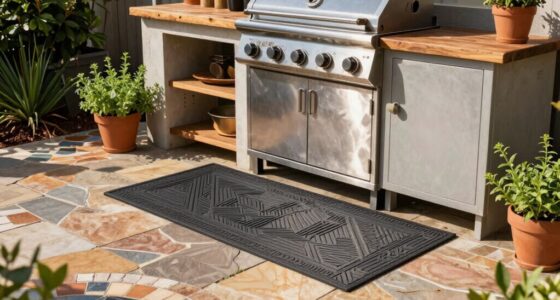
To guarantee safety and comfort in your covered outdoor kitchen, proper ventilation is essential. You should include exhaust vents positioned near your grill and cooktops to effectively remove smoke, heat, and fumes. Incorporate intake vents to promote fresh air circulation, and consider using adjustable vents or high-quality exhaust fans designed for outdoor use. Following local codes and safety standards helps avoid hazards. Keep exploring to discover more expert tips on creating a safe and enjoyable outdoor cooking space.
Key Takeaways
- Install exhaust vents near grills and cooktops to effectively remove smoke and fumes from the cooking area.
- Ensure proper placement and sizing of vents to promote adequate airflow and prevent smoke buildup.
- Use weather-resistant exhaust fans rated for outdoor conditions to maintain ventilation efficiency.
- Comply with local building codes and safety regulations regarding vent placement and airflow capacity.
- Incorporate automatic or smart ventilation systems for ongoing safety and ease of maintenance.
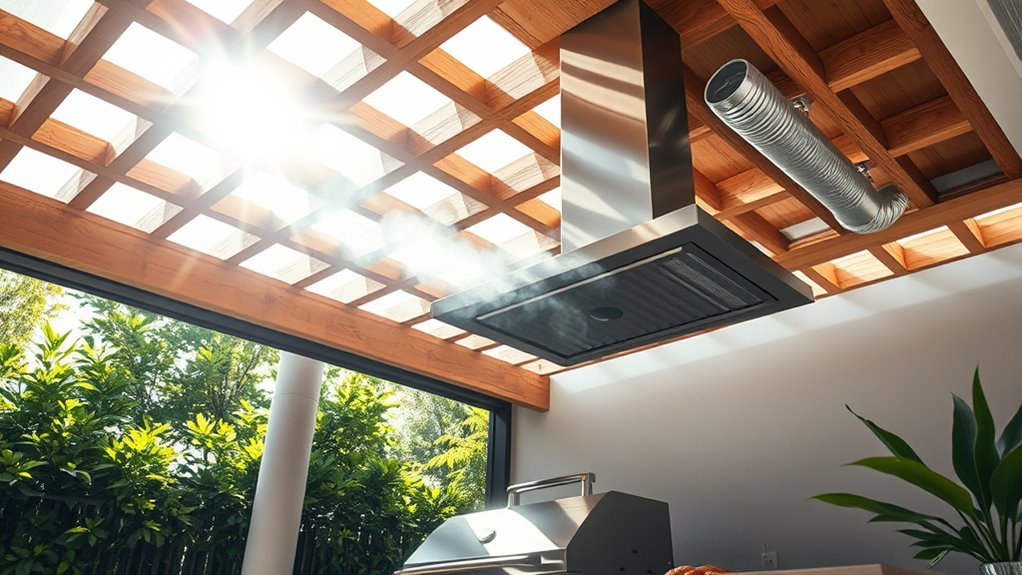
When designing an outdoor kitchen, proper ventilation is vital to guarantee safety and comfort. A well-planned ventilation system design ensures that smoke, fumes, and heat are effectively dispersed, preventing the buildup of dangerous gases and creating a pleasant cooking environment. Without adequate ventilation, you risk compromising outdoor cooking safety, which can lead to health hazards or even accidents. Consequently, understanding the essentials of ventilation system design is essential for anyone aiming to build a functional and safe outdoor kitchen.
A key aspect of ventilation system design involves choosing the right type of exhaust and intake vents. Exhaust vents should be positioned strategically to draw out smoke and fumes away from cooking areas, while intake vents allow fresh air to circulate, maintaining airflow and preventing the accumulation of harmful gases. For covered outdoor kitchens, this becomes even more critical, as the roof or overhead structures can trap smoke and heat, making it harder for natural ventilation to suffice. Properly designed ventilation systems integrate both mechanical and natural ventilation options, ensuring continuous airflow regardless of weather conditions.
When planning your outdoor kitchen, consider the placement of your cooking appliances. Positioning grills and cooktops near dedicated vents helps facilitate the effective removal of smoke and heat. Incorporate high-quality exhaust fans that are powerful enough to handle the volume of smoke generated during cooking. These fans should be rated for outdoor use and capable of operating in various weather conditions. Additionally, installing adjustable vents allows you to control airflow as needed, optimizing both ventilation efficiency and outdoor cooking safety.
It’s also important to account for local building codes and safety regulations when designing your ventilation system. Many jurisdictions specify minimum requirements for vent placement, airflow rates, and exhaust fan capabilities to guarantee outdoor cooking safety. Consulting with a professional can help you meet these standards and avoid potential hazards. Remember, the goal is to create a system that minimizes smoke exposure, reduces heat buildup, and maintains good air quality around your outdoor cooking area.
Furthermore, considering ventilation system design options that utilize modern technology, such as smart fans and automated vents, can enhance safety and convenience. Regularly cleaning vents and fans ensures they operate efficiently and continue to provide proper ventilation. A malfunctioning or clogged ventilation system can quickly turn your outdoor kitchen into a safety hazard. By prioritizing a thoughtful ventilation system design, you create a space that’s safe, comfortable, and enjoyable for all your outdoor cooking adventures. Proper ventilation isn’t just a detail; it’s a fundamental element that safeguards your health and enhances your outdoor culinary experience.

Wells Lamont Women's PU Coated Grip Gardening Gloves 3-Pack, Medium
- Breathable Polyester Shell: Keeps hands dry and comfortable
- PU-Coated Palm for Grip: Provides secure, slip-resistant hold
- Ergonomic Fit: Enhances dexterity and control
As an affiliate, we earn on qualifying purchases.
Frequently Asked Questions
Are There Specific Building Codes for Outdoor Kitchen Ventilation?
Yes, there are specific building codes for outdoor kitchen ventilation. You need to guarantee proper exterior exhaust to prevent smoke and fumes from accumulating. Ventilation zoning may be required, especially if your outdoor kitchen is part of a larger structure, to meet safety standards. Always check local codes, as requirements can vary, and consider consulting a professional to ensure your setup complies and provides adequate airflow.
How Do I Calculate the Required Ventilation Capacity?
To calculate the required ventilation capacity, you start by determining the air exchange rate recommended for your outdoor kitchen, typically 10-15 air changes per hour. Measure the kitchen’s volume (length x width x height) and multiply it by the air exchange rate. Adjust for ventilation efficiency by dividing your result by the system’s efficiency factor, ensuring proper airflow to remove cooking fumes and maintain safety.
Can Natural Ventilation Replace Mechanical Systems?
Think of natural airflow as a gentle river guiding fresh air through your space. It can sometimes substitute mechanical systems if your ventilation design allows for ample openings and prevailing breezes. However, in areas with limited natural airflow, mechanical systems become essential to ensure proper ventilation. You need to assess your outdoor kitchen’s layout and environment, balancing natural ventilation’s elegance with mechanical reliability for safe, effective air exchange.
What Materials Are Best for Outdoor Kitchen Ventilation Vents?
You should choose durable, weather-resistant ventilation materials like galvanized steel or aluminum for outdoor kitchen vents. These materials withstand moisture, rust, and temperature changes, ensuring longevity. When selecting vent types, consider louvered vents for adjustable airflow or screened vents to keep out pests and debris. These options provide effective ventilation while maintaining the aesthetic appeal and safety of your outdoor kitchen, making your space more comfortable and functional.
How Often Should Ventilation Systems Be Inspected and Maintained?
You might worry about forgetting maintenance, but regular inspections are vital. You should inspect your ventilation system at least once a year, especially before grilling season begins. Follow simple maintenance tips like checking for blockages, cleaning vents, and ensuring fans operate smoothly. Staying proactive not only keeps your outdoor kitchen safe but also ensures it functions efficiently. Don’t delay—consistent inspection schedules protect your family and your investment.

WZQH Leather Work Gloves for Men or Women.Gardening,Welding,Coffee-grey L
- Material and Design: 100% split cowhide leather with soft cotton lining
- Protection Features: High abrasion, puncture, cut, and heat resistance
- Reinforced Palm: Extra protection for hands during heavy tasks
As an affiliate, we earn on qualifying purchases.
Conclusion
In closing, ensuring proper ventilation in your outdoor kitchen isn’t just a modern convenience; it’s a wise move for safety and comfort. By following the guidelines and considering anachronistic touches like a vintage vent hood, you blend tradition with practicality. Remember, a well-ventilated space keeps smoke, fumes, and odors at bay, allowing you to enjoy your culinary adventures without a hitch. Embrace these standards, and your outdoor kitchen will be both charming and safe for generations to come.

COOLJOB Gardening Gloves for Men, 2 Pairs Breathable Rubber Coated for Garden Weeding Landscaping, Outside Work for Lawn Yard, Men's Large Size, Black & Red
- Breathable and Comfortable Material: Red and black polyester base keeps hands dry
- Flexible and Dexterous Design: Stretchy seamless knit for ease of movement
- Long Cuffs and Elastic Wrist: Keeps dirt out and allows easy wear
As an affiliate, we earn on qualifying purchases.

Glovtelier 2Pairs Touchscreen Gardening & Mechanic Work Gloves for Women
- Perfect Fit and Dexterity: Snug, ergonomic design for precision handling
- Durable and Safe: Wear-resistant, certified for abrasion and mechanical risks
- Touchscreen Compatibility: Patented cashew-shaped conductive fingertips
As an affiliate, we earn on qualifying purchases.