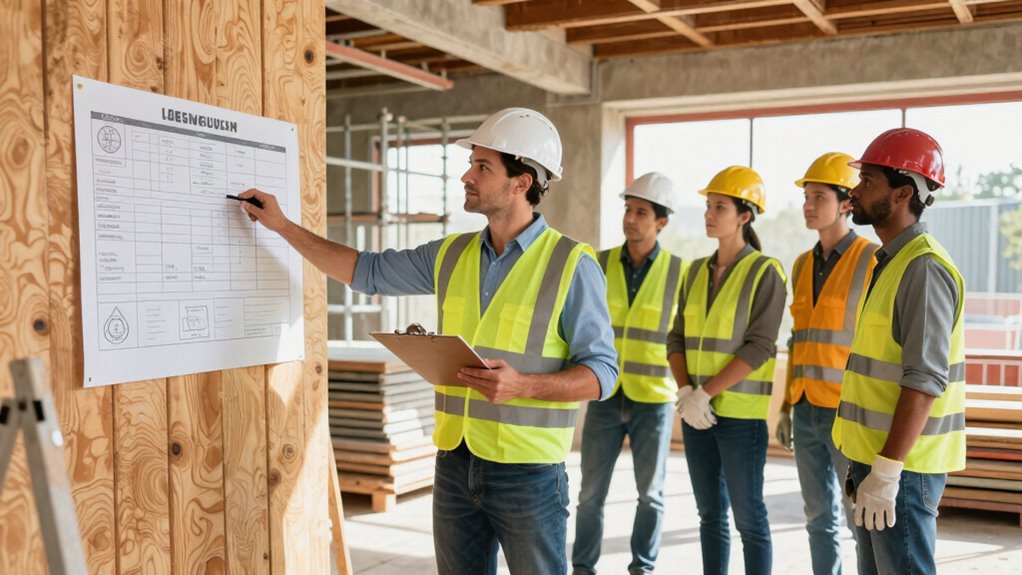
When talking to contractors about safety and code compliance, be clear and direct about your expectations, emphasizing that safety isn’t just about avoiding fines but protecting everyone involved. Stress the importance of thorough risk assessments, ongoing safety measures, and proper documentation like permits and inspection reports. Encourage open communication about violations, and set up routine safety audits to build accountability. If you want practical tips on maintaining oversight and fostering a safety-first culture, keep exploring these strategies.
Key Takeaways
- Clearly communicate that safety and compliance are non-negotiable priorities from the start.
- Emphasize the importance of thorough risk assessments and ongoing safety evaluations.
- Request and review documentation like safety plans, permits, and inspection reports regularly.
- Foster open communication about safety violations and corrective actions to promote transparency.
- Set expectations for routine safety audits and encourage proactive safety management throughout the project.

Talking to contractors about safety and code compliance is essential to ensuring your project stays on track and meets all legal requirements. Your goal is to establish clear communication from the start, emphasizing the importance of thorough risk assessments and proper compliance documentation. When you begin discussions, be direct about your expectations for safety standards and legal adherence. Explain that a comprehensive risk assessment is vital to identify potential hazards early and develop effective mitigation strategies. Contractors should understand that safety isn’t just about avoiding fines; it’s about protecting everyone involved and ensuring smooth progress.
Ask your contractors how they plan to handle safety protocols and verify that they regularly conduct risk assessments throughout the project. This demonstrates your commitment to proactive safety management. Encourage transparency by requesting documentation that proves compliance with local building codes and safety regulations. Proper compliance documentation not only keeps the project legally sound but also provides a clear record if questions or issues arise later. Be specific in your requests—demand copies of safety plans, inspection reports, and permits to verify adherence to all relevant standards.
Request detailed safety plans, inspection reports, and permits to ensure ongoing compliance and accountability throughout the project.
Throughout your conversations, keep the tone professional but firm. Make it clear that safety and compliance are non-negotiable aspects of the project. Don’t shy away from asking detailed questions about how they track safety incidents or how they handle violations of safety standards. Reinforce the idea that ongoing risk assessments are necessary as the project advances, especially when unexpected challenges or changes occur. This proactive approach helps prevent accidents and ensures that safety measures adapt to evolving site conditions. Recognizing the importance of safety management can help foster a culture of accountability on-site. Additionally, understanding how compliance documentation is maintained and updated ensures that standards are consistently met throughout all project phases. Establishing a clear process for safety protocols and documentation review can further strengthen your oversight. Regularly reviewing these protocols helps to maintain a strong safety culture and ensures continuous compliance.
It’s also important to establish a routine for reviewing compliance documentation regularly. Set expectations that contractors will keep you updated on safety audits, inspection results, and any corrective actions taken. By maintaining this dialogue, you reinforce your role in overseeing safety and compliance without micromanaging. Remember, your involvement encourages contractors to prioritize safety, knowing you’re attentive and committed to maintaining standards.
Additionally, understanding how carrier oils are used in aromatherapy products can help in creating a safe environment when handling and applying essential oils on-site, especially if they are part of your project or wellness initiatives. Ultimately, effective communication about safety and code compliance hinges on clarity, consistency, and accountability. When you emphasize risk assessments and demand comprehensive compliance documentation, you create a safer work environment and minimize legal risks. Your proactive stance ensures that safety isn’t an afterthought but an integral part of every phase of your project. This approach not only helps you stay compliant with laws but also fosters a culture of safety that benefits everyone involved.
construction safety inspection reports
As an affiliate, we earn on qualifying purchases.
As an affiliate, we earn on qualifying purchases.
Frequently Asked Questions
How Do I Verify a Contractor’s Safety Certifications?
You verify a contractor’s safety certifications by requesting their safety training records and certification verification documents directly. Contact the issuing agencies or organizations to confirm the validity of their safety training credentials. Review the certifications for proper dates and scope, guaranteeing they meet your project’s safety standards. Don’t hesitate to ask for updated certifications periodically, and cross-check with official databases to ensure their safety training remains current and legitimate.
What Are Common Safety Violations to Watch For?
The most common safety violations often involve neglecting personal protective equipment and skipping emergency procedures—because who needs helmets or fire exits, right? You should watch for workers without helmets, gloves, or eye protection, and make sure emergency procedures are clearly posted and understood. If contractors ignore these basics, it’s a red flag that safety isn’t a priority. Address these issues immediately to keep everyone safe and compliant.
How Can I Ensure Contractors Follow Local Building Codes?
You can guarantee contractors follow local building codes by clearly communicating your expectations upfront, emphasizing the importance of material quality and adhering to safety standards. Regular site visits and inspections help you monitor progress and maintain compliance. Discussing the project timeline allows you to address any delays promptly, ensuring safety and code requirements are met without rushing. Open, ongoing communication keeps everyone accountable and helps prevent violations.
What Should I Do if Safety Concerns Arise During Work?
If safety concerns arise during work, you should immediately stop the work if necessary and address the issue. Make certain workers are trained on safety protocols and emergency procedures, and communicate your concerns clearly. Document the situation and discuss it with the contractor to find a solution. Prioritize safety by enforcing worker training, reviewing emergency procedures, and guaranteeing all safety measures are followed before resuming work.
How Often Should Safety Inspections Be Conducted?
Safety inspections should be scheduled frequently, ideally weekly, to catch hazards early. You should guarantee workers wear personal protective equipment and review emergency preparedness plans during each check. Consistent, thorough inspections cultivate a culture of caution, prevent potential problems, and promote safety. By maintaining meticulous monitoring, you help create a safe, secure space where safety standards shine, and every worker feels protected and prepared for any emergency event.
contractor safety plan templates
As an affiliate, we earn on qualifying purchases.
As an affiliate, we earn on qualifying purchases.
Conclusion
Talking to contractors about safety and code compliance is like tending a garden—you need to stay attentive and communicate clearly for the best results. Keep the conversation open, ask questions, and don’t be afraid to voice concerns. When you stay engaged and proactive, you create a safer, more compliant environment. Remember, your involvement is the root that helps your project grow strong and successful, just like sunlight nurtures a thriving garden.
building code compliance permits
As an affiliate, we earn on qualifying purchases.
As an affiliate, we earn on qualifying purchases.
safety audit checklist for contractors
As an affiliate, we earn on qualifying purchases.
As an affiliate, we earn on qualifying purchases.