
TL;DR
An Ideal Home gardening report lists rowan, amelanchier, crab apple, hawthorn, blackthorn and holly as trees that can support birds in gardens. Their food and shelter benefits vary by species, and “compact” does not always mean small: mature sizes can be several metres, so gardeners should check the variety and available space.
An Ideal Home gardening report identifies six trees that may help attract birds to gardens: rowan, amelanchier, crab apple, hawthorn, blackthorn and holly. The recommendations focus on seasonal food such as berries and fruit, as well as nesting cover, while warning through their listed mature sizes that gardeners need to match each tree to the space available, particularly when considering newly planted trees.

Get garden gear delivered free with Prime
- Fast, free delivery on millions of items
- Prime Video, Amazon Music and more included
- Member-only deals all year
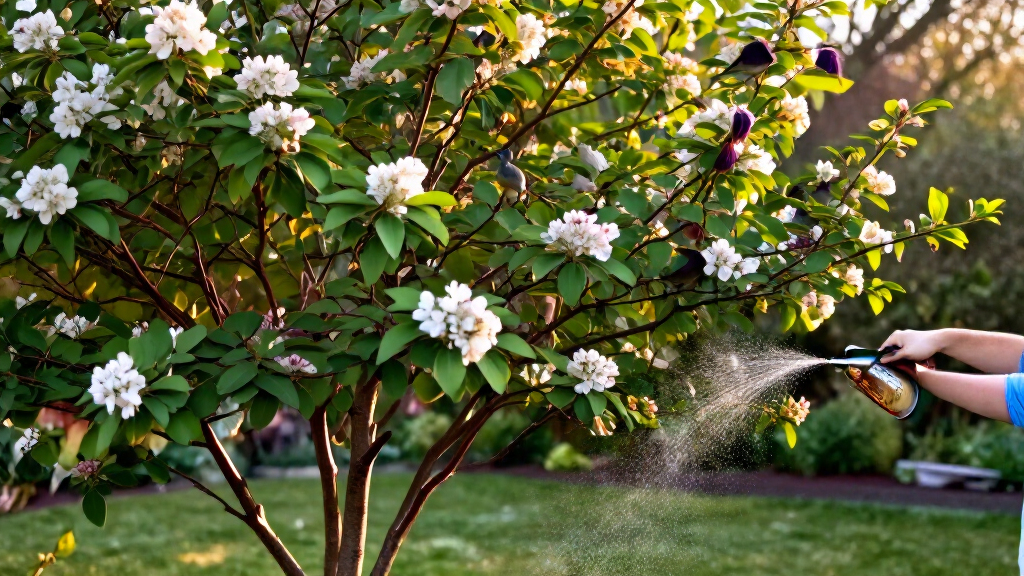
The report’s selections offer different benefits across the year. Rowan produces berries later in the year, while crab apple provides spring blossom and fruit that ripens around autumn. The report says both can offer food for birds, though availability and use will depend on the tree and local conditions.
Amelanchier is described as a multi-season choice, with spring flowers, autumn colour and small dark berries. Hawthorn’s blossoms attract pollinators and its autumn haws provide food, while blackthorn produces flowers early in the year, later followed by sloe berries that can benefit backyard birds. The report also says blackthorn’s dense, thorny growth can provide birds with nesting cover and protection.
The source’s examples show why checking mature dimensions matters. A standard rowan may reach 10 to 15 metres, compared with about 7 metres for the named compact variety. It gives amelanchier a typical height of 4 to 8 metres, and says a dwarf crab apple cultivar can reach about 1.5 metres. Hawthorn examples are also listed at 4 to 8 metres; unclipped blackthorn can reach up to 6 metres tall and spread 4 metres.
Choosing Trees for Food and Cover
The recommendations matter to gardeners who want wildlife habitat without assuming that one tree will suit every plot. As trees can provide both food and shelter, choosing species with different flowering and fruiting periods may support birds at different points in the year. The report highlights late-season berries and fruit as potential food when other sources are less available.
Space is a practical constraint, not a minor detail. Several trees described as suitable for smaller gardens can still grow to several metres tall or wide. A compact cultivar, container growing where appropriate, or regular light pruning may help manage size, but the source does not claim that every listed tree will remain small without care. Local suitability and the conditions of a particular garden also matter.
Products Worth Considering

Orbit B-hyve XR 16-Zone Indoor/Outdoor Smart Sprinkler Controller

Greenworks 40V Cordless Chainsaw Kit with 12-Inch Bar, 2Ah Battery and Charger

EGO Power+ 56V Cordless Leaf Blower, 880 CFM, with Two 4.0Ah Batteries
As an affiliate, we earn on qualifying purchases.
Seasonal Benefits and Mature Sizes
The source frames the choices around a garden’s ability to offer food, nesting sites and shelter. Rowan, crab apple, hawthorn and blackthorn are presented chiefly for their fruit or berries; amelanchier offers flowers, foliage interest and berries; blackthorn and hawthorn are also described as providing protective growth or nesting opportunities.
Chris Bonnett, founder of Gardening Express, says native plants and trees can fit local wildlife needs. David Denyer, a flower and garden expert at eflorist, recommends berry-producing species for colder months. These are expert recommendations quoted by the publication, not results from a comparative study. The supplied article text cuts off during its holly section, so it does not provide the same level of detail or a mature-size example for holly as it does for the other five trees.
“Incorporating even a small selection of native plants and trees in your garden can make a big difference.”
— Chris Bonnett, founder of Gardening Express, quoted by Ideal Home
What the Source Leaves Open
The supplied article does not state its publication date, and its holly section ends mid-sentence. It therefore does not establish which holly varieties the writer recommends, their expected mature dimensions, or the specific benefits attributed to holly in the complete report. Readers should not infer those missing details from the six-tree list alone.
The report also does not provide research comparing how many birds each tree attracts, or evidence that the trees will attract particular species in every garden. Bird activity will depend on factors such as location, existing habitat and the tree’s maturity. “Compact” is not a consistent mature-size measurement in the supplied text, so checking a chosen cultivar’s expected height and spread is necessary.
Check Varieties Before Planting
Anyone considering one of these trees should confirm the selected variety’s mature height and spread with a nursery or reliable horticultural reference before planting. They should also check whether the tree suits local growing conditions and whether pruning or container cultivation is appropriate. The source gives no announced follow-up or planting deadline; the practical next step is to choose a species and cultivar that fit the garden’s space and wildlife aims.
Key Questions
Which six trees does the report recommend?
The list includes rowan, amelanchier, crab apple, hawthorn, blackthorn and holly. The supplied source excerpt provides less detail about holly because its section is cut off.
Which options are described as providing berries or fruit for birds?
The report highlights rowan berries, amelanchier’s small dark berries, crab apples, hawthorn haws and blackthorn sloes as potential food. It does not provide full detail about holly in the supplied excerpt.
Are all six trees genuinely small?
No. The source lists mature heights of several metres for a number of its examples. Standard rowan can reach 10 to 15 metres; the named compact rowan is listed at about 7 metres. Check the specific cultivar’s expected height and spread before planting.
Which tree in the report has the smallest stated mature height?
The report gives a dwarf crab apple cultivar, Malus toringo ‘Tina’, an expected height of about 1.5 metres. That figure applies to the named cultivar, not all crab apple trees.
Source: rss