
TL;DR
Jumping worms, an invasive earthworm species, are rapidly spreading across the U.S., threatening native ecosystems. Experts recommend identification and removal methods to control their spread.
Invasive jumping worms are spreading across the United States, posing a threat to native soil and ecosystems. Experts warn gardeners to identify and control these worms to prevent ecological damage.
Jumping worms, originally from Japan, have been identified in multiple U.S. states, including reports from Michigan State University. These worms are distinguished by their snake-like movements, glossy skin, and flat, encircling clitellum. Unlike native earthworms, their castings are surface-exposed and can degrade soil fertility, leading to erosion and loss of native plant life.
Experts warn that jumping worms rapidly reproduce without significant natural predators in the U.S., and their voracious feeding disrupts soil structure and nutrient cycling. The worms are often found in damp, shady areas, with signs including rapidly disappearing mulch and crumbly soil resembling coffee grounds. Identification can be confirmed by applying a mustard solution to soil, which causes worms to surface.
Control methods include solarization using plastic sheets during warm, dry weather, and tilling soil in early spring before cocoons hatch. If worms are found, they should be collected and destroyed by sealing in plastic bags or immersing in vinegar or alcohol, according to Michigan State University guidance.
Environmental and Agricultural Impact of Jumping Worms
The invasion of jumping worms threatens native soil health, plant growth, and local wildlife by altering soil structure and nutrient availability. Their rapid spread and lack of natural predators make containment difficult, risking long-term ecological damage and increased costs for land management and restoration efforts.

Carolina Young Scientist Earthworm Dissection Kit – Complete Kit for 1–2 Students | Explore Annelid Anatomy | Includes Preserved Specimen, Tools, Guides & NGSS-Aligned Digital Resources
- Experience: Over 95 years in science education
- Digital Resources: Includes 1-year NGSS-aligned online access
- Dissection Guide: Step-by-step instructions with images
As an affiliate, we earn on qualifying purchases.
As an affiliate, we earn on qualifying purchases.
Recent Spread and Identification of Jumping Worms in the U.S.
Jumping worms, native to Japan, have been increasingly reported across multiple states in recent years. They are part of a broader trend of invasive species disrupting native ecosystems, similar to spotted lantern flies. Their presence has been confirmed through field observations and soil testing, with experts warning of their potential to cause lasting environmental harm if not controlled promptly.
“Jumping worms can significantly alter soil properties, making habitats less suitable for native plants and animals.”
— an anonymous researcher

6 Pack Leaf Tarp 6.67 x 6.67 ft Plastic Poly Sheets for Landscape Garden Heavy Duty Landscaping and Garden Leaf Sheet Reusable Poly Sheets for Trimming Lawn Debris Landscape Pruning Yard Hauler
- Durable and Reusable Material: Made from sturdy plastic for repeated use
- Generous Size for Large Tasks: Each sheet measures 80 x 80 inches
- Ideal for Landscaping Cleanup: Handles grass, leaves, and debris easily
As an affiliate, we earn on qualifying purchases.
As an affiliate, we earn on qualifying purchases.
Unconfirmed Aspects of Jumping Worm Spread and Control
It remains unclear how quickly jumping worms are spreading in some regions due to inconsistent reporting. The long-term effectiveness of control methods like solarization and tilling under different environmental conditions is still being studied, and the full extent of their ecological impact is not yet fully understood.

Rapitest Soil Test Kit for Gardens, Vegetables, Flowers and Lawns. USA designed and assembled soil tester completely, quickly and accurately measures/analyzes soil pH acidity and garden nutrients.
- Quick at-home soil testing: Measures pH, Nitrogen, Phosphorous, Potash
- Complete test kit: Includes components for 20 tests
- Multiple testing spots: Tests multiple areas in yard or garden
As an affiliate, we earn on qualifying purchases.
As an affiliate, we earn on qualifying purchases.
Monitoring and Research Efforts to Contain Jumping Worms
Researchers and state agencies will continue monitoring the spread of jumping worms, with increased reporting and public awareness campaigns. Further studies are expected to evaluate the effectiveness of control strategies and develop new methods to prevent their invasion from worsening. Gardeners are advised to stay vigilant and report sightings to local invasive species networks.
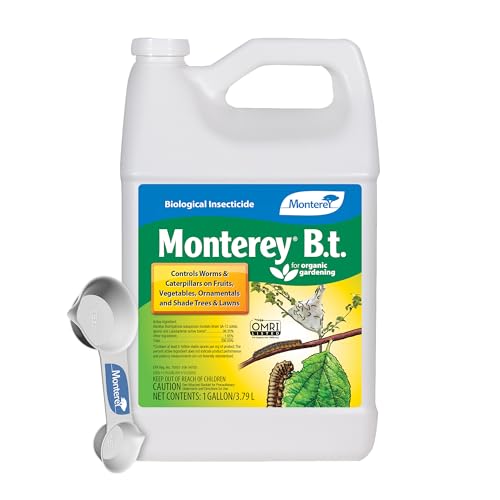
Monterey B.t. Biological Insecticide, 1 Gal with Spoon
- Target Insects: Effective against caterpillars and worms
- Suitable Plants: For vegetables, fruits, and ornamentals
- Eco-Friendly: Safe for earthworms and bees
As an affiliate, we earn on qualifying purchases.
As an affiliate, we earn on qualifying purchases.
Key Questions
How can I identify jumping worms in my garden?
Look for worms that have snake-like movements, a glossy surface, and a flat, encircling clitellum. Signs include rapidly disappearing mulch and crumbly, coffee ground-like soil. Applying a mustard solution can help confirm their presence.
Are jumping worms harmful to plants and animals?
Yes, they disrupt soil structure and nutrient cycling, making habitats less suitable for native plants and ground-nesting animals. Their activity can lead to soil erosion and reduced fertility.
What are the recommended methods to control jumping worms?
Control options include solarization with plastic sheets during warm, dry weather and tilling soil in early spring before cocoons hatch. Collected worms should be destroyed by sealing in plastic or immersing in vinegar or alcohol.
Can jumping worms be eradicated once they are found?
Complete eradication is challenging due to their rapid reproduction and hidden cocoons. Early detection and consistent control methods can reduce their populations, but ongoing monitoring is necessary.
How can I report jumping worm sightings?
Contact your state or regional invasive species network to report sightings. This helps track the spread and coordinate control efforts.
Source: Family Handyman