TL;DR

Get garden gear delivered free with Prime
- Fast, free delivery on millions of items
- Prime Video, Amazon Music and more included
- Member-only deals all year
A Homes & Gardens report recommends October mulch for perennials, shallow-rooted or newly planted shrubs, strawberries in colder climates, and fall-planted garlic. It advises against thick organic mulch around Mediterranean herbs, succulents and cacti because trapped moisture can contribute to rot; conditions and plant needs matter.
A Homes & Gardens report for October 2026 recommends mulching four groups of plants—perennials, shrubs, strawberries in colder climates, and fall-planted garlic—to protect roots from cold and repeated freezing and thawing. It cautions gardeners against thick organic mulch around Mediterranean herbs, succulents and cacti, which prefer drier conditions and may be vulnerable to rot when moisture is trapped around them.
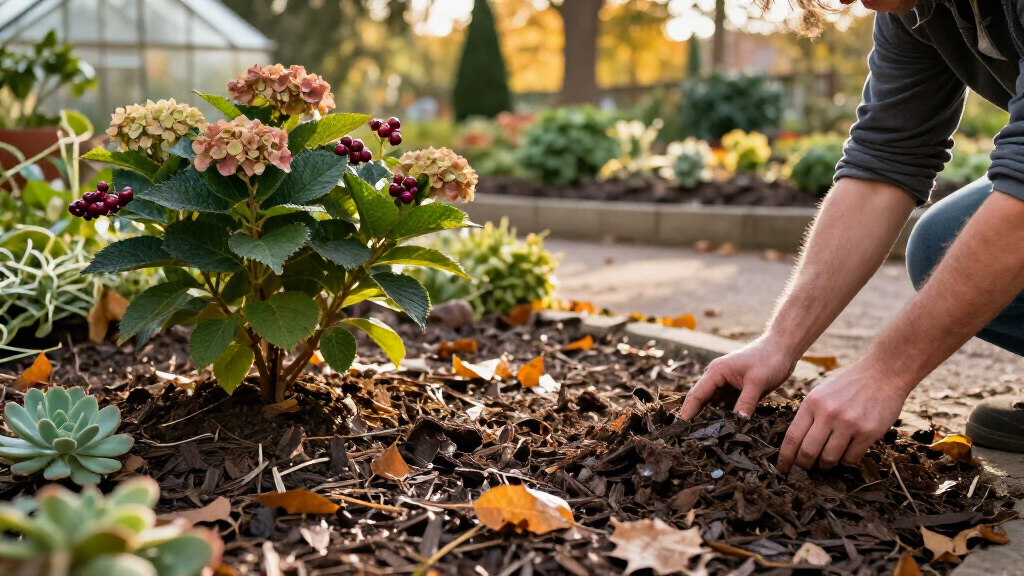
The report recommends a 2- to 3-inch layer of suitable mulch for many perennials and shrubs. Hostas, coneflowers, daylilies, black-eyed Susans, peonies, salvias and coral bells are among its examples. Mulch can help insulate roots and reduce frost heave, when cycles of freezing and thawing lift plant crowns out of the soil. Compost, chopped leaves, bark and pine straw are listed as organic options.
Shallow-rooted shrubs, including azaleas, hydrangeas, spireas and euonymus, are among the plants the report says to protect. It also recommends mulching shrubs planted during the current season, which may not yet be established. But mulch should not touch stems or trunks: Wendy Hanson Mazet, a plant diagnostician with the University of Nevada, Reno Extension, says piled mulch can give rodents shelter and access to feed on bark and cambium tissue.
For strawberries in colder climates, the report says to wait until plants become dormant before adding a couple of inches of straw, leaving the crown uncovered to reduce the risk of excess moisture and rot. Fall-planted garlic can be covered with lightweight straw or chopped leaves to limit cold exposure and frost heave. By contrast, the report says sage, lavender, oregano and rosemary prefer well-drained soil and should not receive a heavy layer of organic mulch; gravel is offered as an alternative around those herbs.
Protecting Roots Without Trapping Moisture
October mulching is not a single rule for every bed. A protective layer can help buffer temperature swings and limit moisture loss for plants that benefit from insulation, while the same material may keep the crowns of dry-soil plants too damp. Matching the material and depth to the plant can reduce winter damage without creating conditions that favor rot.
The advice also carries practical caveats: local winter temperatures affect whether strawberries need protection, and mulch placement matters as much as the choice of material. Keeping mulch clear of plant crowns, stems and trunks helps avoid problems identified in the report, including trapped moisture and rodent damage.
natural straw mulch for garden winter protection
As an affiliate, we earn on qualifying purchases.
As an affiliate, we earn on qualifying purchases.
How October Mulching Varies by Plant
The report frames fall mulching as a way to use remaining soil warmth and protect roots as temperatures fall. It does not present October as a fixed deadline for every garden. Its recommendations depend on soil conditions, climate and plant type, and its examples distinguish between plants that benefit from insulation and those that need dry, well-draining conditions.
For strawberries, the timing is tied to the plant’s dormancy rather than the calendar alone: the report describes foliage losing its bright green color and taking on a reddish tint as signs to wait for. For garlic, the purpose is to protect fall-planted bulbs after they begin establishing roots. The article also says blueberries and currant bushes can benefit from fall mulch, though its headline groups the main advice into four categories.
“When mulch is piled directly against trunks or stems, it provides both protection and easy access for rodents, which can ultimately lead to the decline or death of the plant.”
— Wendy Hanson Mazet, plant diagnostician for the University of Nevada, Reno Extension
shredded leaf mulch for perennials and garlic
As an affiliate, we earn on qualifying purchases.
As an affiliate, we earn on qualifying purchases.
Local Conditions Set the Mulch Line
The report does not offer a universal schedule or prescribe one mulch depth for every plant and region. Its strawberry advice specifically concerns colder climates, including US hardiness zones 6 and below; gardeners elsewhere may have different winter-protection needs. The effects of mulch also depend on drainage, weather and how closely it is placed to the plant.
The guidance is not a substitute for local growing advice, and the report does not quantify how much protection any mulch type provides in particular conditions. It also does not specify a universal rule for every succulent or cactus species. The key distinction it makes is that plants adapted to dry conditions may be harmed by excess moisture around their crowns and roots.
pine bark mulch for shrubs 2 inch layer
As an affiliate, we earn on qualifying purchases.
As an affiliate, we earn on qualifying purchases.
Check Dormancy and Garden Conditions
Gardeners following the report’s advice should first identify which plants need insulation and which require dry conditions. For strawberries, wait for dormancy before applying straw, remove dead or diseased foliage, and keep the crown uncovered. For perennials and shrubs, use an appropriate organic material and keep it away from stems and trunks. Apply lightweight cover over fall-planted garlic without relying on a dense layer.
Before mulching Mediterranean herbs or succulents, check that the area drains well and avoid trapping moisture around the plants. The report’s overall guidance is to let plant type and local conditions determine whether to mulch, what to use and how much to apply; it does not identify a further announcement or formal follow-up.
decorative pea gravel mulch for lavender rosemary and succulents
As an affiliate, we earn on qualifying purchases.
As an affiliate, we earn on qualifying purchases.
Key Questions
Which plants does the report recommend mulching in October?
It recommends mulch for perennials, shallow-rooted or newly planted shrubs, strawberries in colder climates, and fall-planted garlic. Blueberries and currant bushes are also mentioned as fruit plants that appreciate fall mulching.
Which plants should not get a thick layer of organic mulch?
The report warns against heavy organic mulch around sage, lavender, oregano and rosemary, as well as moisture-sensitive succulents and cacti. These plants prefer drier conditions, and trapped moisture can contribute to rot.
How deep should mulch be around perennials and shrubs?
The report recommends about 2 to 3 inches for perennials and shrubs. Keep mulch several inches from trunks and stems rather than piling it against the plant.
When should strawberries be mulched?
Wait until strawberry plants are dormant, rather than mulching them simply because October has arrived. The report describes dormancy signs as foliage turning reddish and beginning to wilt; leave the crown uncovered when applying straw.
Source: rss
Fall Picks
fall essentials
As an affiliate, we earn on qualifying purchases.