
Indirect heat is great for cooking large cuts of meat evenly and developing rich smoky flavors. It allows you to slow roast, smoke, or cook foods gently without burning the exterior. You’ll find it especially useful for tenderizing meats, maintaining steady temperatures, and infusing deep flavors. This method keeps moisture in, prevents hotspots, and makes outdoor cooking more consistent. Want to discover even more tips? Keep exploring to master your outdoor cooking game.
Key Takeaways
- Ensures even cooking and flavor development by preventing direct flame contact.
- Ideal for slow roasting large cuts of meat, maintaining moisture and tenderness.
- Enhances smoke infusion, adding rich, layered smoky flavors to foods.
- Provides precise temperature control for consistent, predictable results.
- Prevents burning while allowing extended cooking times for juicy, tender dishes.

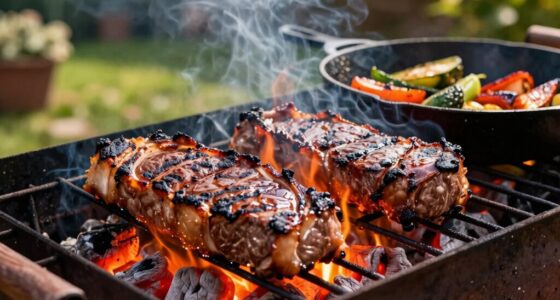
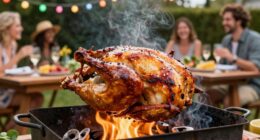
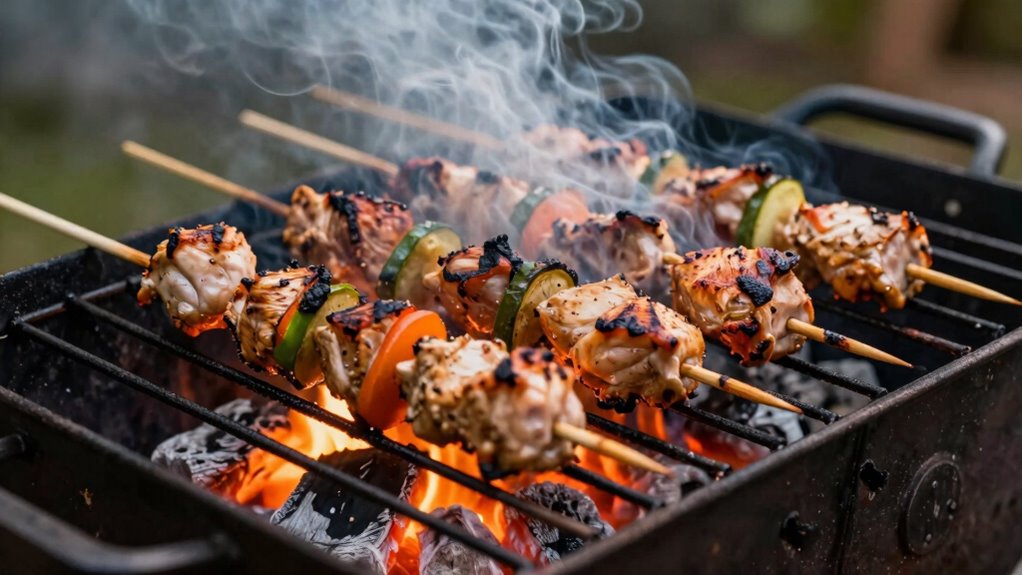
Have you ever wondered what indirect heat is truly good for in outdoor cooking? It’s a technique that transforms your grilling experience, allowing you to cook foods more evenly and develop richer flavors. When you set up your grill for indirect heat, you’re fundamentally creating a gentle, controlled environment that’s perfect for smoke infusion and slow roasting. Instead of placing food directly over the flames, you position it away from the heat source, which means the heat circulates around the food, cooking it slowly and evenly. This method is ideal for large cuts of meat, poultry, or anything that benefits from extended cooking times without burning or drying out. Additionally, controlling airflow plays a crucial role in managing the heat and smoke levels, further enhancing the overall cooking process. Smoke infusion is one of the standout benefits of using indirect heat. When you add wood chips or chunks to your charcoal or gas grill, the smoke generated envelops the food, imparting a deep, smoky flavor that direct grilling simply can’t match. Because the heat is indirect, the smoke has more time to penetrate the meat, infusing it with complex, layered flavors. This process is especially effective when you’re smoking briskets, ribs, or pork shoulders, where a rich smoky taste is essential. You can control the intensity of the smoke by adjusting the amount of wood and the airflow, creating a customized flavor profile. Without direct heat, you avoid the risk of burning the exterior while waiting for the interior to cook through, making smoke infusion more effective and controlled. Interestingly, indirect heat also helps in maintaining consistent temperatures, which is vital for slow cooking and smoking techniques. Proper setup and understanding of heat circulation can significantly improve your results. Additionally, knowing how to manage heat zones allows you to better control the cooking process, ensuring your food turns out perfectly every time. Slow roasting is another key application of indirect heat. When you want tender, juicy meat, slow roasting over indirect heat is your best friend. It allows the heat to gently break down connective tissues and render fats, resulting in meat that’s fall-apart tender. Think about a whole chicken, a beef roast, or a large turkey—they all benefit from this gentle approach. Setting up your grill for indirect heat ensures the heat surrounds the meat evenly, preventing hotspots that could lead to uneven cooking. As a result, you get consistent doneness and retain moisture, making every bite flavorful and succulent. Plus, slow roasting over indirect heat lets you cook larger cuts without constant attention, freeing you up to prepare sides or enjoy a drink while your meal develops.

VORTEX (IN) DIRECT HEAT for Charcoal Grills, Medium Size – For Weber Kettle 22 26.75 WSM Smokey Mountain XL Kamado XL Big Green Egg
MEDIUM SIZE – Fits & Compatible with Weber Kettle 22.5 or 26.5, Weber Smokey Mountain, XL BGE &…
As an affiliate, we earn on qualifying purchases.
As an affiliate, we earn on qualifying purchases.
Frequently Asked Questions
Can Indirect Heat Be Used for Quick-Cooking Foods?
Yes, you can use indirect heat for quick-cooking foods, but it’s not the fastest method. For speedy grilling and quick recipes, direct heat is usually better. Indirect heat is ideal for cooking larger cuts or delicate foods slowly, preventing burning. If you want quick results, stick to direct heat, but for evenly cooked, tender results on larger items, indirect heat works well—even if it takes a little longer.
How Do I Prevent Flare-Ups With Indirect Heat?
Think of flare-ups as sudden thunderstorms in your culinary sky. To prevent them, keep your grill’s lid closed and avoid dripping fats. Use marinade techniques that create a barrier, reducing flare-ups, and opt for smoke infusion methods to add flavor without risking flames. Maintain a steady temperature, and move meat away from direct flames. This way, your cooking stays smooth, like a gentle breeze, and flare-ups stay at bay.
Is Indirect Heat Suitable for All Types of Grills?
Indirect heat isn’t suitable for all grills, especially smaller or single-zone models. You need to carefully consider grill placement—placing food away from direct flames—and manage your fuel well to maintain consistent, indirect heat. For best results, use a two-zone setup, keeping coals or burners on one side, and position your food on the cooler side. This approach guarantees even cooking without flare-ups, regardless of your grill type.
How Do I Control Temperature With Indirect Heat?
To control temperature with indirect heat, adjust your grill’s vents and lid position to regulate airflow, which affects fuel efficiency and heat levels. Use a two-zone setup, placing coals or burners on one side, and the food on the other. This method maintains a steady, low temperature ideal for slow cooking, enhances flavor through slow heat, and conserves fuel, making your outdoor cooking more efficient and delicious.
Can I Cook Delicate Foods Using Only Indirect Heat?
Yes, you can cook delicate foods using only indirect heat, which is ideal for flavor enhancement and smoke infusion. It gently cooks your food without direct contact with flames, reducing the risk of burning or drying out. This method allows the smoke to penetrate, adding a rich, smoky flavor. Keep the temperature steady, and you’ll achieve tender, flavorful results perfect for items like fish, vegetables, or delicate poultry.

TMKEFFC Smoking Gun Portable Smoker Infuser, Handheld Cocktail Smoke Food Smoker for Meat, Sous Vide, Drinks, Cheese, Cup Cover and Wood Chips Included, Black
(Upgraded 2024)Natural Smoke Flavor For Smoking-Lover: Packing included 1 Cup Cover, Wood Chips, Rubber Tube, Small Screwdriver, Cleaning…
As an affiliate, we earn on qualifying purchases.
As an affiliate, we earn on qualifying purchases.
Conclusion
Now that you understand the benefits of indirect heat, you’ll see how it’s perfect for evenly cooking large cuts or delicate foods without burning them. Did you know that using indirect heat can reduce cooking time by up to 20% compared to direct grilling? So next time you’re planning a barbecue, remember: indirect heat isn’t just for safety, it’s your secret weapon for perfectly cooked, juicy, and tender outdoor meals. Happy grilling!

Glad Roasting Pan Nonstick 11×15 – Heavy Duty Metal Bakeware Dish with Rack – Large Oven Roaster Tray for Baking Turkey, Chicken, and Veggies
VERSATILE ROASTING PAN – A cookware essential. This big 15 inch roaster is ideal for cooking turkey, chicken…
As an affiliate, we earn on qualifying purchases.
As an affiliate, we earn on qualifying purchases.

Weber Apple Wood Chips, 2 lb – Premium BBQ Smoking & Grilling Chips for Subtle, Sweet Apple Flavor – Ideal for Beef, Lamb, Poultry, Pork & Fish
Subtle Sweet flavor
As an affiliate, we earn on qualifying purchases.
As an affiliate, we earn on qualifying purchases.