TL;DR
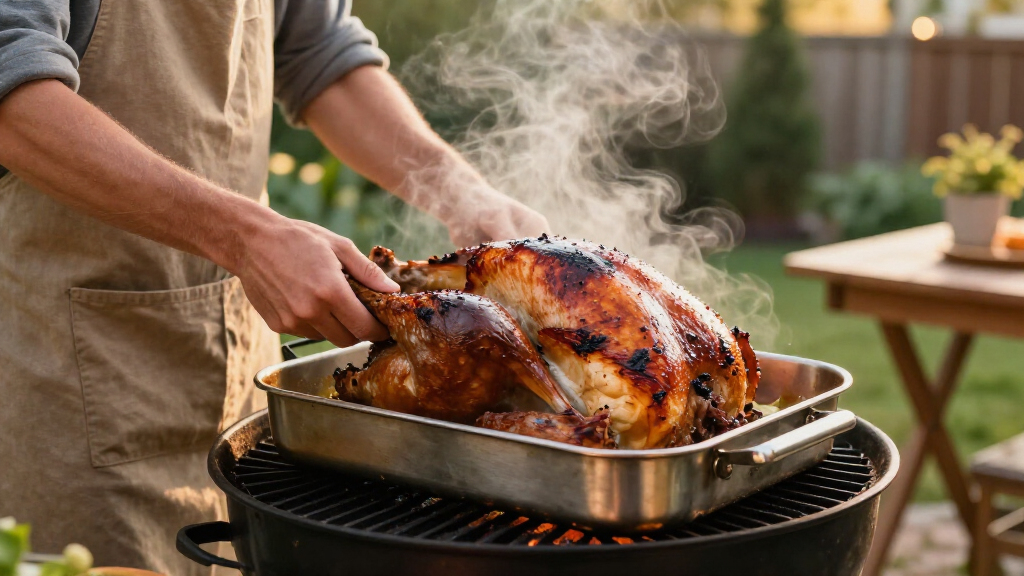
An outdoor turkey roasting pan holds the bird and catches drippings while you roast on a grill or outdoor cooker. Check pan dimensions against the cooking surface and lid, choose sturdy material, roast with indirect heat, and use a food thermometer to confirm 165°F (74°C) in the thickest breast and innermost thigh and wing.
A turkey can fit in your roasting pan and still refuse to fit under the grill lid. That small mismatch can turn a relaxed outdoor cook into a scramble with a hot, heavy bird and nowhere to put it.

Get garden gear delivered free with Prime
- Fast, free delivery on millions of items
- Prime Video, Amazon Music and more included
- Member-only deals all year
Outdoor turkey roasting pans are designed for cooking a whole turkey on equipment such as a gas grill, charcoal grill, pellet grill, or outdoor burner. They can free up your indoor oven and catch drippings for gravy, but you need a pan that fits your cooker and can handle the bird’s weight.
Here you’ll learn how to check size, choose a material, set up indirect heat, and handle food safely. The goal is simple: golden skin, usable drippings, and a turkey that reaches a safe temperature without a last-minute wrestling match.
Measure the grate, lid clearance, and pan handles before buying.
Support thin disposable aluminum pans with a rigid tray when loaded.
Use a rack when practical, and avoid filling the pan with liquid that can hinder browning.
Roast with indirect heat to reduce flare-ups and scorched drippings.
Check 165°F (74°C) in the thickest breast and innermost thigh and wing; don’t rely on time alone.
Check the grill and pan fit before you buy
An outdoor turkey roasting pan should fit the cooking surface with room around it for heat to move and enough clearance for the lid to close. Measure the grill’s usable area, then compare it with the pan’s outside dimensions, including handles. A snug fit against the lid or walls can block airflow and make temperature control harder.
For example, if your grill has a 22-inch round cooking grate, a wide rectangular pan may technically sit on it but leave little room for heat to circulate. Measure the opening under the lid too; a tall turkey on a rack may touch the top even when the pan itself fits. Those few inches matter when hot air needs to flow around the bird.
Choose a pan that supports the turkey while leaving clear space between its sides and the pan walls. Pans are designed for cooking a whole turkey on specific surfaces and under particular lids, so check the manufacturer’s dimensions and heat guidance rather than judging by a product photo. When shopping, take your grill measurements with you and account for handles, lid hinges, and raised racks.
A quick cardboard cutout of the pan’s footprint can help: set it on the grill grate and lower the lid before you order. It’s a simple rehearsal that can save you from discovering the fit problem on cooking day.
Products Worth Considering

Solo Stove Bonfire 2.0 Smokeless Wood-Burning Fire Pit with Stand, 19.5-Inch, Silver

AMERLIFE 10 x 12 ft Polycarbonate Greenhouse with 4 Roof Vents

Blackstone 1814 Portable Propane Gas Griddle, 17-Inch
As an affiliate, we earn on qualifying purchases.
Choose a pan that won’t buckle under a heavy bird
The best pan material depends on how often you roast and how you plan to move it. Heavy-gauge stainless steel and aluminized steel offer sturdy reusable options, while disposable aluminum pans cost less and make cleanup easier. The tradeoff shows up when the pan is full: thin aluminum can flex, spill hot drippings, or sag under a large turkey.
Imagine carrying a 16-pound turkey with a pool of hot juices sloshing beneath it. A disposable pan may be fine for roasting, but its edges are a poor place to grip when you lift it. Set it on a rigid sheet pan or sturdy tray before loading, and support it from underneath when you move it. Don’t carry a full pan by its thin rim.
Reusable pans can last through many holiday meals, but check that the product suits your cooker’s heat and is dishwasher-safe if that matters to you. Avoid pouring cold liquid into a hot metal pan or plunging a hot pan into cold water; sudden temperature changes can warp it. Coated pans may have specific temperature and cleaning instructions, so follow the maker’s guidance.
There’s no need to buy the heaviest pan on the shelf if you roast once a year and have a safe way to support a disposable one. For frequent outdoor cooks, a sturdy reusable pan can feel more like reliable equipment than a seasonal accessory.
Use a rack and pan depth to help the bird brown
A roasting pan needs enough depth to catch juices, but very high sides can shield the turkey from circulating heat and slow browning. A rack raises the bird above the drippings, helping hot air reach underneath and keeping the skin from sitting in liquid. A rack is useful, though you can roast without one if your recipe and cooker setup allow it.
Think of the pan as a shallow catch basin, not a covered bath. If the turkey sits low in a deep pan filled with broth, the bottom can steam while the top browns. A rack lifts the bird so the skin can dry and color more evenly, while the pan still catches the juices for gravy.
For a practical setup, place the rack in the pan, set the turkey breast-side up, and check that the pan does not block the grill’s vents or sit close to a burner. If the rack is metal, confirm it is rated for the cooking heat. Lightly oiling a suitable rack may help with sticking; don’t use cooking spray near open flames unless its label says it is safe for that use.
You usually don’t need to add water or broth for basic roasting. Added liquid can reduce browning and may evaporate, so follow your recipe and watch the drippings. If you want gravy, unburned pan juices are often enough to get started.
Set up indirect heat to avoid scorched drippings
Indirect heat keeps the turkey away from the flame while the covered grill acts like an outdoor oven. On a gas grill, light burners on one side and place the pan over the unlit side; on a charcoal grill, bank coals to the edges and set the turkey in the cooler center. This setup lowers the chance of flare-ups and bitter, smoky drippings.
Outdoor cookers can develop hot spots or swing in temperature as the wind picks up. Keep a reliable grill thermometer where you can read it, and monitor cooking temperature during the roast. Don’t let the pan sit directly over a flame unless both the pan and cooker are made for that use. Grease hitting fire can flare suddenly, so a pan helps contain drippings but does not make direct flame harmless.
For instance, a cook using a two-burner gas grill can heat one burner and leave the other off, placing the turkey over the unlit burner. If the skin starts darkening too quickly on one side, the grill may have a hot spot; rotate the pan carefully if your setup permits. Keep the lid closed as much as possible to hold steady heat.
Outdoor roasting lets you keep some heat and cooking odors outside, which can be welcome when your indoor oven is full. You still need to plan for weather, fuel, and enough space to handle the pan safely. The grill is doing oven duty, but it brings its own quirks.
Check the turkey’s temperature instead of trusting the clock
Use a food thermometer to confirm doneness; cooking time alone cannot tell you whether the turkey is safe. The thickest part of the breast and the innermost parts of the thigh and wing should each reach 165°F (74°C), with the thermometer tip kept away from bone. If the bird is stuffed, the center of the stuffing must also reach 165°F (74°C).
A 12-pound turkey might roast faster or slower depending on grill temperature, wind, and whether you keep lifting the lid. Time estimates are useful for deciding when to start, but they are not a doneness test. Near the end, check several spots; the breast can reach temperature before the deep part of a thigh.
Keep raw poultry and its juices separate from ready-to-eat foods. Use a clean plate and utensils for the cooked bird, and wash hands and surfaces after handling raw turkey. Cooking stuffing separately is usually easier and safer because it avoids relying on the center of a packed bird to heat through.
Once you remove the turkey, let it rest according to your recipe before carving. Set the hot pan on a heat-safe surface, away from children and pets, and use oven mitts or other suitable heat protection. A thermometer gives you a clear answer; a clock can only offer an estimate.
Follow five steps for a calmer outdoor roast
A little preparation makes outdoor turkey roasting easier because you solve fit, support, and heat questions before the bird is hot. Start with your cooker’s dimensions and manufacturer instructions, then choose a pan and setup suited to that equipment. Equipment such as a grill thermometer, sturdy tray, heat-safe mitts, and meat thermometer can make the job easier to manage.
- Measure the grill: Check grate space, lid clearance, and room around burners or coals.
- Pick a stable pan: Choose reusable heavy-gauge metal or support a disposable pan with a rigid tray.
- Prepare the rack: Raise the turkey above the drippings if you have a compatible rack.
- Arrange indirect heat: Keep the pan away from direct flame and check the grill temperature.
- Confirm doneness: Test the breast, innermost thigh, and wing for 165°F (74°C).
Consider a family cookout where the turkey is ready before the side dishes. With the pan dimensions checked ahead, you can keep the bird on the grill while the indoor oven handles casseroles. If the turkey finishes before guests arrive, have a clean, heat-safe place ready for the pan and follow safe food-handling practices while it rests.
After dinner, strain drippings for gravy only if they are not burned or contaminated, then bring them to a safe simmer as part of preparation. Let the pan cool as its instructions recommend before washing. A calm roast comes from a few straightforward checks, repeated at the right time.
Frequently Asked Questions
Can you use a regular roasting pan on a grill?
Often, yes, if the pan fits, is rated for the heat, and works with the cooker’s setup. Keep it away from direct flame unless the manufacturer permits that use.
What size pan do you need for a turkey?
Choose a pan that supports the bird while leaving space around it for airflow and fitting beneath the grill lid. Check the pan’s outside dimensions, including handles, against the cooking area.
Can you use a disposable aluminum pan?
Yes, but thin pans can buckle under a heavy turkey and hot drippings. Set the pan on a rigid tray and support it from underneath whenever you move it.
Should you put water or broth in the pan?
Usually not for basic roasting. Added liquid can reduce browning or evaporate, so follow your recipe and keep an eye on the drippings to prevent scorching.
How long does an outdoor turkey take to roast?
It depends on bird weight, cooker temperature, weather, and the grill setup. Use time estimates to plan, then confirm doneness with a thermometer: the breast and innermost thigh and wing should reach 165°F (74°C).
Can you cook stuffing inside the turkey?
Cooking stuffing separately is usually easier and safer. If you stuff the bird, the center of the stuffing must also reach 165°F (74°C).
Conclusion
Choose an outdoor turkey roasting pan that fits your grill, supports the loaded bird, and leaves room for heat to circulate. Pair it with indirect heat and a food thermometer, and you’ll have a steadier roast and better drippings for gravy.
Measure before you buy, then let the thermometer make the final call. The lid closes, the skin turns golden, and dinner stays outdoors where you planned it.