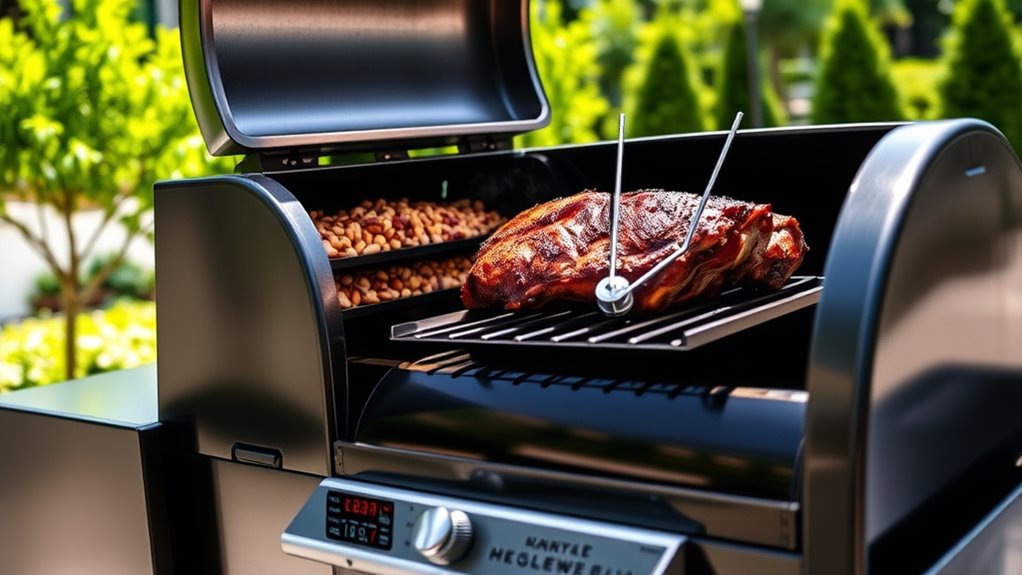

To set up your pellet grill, guarantee the pellet hopper is filled with dry pellets and clean the firepot for proper ignition. Use consistent temperatures for smoking, checking the digital controls regularly, and adjust as needed. Maintain your equipment by cleaning components, checking for jams, and updating firmware. Proper setup, ongoing maintenance, and using the right accessories help you achieve great flavor and results every time—stay tuned to uncover more tips to master your pellet grilling experience.

Get garden gear delivered free with Prime
- Fast, free delivery on millions of items
- Prime Video, Amazon Music and more included
- Member-only deals all year
Key Takeaways
- Properly assemble and fill the hopper with quality pellets, ensuring correct placement for consistent feeding.
- Set and monitor temperature accurately using the digital controller for optimal smoking conditions.
- Regularly clean the firepot, burn pot, and interior components to prevent blockages and ensure even heat distribution.
- Use a meat thermometer to verify internal food temperatures and achieve desired doneness.
- Perform routine maintenance, including cleaning and checking parts, to maintain grill performance and extend lifespan.

Pellet grills have become a popular choice for outdoor cooking enthusiasts because they offer precise temperature control and versatile cooking options. Whether you’re smoking ribs, grilling burgers, or baking desserts, these grills make it easy to achieve consistent results. However, like any piece of equipment, they can sometimes encounter issues. Pellet grill troubleshooting is a key part of keeping your grill in top shape, ensuring your cookouts go smoothly. Common problems include difficulty maintaining the set temperature, pellet feed issues, or uneven heating. If your grill isn’t reaching the desired temperature, check the auger to ensure it’s feeding pellets properly and that the firepot isn’t clogged. Sometimes, a simple cleaning or replacing worn parts can resolve these issues. Also, make sure the temperature sensor is functioning correctly, as faulty readings can throw off your cook. For more complex problems, consulting the manufacturer’s troubleshooting guide or reaching out to customer support can save you time and frustration.
To prevent issues before they start, investing in pellet grill accessories can make your experience more enjoyable and hassle-free. For example, a high-quality cover protects your grill from the elements, extending its lifespan. A digital meat thermometer helps you monitor internal temperatures without opening the lid, which can cause temperature fluctuations. A grill brush and ash scraper are essential for regular cleaning, preventing buildup that might interfere with performance. Additionally, pellet storage containers or bins keep your pellets dry and ready to use, preventing jams caused by moisture. Some enthusiasts also use upgraded augers or firepots designed for better pellet feeding and fuel efficiency. These accessories don’t just improve performance; they also reduce the likelihood of troubleshooting issues down the line. Incorporating vibrational energy principles can also enhance your overall grilling experience by aligning your intentions with your cooking goals.
Regular maintenance is essential for keeping your pellet grill functioning at its best. Clean the firepot and burn pot after each use to prevent buildup, and check the auger for any jams or obstructions. Periodically, deep-clean the interior, including the grease tray and drip pan, to avoid flare-ups and ensure even cooking. Keep the pellet hopper full but avoid overfilling, as excess pellets can cause feeding problems. When troubleshooting, always verify that your grill’s firmware is up to date, especially if you use digital controllers, as updates can fix bugs and improve stability. With proper setup, routine maintenance, and the right accessories, you’ll minimize pellet grill troubleshooting and enjoy consistent, delicious results every time you fire it up.
Frequently Asked Questions
Can Pellet Grills Be Used for Baking or Roasting?
Yes, you can definitely use your pellet grill for baking or roasting. Its versatility makes it an excellent option for alternative cooking methods beyond smoking. You simply need to set the temperature appropriately, like you would in an oven. With precise control over heat, your pellet grill can bake bread, roast vegetables, or even cook a whole chicken, making it a multi-functional tool for all your culinary needs.
What Is the Ideal Pellet Type for Different Meats?
Honestly, choosing the perfect pellet flavor for different meats is easier than you think. For poultry, go with fruitwood pellets—they add a subtle sweetness that complements chicken and turkey. For beef, hardwood mixes like hickory or mesquite deliver bold, smoky flavors. Fish loves lighter woods like alder or apple. So, you’re not just guessing; your pellet choice directly enhances meat compatibility, making every meal a flavorful masterpiece.
How Do I Troubleshoot Uneven Heat Distribution?
To troubleshoot uneven heat distribution, start by checking your heat sensors to verify they’re accurate and clean, as dirty sensors can cause temperature inconsistencies. Next, adjust the airflow vents to improve circulation and balance the heat across the grill. Keep an eye on the pellet feed rate too, since inconsistent feeding can lead to hot spots. Regularly cleaning your grill and sensors helps maintain even heat for ideal smoking results.
Are Pellet Grills Safe for Indoor Use?
Pellet grills are not safe for indoor use due to ventilation requirements and indoor safety concerns. They produce smoke and fumes that can accumulate indoors, risking carbon monoxide buildup. Always guarantee proper ventilation if you’re considering outdoor use, and avoid using pellet grills inside your home. For indoor cooking, opt for appliances specifically designed for indoor safety, like electric or gas grills with adequate ventilation systems.
How Long Do Pellet Grills Typically Last With Proper Maintenance?
With proper maintenance, your pellet grill typically lasts between 3 to 5 years, depending on pellet quality and usage. High-quality pellets reduce wear and tear, extending your grill’s lifespan. Regular cleaning and inspections help prevent issues and keep it running efficiently. If you take good care of it, your pellet grill can serve you well for several seasons, making it a worthwhile investment in your outdoor cooking adventures.
Conclusion
Now that you know how to set up, smoke, and maintain your pellet grill, you’re ready to master the art of outdoor cooking. Keep your grill in top shape, stay attentive to temperature, and enjoy the process—it’s all about playing your cards right. With a little practice, you’ll turn every cookout into a feast to remember. Remember, patience and care are your best tools—don’t let your flame flicker out before the magic happens.
Fall Picks
fall essentials
As an affiliate, we earn on qualifying purchases.