
Charcoal often wins over outdoor cooks because it delivers unbeatable smoky flavor and high heat that’s perfect for searing. It’s more than just cooking; it’s about connecting with tradition and craftsmanship. Managing the fire and adjusting airflow can be a satisfying experience, making your grilling more engaging. Plus, with various types of charcoal and wood chunks, you can customize flavors easily. If you want to discover why many still prefer charcoal, keep exploring the many benefits it offers.

Get garden gear delivered free with Prime
- Fast, free delivery on millions of items
- Prime Video, Amazon Music and more included
- Member-only deals all year
Key Takeaways
- Charcoal provides a distinct smoky flavor that enhances the taste of grilled foods.
- It heats quickly and reaches high temperatures ideal for searing and traditional grilling techniques.
- The ritual of tending the fire offers a satisfying, craftsmanship-focused outdoor cooking experience.
- Versatility in charcoal types and wood additions allows for flavor customization.
- Its cultural and social significance fosters a communal, authentic outdoor grilling atmosphere.
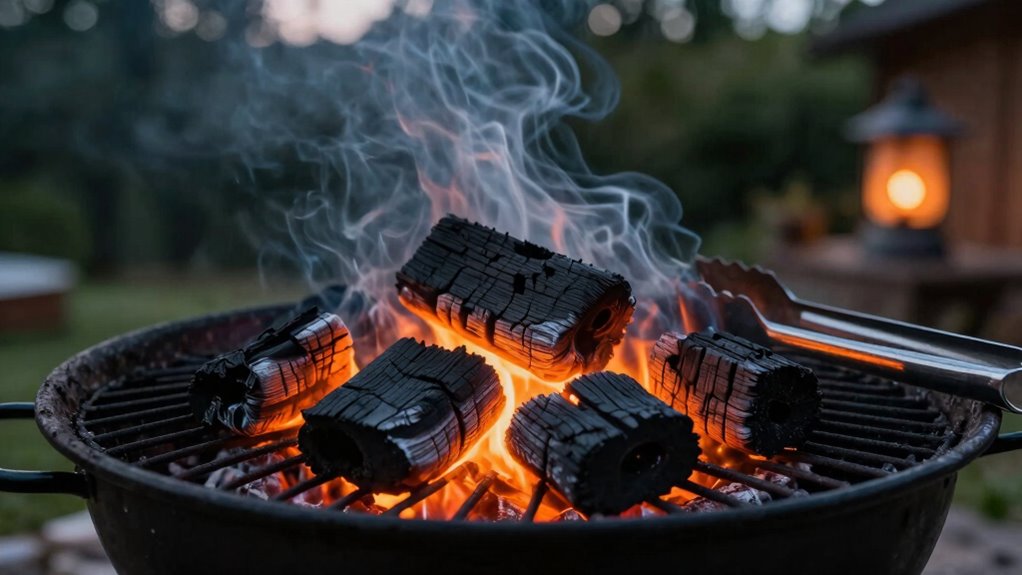
Despite the rise of gas grills and electric alternatives, many outdoor cooks still swear by charcoal for its unmatched flavor and traditional appeal. When you light a bag of charcoal, you’re not just starting a fire—you’re igniting a process that delivers that distinctive, smoky aroma that no other method can replicate. Charcoal flavor has a depth that infuses every bite with a richness that’s hard to match with gas or electric options. It’s this robust, earthy taste that keeps seasoned grillers coming back time and again, craving the authentic experience of traditional grilling.
Charcoal offers unmatched smoky flavor and a rich, authentic grilling experience that keeps enthusiasts coming back.
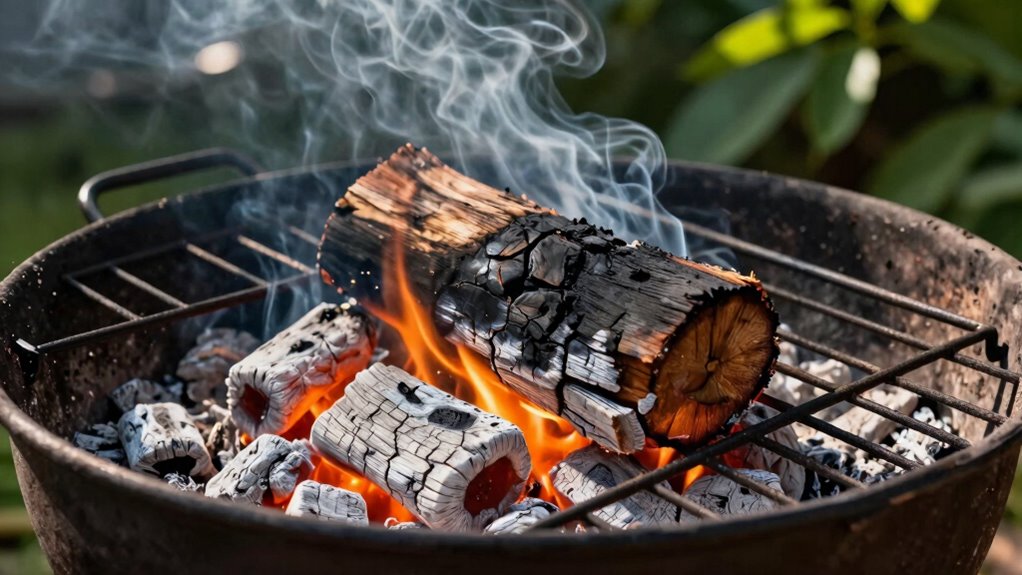
You probably appreciate how charcoal heats up quickly and reaches high temperatures, making it ideal for searing steaks or burgers. But more than just heat, what makes charcoal stand out is the way it interacts with your food. As the charcoal embers glow, they release subtle oils and smoke that penetrate the meat, creating complex layers of flavor that you just can’t achieve with other grills. This process, rooted in centuries of tradition, gives your food that signature smoky taste that defines true grilling.
Many outdoor cooks prefer traditional grilling with charcoal because it feels more connected to history and craftsmanship. When you tend to a charcoal fire, you’re engaging in a ritual that’s been passed down through generations. There’s a sense of skill involved in managing the coals, controlling airflow, and timing your cook. This hands-on approach allows you to fine-tune the heat and develop a deeper understanding of your grill, resulting in more flavorful, perfectly cooked meals. It’s not just about the end result but also about enjoying the process, which many find more satisfying than simply pressing a button or turning a knob. Additionally, the fire management involved in charcoal grilling enhances your understanding of heat control and cooking techniques, creating a rewarding experience for enthusiasts.
Moreover, charcoal often provides better flavor control through different types of charcoal and wood chunks. You can experiment with lump charcoal, briquettes, or adding wood chips for extra aroma, tailoring the flavor profile to your liking. This level of customization appeals to those who want to elevate their grilling game and create signature dishes. Plus, many people associate traditional grilling with outdoor gatherings and socializing, where the act of tending the fire becomes part of the experience, fostering a sense of community. Understanding the different charcoal types can significantly influence the flavor outcome and overall grilling experience. Additionally, the use of natural materials in some charcoal options can contribute to a cleaner burn and purer taste.
In the end, if you value authentic flavor, a hands-on process, and a connection to tradition, charcoal remains the top choice for many outdoor cooks. Its unique ability to impart a deep, smoky flavor and deliver that classic grilling experience ensures it continues to hold a special place in the hearts of enthusiasts who seek more than just a meal—they want an experience. Additionally, the variety of charcoal types, such as lump charcoal and briquettes, allows for further flavor customization, making it a versatile option for passionate grillers. Proper temperature control is also easier to achieve with charcoal, enabling precise cooking for different types of food.
best charcoal grill for outdoor cooking
As an affiliate, we earn on qualifying purchases.
As an affiliate, we earn on qualifying purchases.
Frequently Asked Questions
How Long Does Charcoal Typically Last During a Cookout?
During a cookout, charcoal typically lasts about 1 to 3 hours, depending on the amount used and how you manage airflow. To maximize charcoal longevity and fuel efficiency, keep the lid on when possible, control vents for consistent heat, and avoid overloading the grill. Smaller, distributed heaps burn longer than large, dense piles, helping you get the most out of your fuel and ensuring your cookout runs smoothly.
Is Charcoal More Environmentally Friendly Than Gas?
Charcoal isn’t more environmentally friendly than gas; in fact, it often has a higher carbon footprint and greater environmental impact. When you choose charcoal, you’re releasing more particulate matter and greenhouse gases into the atmosphere. Gas, on the other hand, burns cleaner, producing fewer emissions. So, if reducing your environmental impact is your goal, gas is the smarter choice—less pollution, less harm, and a smaller carbon footprint.
Can You Use Charcoal Indoors Safely?
No, you shouldn’t use charcoal indoors safely. Doing so risks poor indoor safety and air quality, as burning charcoal produces carbon monoxide and other harmful fumes. These toxins can accumulate quickly in enclosed spaces, posing serious health hazards. Always cook outdoors in a well-ventilated area, and never use charcoal indoors, even with ventilation. Protect yourself by prioritizing safe practices that keep your indoor air clean and safe.
What Types of Charcoal Are Best for Flavor?
Think of charcoal as the artist’s palette—your choice shapes the flavor. For rich, natural flavor enhancement, go with hardwood chunks or lump charcoal, which are like raw, unfiltered inspiration. Briquettes, on the other hand, are more uniform, offering steady heat but milder flavor. Wood burns brighter and more aromatic, adding depth, while briquettes provide convenience. Choose based on whether you crave bold, smoky notes or consistent, subtle taste.
How Much Does Charcoal Cost Compared to Other Fuels?
Charcoal generally costs more than some alternative fuel options like propane or electric grills, especially over time. It’s a bit pricier per cook, but many outdoor cooks prefer its flavor and high heat. When doing a cost comparison, you’ll find propane and electric setups often save money and are more convenient. However, if you prioritize flavor and traditional grilling, the slightly higher cost of charcoal might be worth it.
As an affiliate, we earn on qualifying purchases.
Conclusion
So, next time you’re tempted to switch to gas, remember—charcoal’s smoky charm still has a way of winning hearts. It’s ironic how something so simple can deliver such complex flavor, making even the most modern grills feel a bit outdated. Whether it’s tradition or the thrill of mastering the perfect burn, charcoal keeps pulling you back. Sometimes, the old ways truly are the best—no matter how much tech tries to replace them.
As an affiliate, we earn on qualifying purchases.
As an affiliate, we earn on qualifying purchases.
Fall Picks
fall essentials
As an affiliate, we earn on qualifying purchases.