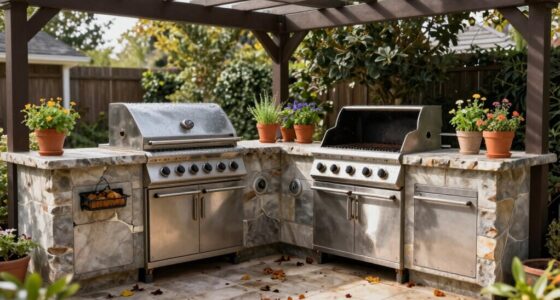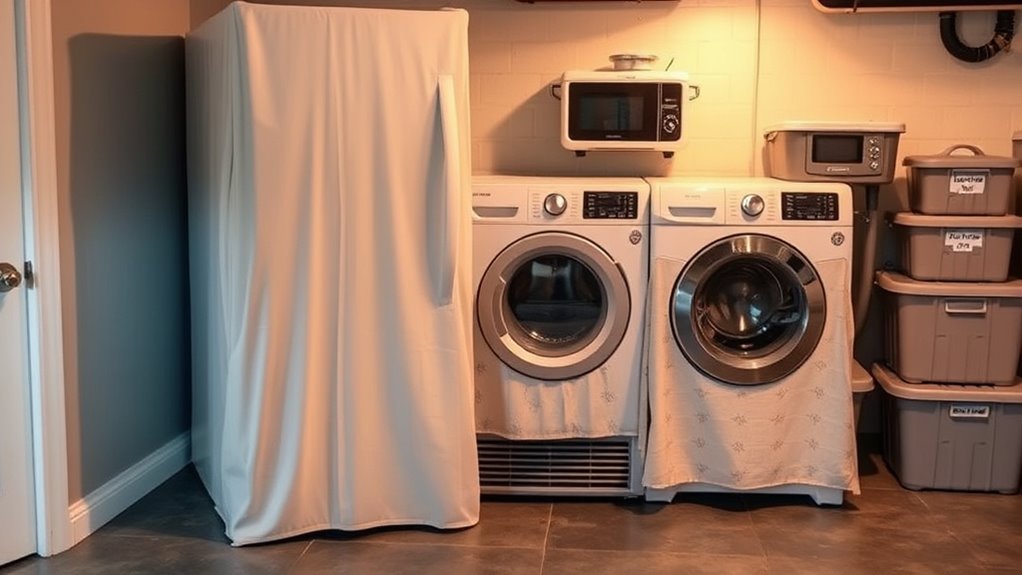

To properly cover and store appliances during the off-season, clean them thoroughly, removing dust, dirt, and food residues. Use breathable covers to prevent moisture buildup, and avoid plastic covers that trap humidity. Save space by elevating large appliances on pallets or blocks, and store them in a cool, dry, well-ventilated area. Disconnect and inspect periodically to guarantee they stay protected and in good condition, helping you get the most out of your appliances when you need them again.

Get garden gear delivered free with Prime
- Fast, free delivery on millions of items
- Prime Video, Amazon Music and more included
- Member-only deals all year
Key Takeaways
- Use breathable fabric covers to prevent moisture buildup and protect appliances from dust and pests.
- Ensure appliances are thoroughly cleaned, dried, and free of debris before covering and storing.
- Elevate large appliances on pallets or blocks to prevent water damage and humidity exposure.
- Store appliances in a cool, dry, and well-ventilated space away from extreme temperatures and high humidity.
- Regularly inspect covers and stored appliances for pests, moisture, and damage to maintain protection.
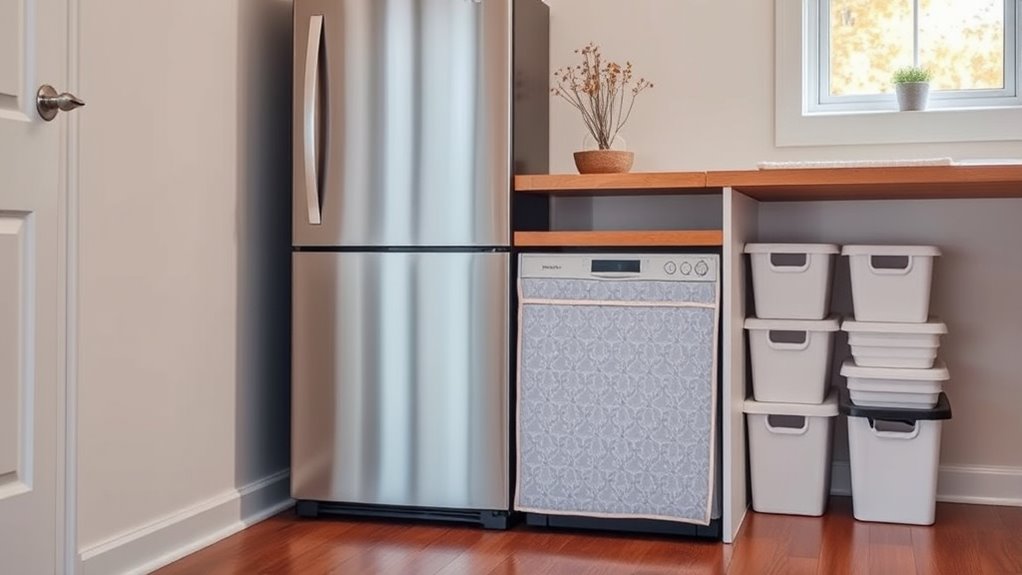
When the off-season arrives, properly covering and storing your appliances becomes vital to guarantee they stay in good condition. This process is a key part of appliance maintenance and seasonal preparation that saves you time and money when you need them again. Whether it’s a refrigerator, washer, dryer, or small kitchen gadgets, each item benefits from careful storage to prevent damage from dust, pests, and environmental factors. The goal is to keep them clean, dry, and protected so they function smoothly when you bring them back into use.
Start by thoroughly cleaning each appliance before storing it. Remove any food residues, dust, or dirt that could attract pests or cause corrosion over time. For appliances like refrigerators and freezers, defrost and dry out all compartments to prevent mold growth. Wipe down surfaces with a mild disinfectant and ensure vents and filters are clean. Doing this during seasonal preparation not only preserves the appliance but also makes maintenance easier when you’re ready to use them again.
Next, consider the right covering for each appliance. Use breathable covers made from fabric or materials designed for storage. Avoid plastic covers that trap moisture, which can cause mold or rust. Covering appliances helps prevent dust accumulation, keeps pests away, and shields them from sunlight, which can degrade plastics and finishes over time. For larger appliances, you can also place them on pallets or blocks to elevate them off the floor, protecting against humidity and potential water damage.
When storing appliances, choose a cool, dry, and well-ventilated space. Avoid areas prone to extreme temperature fluctuations or humidity, such as basements or attics, unless those spaces are climate-controlled. Proper storage conditions are essential for maintaining the integrity of interior components, especially for appliances with electrical parts or delicate finishes. If possible, disconnect and unplug appliances before storage to prevent electrical issues and reduce wear on cords and connections. Additionally, understanding appliance longevity can help you plan for maintenance and replacement schedules.
Finally, check on your stored appliances periodically during the off-season. Inspect covers, look for signs of pests, and ensure no moisture has accumulated. This ongoing seasonal preparation ensures your appliances stay in top shape, ready for use whenever the season changes. With proper appliance maintenance and thoughtful storage, you extend the lifespan of your appliances and guarantee they perform efficiently when you need them most. Taking these steps might require some effort upfront, but the peace of mind knowing your appliances are protected and ready to go makes it well worth it.
As an affiliate, we earn on qualifying purchases.
Frequently Asked Questions
Can Appliances Be Stored Outdoors Safely During Winter?
You shouldn’t store appliances outdoors during winter because exposure to cold, moisture, and snow can damage them. To protect outdoor appliances, use proper outdoor appliance protection like heavy-duty covers and make sure they’re clean and dry before storage. Follow winter storage tips by elevating your appliances off the ground and storing them in a sheltered, dry area if possible. This keeps them safe and ready for use when warmer weather returns.
How Often Should I Check Covered Appliances During Storage?
You should check covered appliances at least once a month during storage, balancing vigilance with patience. While the appliance remains protected, occasional inspections help catch issues like moisture buildup or pests early. Use these storage tips to maintain appliance maintenance—ensure covers stay secure and dry, and look for signs of damage. This rhythm keeps your appliances in good condition, ready for use when the season changes, saving you time and money later.
Are There Eco-Friendly Materials for Appliance Covers?
Yes, there are eco-friendly materials for appliance covers. You can choose biodegradable covers made from natural fibers or recycled materials, which help reduce environmental impact. These covers are durable and protect your appliances effectively while being kind to the planet. Look for products labeled as biodegradable or made from recycled contents, and you’ll enjoy a sustainable option that keeps your appliances safe during off-season storage.
What Are Common Mistakes When Storing Appliances Off-Season?
You often forget to label appliances, leave humidity unchecked, and neglect proper ventilation. These mistakes can lead to mold, corrosion, and damage. Always label your stored appliances, control humidity levels to prevent moisture buildup, and guarantee good airflow around them. Avoid rushing the process, skip inspection, or ignoring manufacturer guidelines. Doing these steps right helps preserve your appliances and keeps them in top shape for when you need them again.
How Do I Prevent Pest Infestations in Stored Appliances?
To prevent pest infestations in stored appliances, you should use pest-proof covers to block entry points. Additionally, place natural repellents like cedar chips or essential oils around the storage area. Keep the appliances clean and dry before covering them, and store them in a cool, dry place. Regularly check on your stored items to spot any signs of pests early and maintain a pest-free environment.
As an affiliate, we earn on qualifying purchases.
Conclusion
By properly covering and storing your appliances during the off-season, you’re giving them a peaceful retreat, like sending them on a well-deserved vacation. This simple act protects your investments, keeps them in top shape, and saves you money in the long run. Think of it as tucking away your appliances in a cozy, protective blanket, ensuring they’re ready to spring back to life when the season calls for it. Your appliances will thank you with years of reliable service.
As an affiliate, we earn on qualifying purchases.
appliance pest protection covers
As an affiliate, we earn on qualifying purchases.
As an affiliate, we earn on qualifying purchases.
Columbus Day / Indigenous Peoples' Day Picks
long weekend sales
As an affiliate, we earn on qualifying purchases.