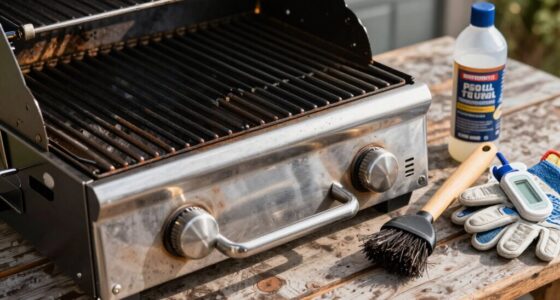
To protect your grill grates between uses, clean off food residue, grease, and ash with a stiff brush while still warm. After cleaning, apply a thin layer of high-smoke-point oil to prevent rust and create a seasoned surface. Cover your grill to shield it from moisture, and if storing long-term, remove the grates and keep them dry in a protected space. Regular maintenance keeps your grates in top shape; learn more to guarantee your grill stays perfect for every cookout.

Get garden gear delivered free with Prime
- Fast, free delivery on millions of items
- Prime Video, Amazon Music and more included
- Member-only deals all year
Key Takeaways
- Clean the grates thoroughly after each use to remove food residue and prevent buildup.
- Apply a thin, even layer of high-smoke-point oil to season and protect the surface.
- Cover the grill with a weather-resistant cover to shield from moisture and environmental elements.
- Store grates in a dry, protected area if removing for long-term storage.
- Re-season the grates periodically to maintain a durable, protective coating.

Keeping your grill grates in top condition between uses is essential for ensuring delicious, well-cooked meals. Proper grill cleaning is the first step in protecting your grates and maintaining their longevity. After each grilling session, you should remove any food residue, grease, and ash. Use a grill brush with stiff bristles to scrub the grate while it’s still warm—this makes it easier to dislodge stuck-on bits. For stubborn spots, a scraper or putty knife can help lift residue without damaging the surface. Once clean, wipe the grates with a damp cloth or paper towel to remove any remaining debris and prevent rust. Regular cleaning prevents buildup that can cause uneven cooking and flavor transfer, keeping your grill in optimal shape. Applying a seasoning process helps to establish a protective layer on the grates, further shielding them from moisture and corrosion.
But cleaning alone isn’t enough. To truly protect your grill grates and improve their performance, you need to focus on grate seasoning. Grate seasoning involves applying a thin layer of oil to the grates after cleaning and heating the grill. This process creates a natural non-stick surface and forms a protective barrier against moisture, rust, and corrosion. When you regularly season your grates, you help maintain their condition and promote even heat distribution, which results in better searing and flavor. Use oils with high smoke points, like vegetable, canola, or grapeseed oil, and apply a small amount with a cloth or paper towel. Heat the grill to high for about 15 minutes after oiling to allow the seasoning to set and bond with the metal. Over time, this creates a durable, seasoned surface that enhances your grilling experience.
Between uses, it’s also wise to cover your grill to shield it from the elements—rain, snow, or excessive humidity can accelerate rust formation. If you’re storing it for a long period, consider removing the grates and storing them in a dry, protected space. This extra step prevents unnecessary exposure to moisture, which can degrade the seasoned surface and lead to corrosion. You might also occasionally reapply a light coat of oil and heat the grates to maintain their seasoned layer. This routine keeps your grill in excellent condition, making it easier to clean and ensuring your meals turn out just right every time.
As an affiliate, we earn on qualifying purchases.
Frequently Asked Questions
How Often Should I Apply a Protective Coating to My Grill Grates?
You should apply a protective coating to your grill grates after every few uses, especially if you notice rust or buildup. Regular grill maintenance involves cleaning and reapplying protective coatings to keep the grates in top condition. This routine prevents rust and prolongs their lifespan. If you grill frequently, consider applying a fresh coat every 1-2 months, but always clean thoroughly beforehand for the best results.
Can I Use Household Products to Clean and Protect Grill Grates?
Yes, you can use household products for cleaning and protecting your grill grates. For cleaning, try using a mixture of baking soda and water or dish soap and warm water to scrub away grease and residue. DIY solutions like vinegar and baking soda work well for removing rust and buildup. Just make certain you rinse thoroughly and dry the grates afterward to prevent rust, and consider applying a light coat of cooking oil for protection.
What Are the Best Storage Options to Prevent Rust?
To prevent rust, you should store your grill accessories in a dry, covered space. Use storage containers with tight-fitting lids to keep moisture out, and consider wrapping your grates in foil or a cloth to add extra protection. Make sure the area is well-ventilated and free from humidity. Proper storage keeps your grill accessories in good condition, ensuring they last longer and stay rust-free between uses.
Is It Necessary to Remove Grease Buildup Before Protection?
Think of your grill as a trusted friend, and grease buildup as stubborn emotional baggage. Grease removal is essential before applying protective coatings; it clears the way for a fresh start. If you ignore it, rust and corrosion can take hold, like unresolved issues. By cleaning thoroughly, you guarantee your grill’s surface is ready to be shielded, preserving its spirit and performance for many more joyful barbecues ahead.
How Long Does Protective Treatment Typically Last?
Protective treatments for grill grates usually last about one to three seasons, depending on how often you use your grill and the type of treatment applied. For seasonal maintenance, reapply the treatment annually to keep your grates in top shape. Chemical alternatives can extend protection, but natural oils may require more frequent reapplication. Regular cleaning and re-treatment guarantee your grill stays protected longer and performs better each season.
As an affiliate, we earn on qualifying purchases.
Conclusion
By taking a few simple steps to protect your grill grates, you’re fundamentally giving your grill a shield to weather the storm of frequent use. Regular cleaning, oiling, and covering your grill keep the grates in top shape—like a knight’s armor guarding against rust and wear. Think of it as tending to a garden; with a little care, your grill will serve up delicious meals season after season, shining brighter than a diamond in the rough.
As an affiliate, we earn on qualifying purchases.
As an affiliate, we earn on qualifying purchases.
Halloween Picks
halloween
As an affiliate, we earn on qualifying purchases.