
To protect your wood elements, start by cleaning the surfaces thoroughly and applying a quality stain or sealant suited for outdoor use. Regularly inspect for damage, and reapply treatments every 1-3 years to maintain their barrier against UV rays, moisture, and dirt. Install covers, gutters, and ensure good ventilation to minimize environmental stress. Proper maintenance prolongs the wood’s life and keeps it looking great—discover more tips as you continue to care for your wood.

Get garden gear delivered free with Prime
- Fast, free delivery on millions of items
- Prime Video, Amazon Music and more included
- Member-only deals all year
Key Takeaways
- Select appropriate stain or sealant based on wood location and exposure to ensure optimal protection.
- Clean and prepare wood surfaces thoroughly before applying protective treatments for even coverage.
- Regularly inspect and reapply stain or sealant every 1-3 years to maintain a durable barrier.
- Use protective coverings, gutters, and proper ventilation to reduce environmental stressors on wood.
- Perform routine maintenance, including gentle cleaning and prompt repairs, to prolong wood’s lifespan and appearance.
Wood elements add natural beauty and warmth to any space, but they require proper protection to maintain their appearance and durability. Over time, environmental hazards such as moisture, sunlight, temperature fluctuations, and pests can take a toll on wood, causing fading, warping, cracking, or rotting. To keep your wood looking its best, you need to implement effective maintenance techniques that defend against these threats. Regular care not only preserves the aesthetic appeal but also extends the lifespan of your wood features.
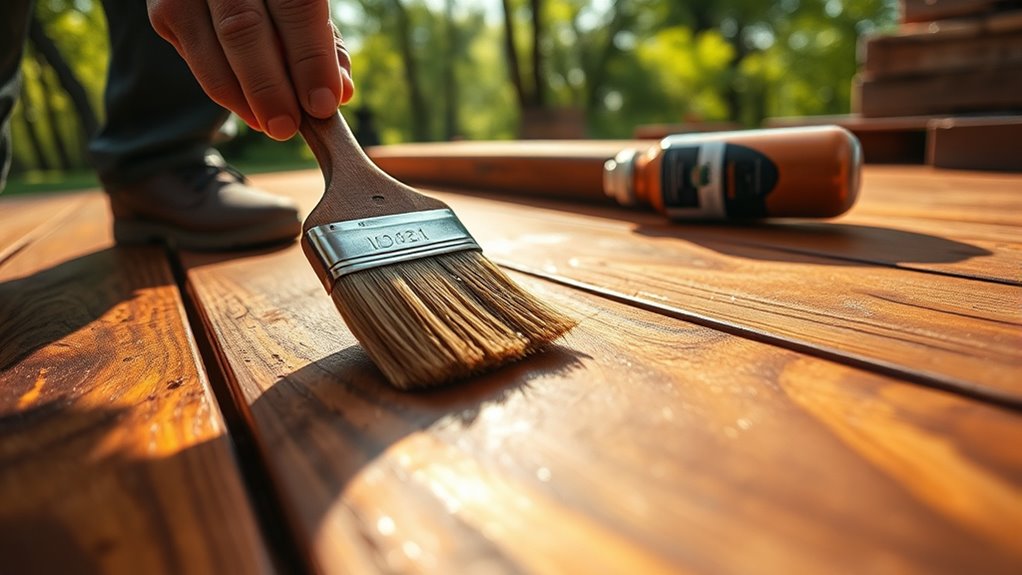
One of the most essential steps in protecting wood is applying a quality stain or sealant. Stains penetrate the wood, adding color and providing a barrier that fights against UV rays and moisture. This helps prevent fading and the damaging effects of environmental hazards. Sealants, on the other hand, create a protective layer on the surface, shielding the wood from water infiltration, dirt, and other pollutants. Choosing the right product depends on the wood’s location and use—exterior wood, for example, requires more durable, weather-resistant options. Applying these products correctly is key. You should clean the wood thoroughly before treatment, removing dirt, dust, and old finishes that may hinder adhesion. Use a brush or sprayer for even application, and ensure you cover all surfaces, paying special attention to edges and joints where water can seep in.
Applying quality stain or sealant is essential for protecting wood from UV rays, moisture, and environmental damage.
Consistent maintenance techniques are key to long-term protection. Regular inspections help you spot early signs of damage, such as cracks or discoloration, allowing you to address issues before they worsen. Reapplying stain or sealant periodically—typically every 1-3 years—restores the protective barrier and keeps the wood looking fresh. In addition, it’s wise to keep your wood clean by gently washing it with mild soap and water, especially after harsh weather. This prevents dirt and mold buildup that could accelerate decay. When cleaning, avoid using abrasive tools that might scratch or damage the surface, exposing the wood to environmental hazards more easily. Understanding signs of spoilage, such as mold or discoloration, can help you determine when your wood needs maintenance or replacement.
Furthermore, controlling the environment around your wood elements can notably enhance their longevity. Using protective coverings during severe weather, installing gutters to direct water away, and trimming nearby plants to prevent excess moisture can all reduce environmental stress. Proper ventilation around wooden structures also helps prevent mold and rot, especially in humid climates. Implementing these maintenance techniques and being proactive about environmental hazards keeps your wood elements resilient and visually appealing for years to come.
As an affiliate, we earn on qualifying purchases.
Frequently Asked Questions
How Often Should I Reapply Stain or Sealant on Wood Surfaces?
You should reapply stain or sealant on your wood surfaces every 2 to 3 years, depending on exposure and wear. For stain renewal, inspect for fading or peeling and touch up as needed. Sealant frequency varies with weather conditions; if you notice peeling or loss of water resistance, it’s time for a reapplication. Regularly maintaining these applications helps preserve your wood’s appearance and durability.
Can I Use Waterproofing Products on All Types of Wood?
You can’t use waterproofing products on all types of wood because some woods, like cedar or redwood, have natural oils that resist water. For other woods, waterproof barriers form a protective layer over the wood grain, preventing moisture from penetrating and causing damage. Always choose a waterproofing product suitable for your specific wood type, and follow the manufacturer’s instructions to guarantee effective protection without harming the wood’s natural appearance.
What Are the Best Cleaning Methods for Maintaining Stained Wood?
Think of your stained wood as a cherished storybook. To keep it vibrant, use gentle cleaning techniques like a soft brush or damp cloth to remove dirt and dust. For stain removal, avoid harsh chemicals; instead, try a mild soap solution. Regular maintenance prevents grime from seeping into the pages, ensuring your wood’s story remains beautiful and enduring for years to come.
How Do Temperature and Humidity Affect Wood Sealing?
Temperature variations and moisture fluctuations directly impact wood sealing by causing expansion and contraction, which can create cracks or gaps. When temperatures rise or fall sharply, the sealant may become less effective, leading to potential damage. High humidity increases moisture levels, making it harder for the sealant to adhere properly. To guarantee ideal protection, apply sealant during stable temperature and humidity conditions, and monitor environmental changes regularly.
Are There Eco-Friendly Options for Wood Protection and Maintenance?
Yes, you can choose eco-friendly preservatives and biodegradable sealants to protect and maintain wood. These options reduce environmental impact while effectively safeguarding your wood from moisture, UV rays, and pests. Look for products labeled as biodegradable or eco-conscious, and verify they are suitable for your specific wood type. By switching to these environmentally friendly solutions, you help preserve the planet while keeping your wood in excellent condition.
As an affiliate, we earn on qualifying purchases.
Conclusion
By regularly staining, sealing, and maintaining your wood elements, you guarantee they stay beautiful and durable for years. Some might think it’s too much effort, but the truth is, a little upkeep now saves you costly repairs later. With simple routine care, you’ll enjoy the natural warmth of your wood features without worry. So, don’t hesitate—taking these steps today keeps your wood looking great and lasting longer, making your space truly shine.
As an affiliate, we earn on qualifying purchases.
As an affiliate, we earn on qualifying purchases.
Halloween Picks
halloween
As an affiliate, we earn on qualifying purchases.