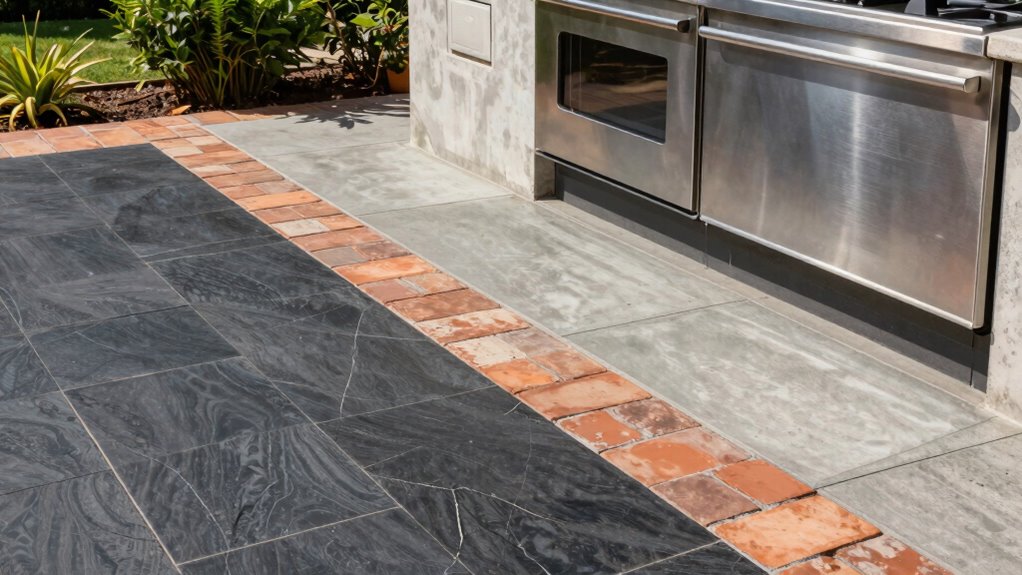

For outdoor kitchens, durable options like concrete create custom, long-lasting surfaces that resist cracking and staining when sealed properly. Natural stone pavers, such as granite or slate, withstand temperature changes and heavy foot traffic. Porcelain tiles offer high moisture and weather resistance, making them a smart choice for longevity. Composite decking is also popular for its low maintenance and resistance to rot and insects. To find out which material suits your space best, keep exploring the details ahead.
Key Takeaways
- Concrete with modern high-durability mixes and sealants resists cracking, staining, and weathering in outdoor kitchen environments.
- Natural stone like slate and granite offers excellent heat and moisture resistance, maintaining stability under heavy use.
- Porcelain tiles are highly durable, moisture-resistant, and slip-proof, making them ideal for outdoor cooking areas.
- Composite decking provides low maintenance, rot resistance, and withstands outdoor elements while mimicking natural materials.
- Durability testing ensures selected materials resist cracking, fading, and shifting, ensuring long-lasting outdoor kitchen flooring.
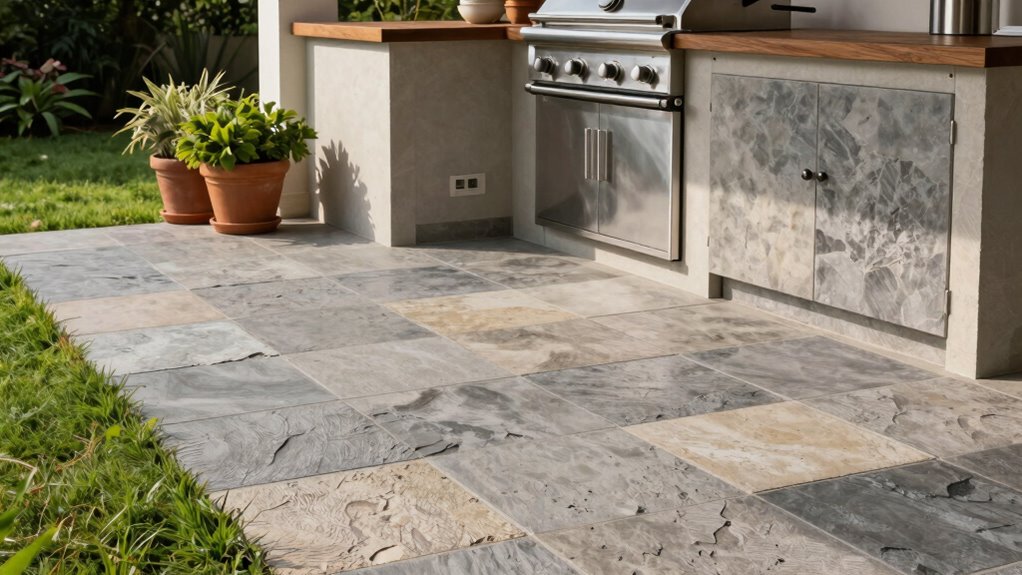
When it comes to outdoor spaces, choosing the right flooring can dramatically enhance your yard’s functionality and appearance. If you’re designing an outdoor kitchen or a cooking area, the flooring you select needs to stand up to more than just foot traffic; it must endure spills, heat, and frequent use while still complementing your garden aesthetics. Durability testing is essential in this process—knowing how materials hold up under various conditions helps you pick flooring that won’t crack, fade, or warp over time.
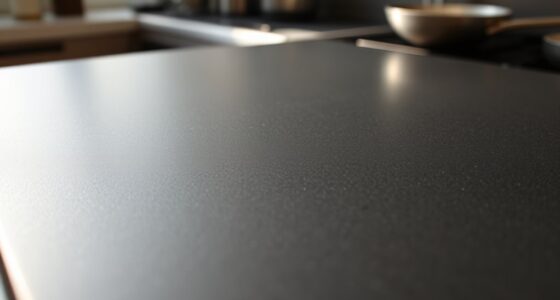
For outdoor kitchens, concrete is a popular choice because of its strength and versatility. It can be poured in custom shapes and finished in various textures to match your garden aesthetics. Modern concrete mixes are highly durable, especially when tested for resistance to cracking and staining. Applying sealants further enhances its longevity and makes cleaning easier, which is vital when dealing with food spills and outdoor messes.
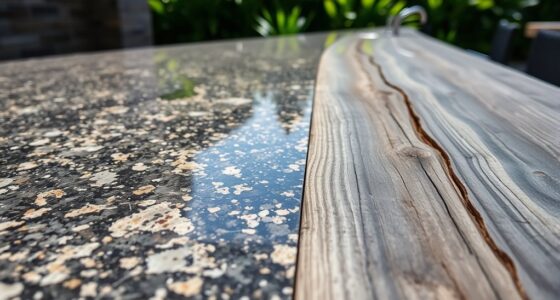
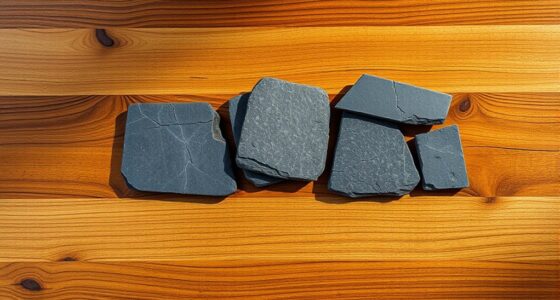
Pavers or natural stone also make excellent options, offering both durability and style. When selecting pavers, you should consider durability testing results—look for materials that resist shifting and cracking, especially in regions with temperature fluctuations. Natural stone, like slate or granite, is naturally resistant to heat and moisture, making it ideal for outdoor kitchens. Its textured surface can add visual interest to your garden aesthetics while providing a sturdy surface that handles heavy appliances and foot traffic without significant wear.
Tile is another option, especially porcelain tile, which ranks high in durability testing. It’s resistant to moisture, staining, and temperature changes, making it suitable for outdoor cooking areas. Choose tiles with textured surfaces to avoid slipping when the surface is wet, and ensure they’re rated for outdoor use to prevent cracking or warping.
Composite decking is gaining popularity for outdoor kitchens because of its low maintenance and durability. It’s resistant to rot, insects, and moisture, which are common concerns in outdoor environments. Plus, modern composite materials are designed with garden aesthetics in mind, often mimicking the natural look of wood or stone, adding to the visual appeal of your space.
outdoor concrete flooring for kitchens
As an affiliate, we earn on qualifying purchases.
As an affiliate, we earn on qualifying purchases.
Frequently Asked Questions
How Does Outdoor Flooring Handle Spills and Stains?
Outdoor flooring with spill resistance and stain prevention features handles spills and stains well. You just need to wipe up messes quickly to prevent any lasting damage. Materials like porcelain tiles, sealed concrete, or composite decking are designed to resist moisture and stains, making cleanup easier. Regular maintenance, such as cleaning with mild soap and water, keeps your outdoor surfaces looking their best and extends their lifespan in busy kitchen areas.
Which Flooring Options Are Easiest to Clean and Maintain?
You’ll find that concrete and porcelain tile are the easiest outdoor flooring options to clean and maintain, thanks to their durability considerations and resistance to stains. They also offer a variety of aesthetic options, allowing you to choose styles that match your outdoor kitchen’s look. Regular sweeping and occasional washing keep these materials looking fresh without much effort, making them practical choices for a low-maintenance outdoor kitchen area.
Are There Eco-Friendly Outdoor Flooring Choices Available?
You might think eco-friendly outdoor flooring choices are limited, but many sustainable options prove otherwise. Materials like reclaimed wood, recycled composite decking, and bamboo are durable and environmentally conscious. These eco-friendly materials reduce waste and carbon footprint, making them perfect for outdoor kitchens. By choosing sustainable options, you not only enjoy stylish, long-lasting flooring, but you also contribute to environmental preservation. So, yes, eco-friendly outdoor flooring choices are readily available and highly effective.
How Does Outdoor Flooring Resist Weather-Related Damage?
Outdoor flooring resists weather-related damage through the use of weatherproof materials like composite decking, natural stone, or porcelain tiles. These materials undergo durability testing to guarantee they withstand rain, snow, and UV exposure. You’ll want to choose options specifically designed for outdoor use, as they resist cracking, fading, and warping over time. Regular maintenance further extends their lifespan, keeping your outdoor space looking great regardless of the weather.
Can Outdoor Flooring Be Installed Over Existing Surfaces?
Yes, you can install outdoor flooring over existing surfaces, but it comes with installation challenges. You need to guarantee the underlying surface is stable, level, and clean to avoid future issues. Aesthetic considerations are also important—you want the new flooring to complement your space and look seamless. Consulting a professional can help you address these challenges and achieve a smooth, durable finish that enhances your outdoor kitchen area’s appeal.
natural stone pavers for outdoor kitchen
As an affiliate, we earn on qualifying purchases.
As an affiliate, we earn on qualifying purchases.
Conclusion
Choosing the right outdoor flooring is like planting a sturdy tree—you want something that will stand tall through seasons and time. Whether you opt for durable tiles, resilient concrete, or natural stone, each choice shapes your outdoor kitchen into a lasting sanctuary. Remember, the foundation you set today is the backbone of your outdoor culinary haven tomorrow. Invest wisely, and your outdoor space will flourish like a well-tended garden, enduring for years to come.
porcelain outdoor tiles for patio
As an affiliate, we earn on qualifying purchases.
As an affiliate, we earn on qualifying purchases.
composite decking for outdoor kitchen
As an affiliate, we earn on qualifying purchases.
As an affiliate, we earn on qualifying purchases.