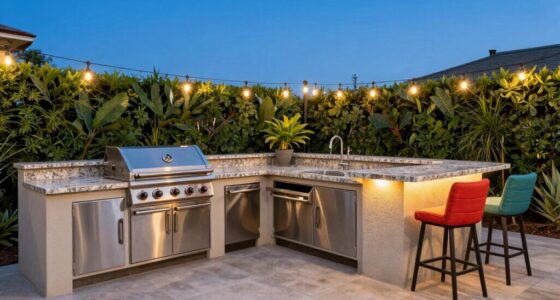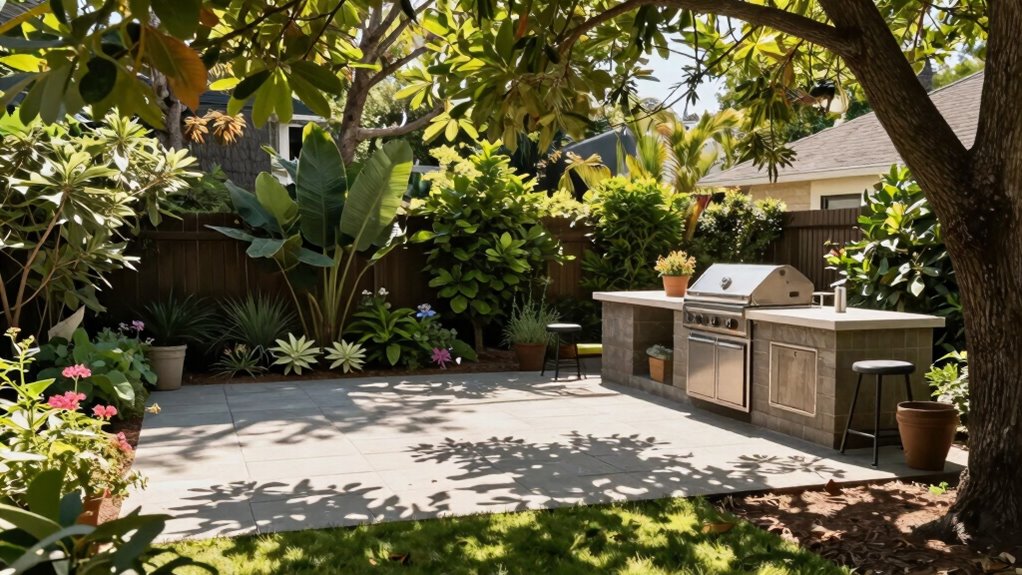

To choose the right spot for your outdoor kitchen, consider blending it with your landscape’s natural features for a seamless look. Position it near your indoor kitchen for convenience but far enough to avoid smoke and odors. Guarantee easy access to utilities like water, gas, and electricity, and pick a location with good sunlight and shade. Use privacy screens or nearby trees for seclusion. Keep these tips in mind to create a functional, attractive outdoor space—more details await to guide your perfect setup.

Get garden gear delivered free with Prime
- Fast, free delivery on millions of items
- Prime Video, Amazon Music and more included
- Member-only deals all year
Key Takeaways
- Select a location near the indoor kitchen for convenience while maintaining distance to prevent odors.
- Ensure the area blends with existing landscape features and natural elements for aesthetic harmony.
- Position the outdoor kitchen in a secluded spot using screens or foliage for privacy.
- Confirm easy access to utilities like water, gas, and electricity with minimal landscape disruption.
- Maximize sun exposure and shade to enhance usability throughout different times of the day.
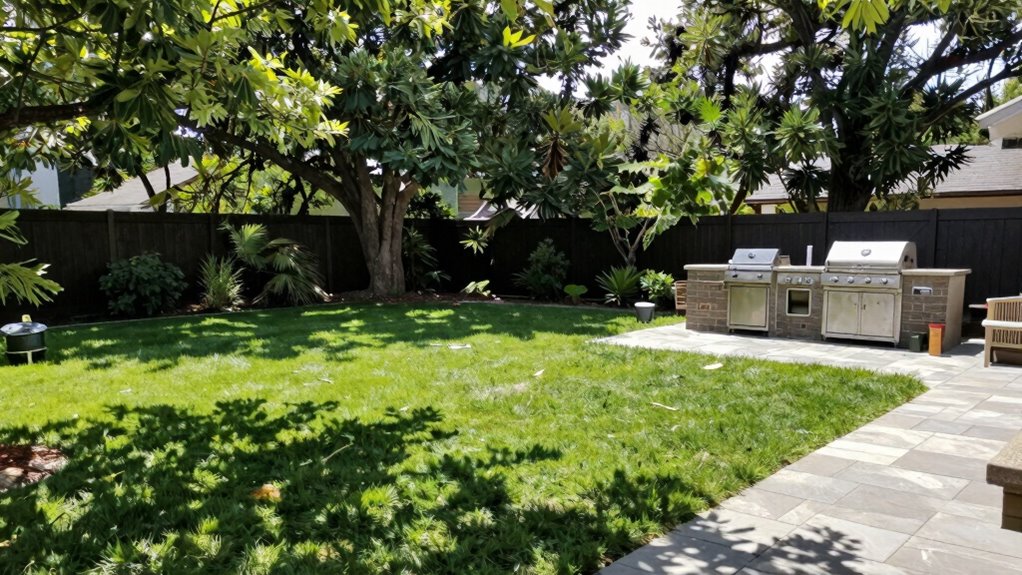
Selecting the perfect location for your outdoor kitchen is crucial to ensuring it’s both functional and enjoyable. As you plan your space, consider how well it integrates with your existing landscape. You want the kitchen to feel like a natural extension of your yard, blending seamlessly with the surroundings. Look for an area that complements your landscaping, whether that’s lush lawns, garden beds, or mature trees. This landscape integration not only enhances visual appeal but can also provide natural shading and wind protection, making your outdoor cooking experience more comfortable.
Next, focus on privacy considerations. You’ll likely want to cook and entertain without feeling exposed to neighbors or passersby. Positioning your outdoor kitchen in a secluded corner or behind existing landscape features like bushes, fencing, or walls can create a more intimate setting. If your yard is open and exposed, consider adding privacy screens or planting tall shrubs to block views and reduce noise. Privacy isn’t just about seclusion; it’s about creating a space where you feel relaxed and uninhibited, so think about how your outdoor kitchen will be used and who will be present.
Placement also depends on the practical aspects of your yard. Think about proximity to your indoor kitchen: you’ll want easy access without it feeling too crammed or isolated. Ideally, your outdoor kitchen should be close enough to your house for convenience but far enough to avoid smoke or cooking odors infiltrating your indoor spaces. Consider the path from your home to the outdoor area, making sure it’s flat and unobstructed for easy movement. Also, keep in mind the location of utilities like water, gas, and electricity, which are essential for your appliances and should be easily accessible. Additionally, understanding natural light and shade can influence your choice, ensuring your outdoor cooking area remains comfortable throughout the day. Incorporating sun exposure and shade considerations can help you find a spot that maximizes comfort and usability, especially during different times of day. Furthermore, assessing the natural features of your yard can help you select a location that requires minimal alteration, reducing overall costs and preserving your landscape’s integrity. Considering existing landscape elements can also help you create a cohesive, aesthetically pleasing outdoor space that complements your home.
As an affiliate, we earn on qualifying purchases.
Frequently Asked Questions
How Much Space Is Needed for a Functional Outdoor Kitchen?
You’ll need at least 10 by 10 feet for a functional outdoor kitchen, but more space offers better comfort. Consider plant placement to create natural shade and privacy, and guarantee you have ample room for lighting options that enhance evening usability. Allow space for appliances, prep areas, and seating. Planning for enough room ensures smooth cooking, socializing, and easy movement without feeling cramped.
What Are the Best Materials for Outdoor Kitchen Countertops?
You’ll want durable outdoor finish options like granite, concrete, or quartz to withstand weather and splatters. Don’t forget maintenance considerations—some surfaces need sealing, others resist stains naturally. If you prefer fuss-free, go for quartz or certain engineered stones. But if you enjoy a bit of upkeep, concrete can be customized and cleaned easily. Choose wisely, because your outdoor kitchen countertops should be as resilient as your grilling skills!
How Do I Ensure Proper Drainage in My Outdoor Kitchen Area?
To guarantee proper drainage in your outdoor kitchen area, you need to implement effective drainage solutions and proper slope grading. You should grade the ground to slope away from your kitchen, directing water toward designated drainage points or drainage systems. Installing drainage channels or gravel bases can help prevent water pooling. Regularly inspect and maintain these systems to ensure they remain effective, especially after heavy rain or seasonal changes.
Can I Incorporate a Fireplace or Fire Pit Nearby?
Yes, you can incorporate a fireplace or fire pit nearby, but you should pay attention to fireplace placement to guarantee safety and convenience. Keep the fire pit a safe distance from your outdoor kitchen and any structures, following fire pit safety guidelines. Choose a spot with good airflow and minimal wind to prevent smoke from drifting toward cooking or seating areas. Proper placement ensures safety while creating a cozy, inviting outdoor space.
What Are Local Building Codes or Permits Required?
You need to check your local building codes and zoning restrictions before starting your outdoor kitchen. Most areas require a permit, so you’ll want to research the permit application process through your city or county building department. Contact them early to understand specific requirements, which might include setbacks, distance from property lines, or fire safety measures. Ensuring compliance helps prevent fines or delays during your project.
As an affiliate, we earn on qualifying purchases.
Conclusion
By selecting the perfect spot for your outdoor kitchen, you’re not just creating a space—you’re designing the heart of your backyard paradise. Trust your instincts, consider practicality, and think about how the location will amplify your outdoor experience. With the right spot, your yard transforms into a culinary haven where memories are made, friends gather, and every meal feels like a feast in the great outdoors. It’s your ticket to outdoor living greatness—so choose wisely!
outdoor kitchen utility hookup kit
As an affiliate, we earn on qualifying purchases.
As an affiliate, we earn on qualifying purchases.
outdoor kitchen lighting fixtures
As an affiliate, we earn on qualifying purchases.
As an affiliate, we earn on qualifying purchases.
Halloween Picks
halloween
As an affiliate, we earn on qualifying purchases.