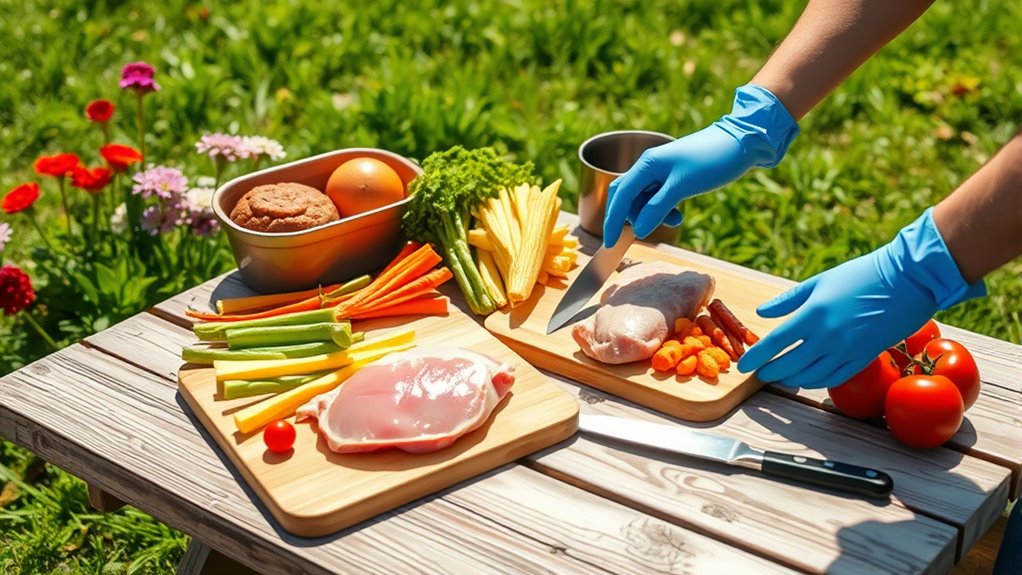

To avoid cross-contamination outdoors, always keep raw foods separate from cooked, using different utensils, plates, and containers. Store raw meats on the lowest shelf or in sealed containers to prevent juices from dripping onto other foods. Wash your hands thoroughly after handling raw meats and make certain all surfaces and tools are cleaned regularly. Maintain proper temperatures by keeping raw items cold and cooked foods hot, and follow hygiene practices closely—stay tuned to learn even more effective tips.

Get garden gear delivered free — and shop member deals
- Fast, free delivery on millions of items
- Access to Prime Big Deal Days deals on October 6–7
- Prime Video, Amazon Music and more included
Key Takeaways
- Use separate clean utensils and plates for raw and cooked foods outdoors.
- Wash hands thoroughly after handling raw meats before touching cooked foods.
- Store raw meats below cooked foods in sealed containers to prevent juices from dripping.
- Keep raw meats and cooked foods at proper temperatures to inhibit bacterial growth.
- Regularly sanitize surfaces, containers, and utensils to reduce cross-contact risks outdoors.

When handling raw and cooked foods outdoors, it’s essential to prevent cross-contamination to keep everyone safe. One of the best ways to do this is by practicing proper marinating safety. Always marinate raw meats in the refrigerator, never at room temperature. If you plan to use some of the marinade as a sauce later, set aside a portion before adding raw meat. Avoid reusing marinade that has touched raw meat unless you boil it thoroughly to kill any bacteria. Using separate containers for marinating raw foods helps prevent accidental spills or contact with cooked items, reducing the risk of cross-contamination. Additionally, selecting appropriate containers that are easy to clean and do not absorb odors or bacteria is vital for maintaining food safety outdoors.
Storage techniques are equally crucial when handling food outside. Keep raw meats, seafood, and poultry in sealed containers or tightly wrapped in plastic wrap, and store them on the lowest shelf of your cooler or cooler bag. This prevents juices from dripping onto ready-to-eat foods, which could cause foodborne illnesses. Cooked foods should be stored separately from raw items, ideally in clean containers that can be sealed to prevent contamination from insects, dirt, or other outdoor elements. When you’re not actively cooking, keep these items chilled or hot as needed; bacteria multiply rapidly between 40°F and 140°F, so maintaining proper temperatures is critical.
It’s also important to think about how you arrange your food storage. Use stackable, non-porous containers to keep raw and cooked foods apart, and label them if needed to avoid confusion. When you’re ready to serve, use clean utensils and plates—never reuse the same ones for raw and cooked foods. This simple step greatly reduces the chance of transferring bacteria from raw meat to cooked dishes. Wash your hands thoroughly with soap and water after handling raw meats, especially before touching cooked foods or utensils. Remember to practice good hygiene to minimize contamination risks in outdoor settings.
As an affiliate, we earn on qualifying purchases.
Frequently Asked Questions
Can I Reuse Marinade From Raw Meat on Cooked Foods?
You should avoid reusing marinade from raw meat on cooked foods to prevent cross-contamination. Marinade used on raw meat contains bacteria that can transfer to cooked food if reused. To prevent this, set aside a portion of the marinade before adding raw meat, or boil the marinade thoroughly if you plan to reuse it. This practice guarantees cross contamination prevention and keeps your outdoor cooking safe and delicious.
What’s the Best Way to Clean Outdoor Utensils Between Uses?
To clean outdoor utensils between uses, start by thoroughly scrubbing cleaning brushes with hot, soapy water. Rinse utensils with clean water to remove debris. Then, sanitize surfaces and utensils using a food-safe sanitizing solution or a mixture of bleach and water. Make sure to let everything air dry completely before using again. This process helps prevent cross-contamination and keeps your outdoor cooking safe.
How Long Can Raw Meats Sit Out Before Safety Concerns Arise?
Raw meats shouldn’t sit out longer than two hours; if the temperature hits 90°F or higher, cut that time to just an hour. Bacteria grow rapidly in the temperature danger zone, increasing your risk of foodborne illness. Keep raw meats chilled or on ice, and avoid leaving them out. Stay vigilant, stay safe, and always prioritize proper storage to prevent bacterial growth and guarantee your outdoor cookout stays healthy and enjoyable.
Are Disposable Gloves Necessary When Handling Raw Foods Outdoors?
You don’t necessarily need disposable gloves when handling raw foods outdoors, but practicing good glove hygiene is essential if you choose to use them. Wash your hands thoroughly before and after glove use, and change gloves frequently to prevent cross-contamination. If gloves aren’t available, use alternatives like clean utensils or utensils dedicated solely to raw foods. Always make certain your hands are clean, and avoid touching cooked foods with raw meat-handling tools.
How Should I Store Leftovers Safely During Outdoor Activities?
Think of leftovers as precious treasures that need protection. You should store them in airtight containers, keeping food storage organized and safe. Use coolers with ice packs to maintain proper temperature control and prevent bacteria growth. Keep leftovers chilled below 40°F, and consume within two hours. This way, your outdoor meal stays fresh and safe, just like a treasure chest guarding its valuable contents.
reusable food-safe plastic containers
As an affiliate, we earn on qualifying purchases.
As an affiliate, we earn on qualifying purchases.
Conclusion
By keeping raw and cooked foods separate, you’re like a skilled conductor preventing a discordant symphony. Think of each food as an instrument that needs its own space to shine. Always use different utensils and plates, and wash your hands thoroughly. This simple act prevents bacteria at bay and ensures your outdoor feast remains a delicious harmony. Remember, careful handling is the key to a safe and enjoyable meal under the open sky.
outdoor cooler with sealed compartments
As an affiliate, we earn on qualifying purchases.
As an affiliate, we earn on qualifying purchases.
food-grade marinating containers
As an affiliate, we earn on qualifying purchases.
As an affiliate, we earn on qualifying purchases.
Fall Picks
fall essentials
As an affiliate, we earn on qualifying purchases.