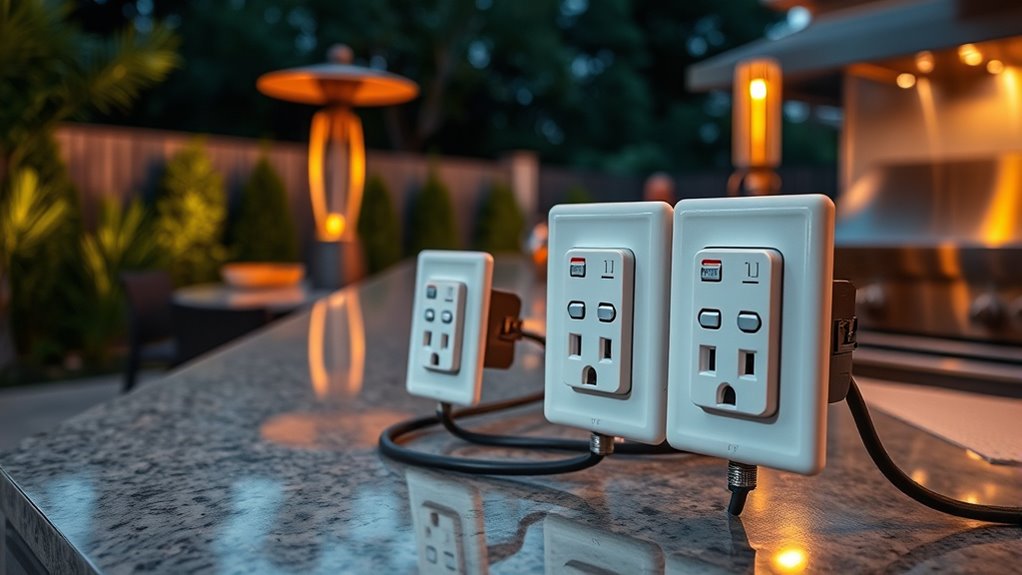

To ensure electrical safety in your outdoor kitchen, it’s vital to install GFCI outlets and proper circuits. GFCIs quickly cut off power if they detect imbalance, preventing shocks, especially near water sources like sinks and grills. Make certain all outlets are GFCI-protected and outlets are weatherproof. Using correctly rated wiring and grounding appliances also keeps the area safe. Keep these tips in mind to protect yourself and your space—there’s more to know for a secure outdoor setup.

Get garden gear delivered free with Prime
- Fast, free delivery on millions of items
- Prime Video, Amazon Music and more included
- Member-only deals all year
Key Takeaways
- Install GFCI outlets in outdoor kitchens to protect against electrical shocks near water sources like sinks and grills.
- Regularly test GFCI outlets to ensure proper functioning and safety.
- Use weather-resistant wiring and conduit to shield circuits from moisture and environmental damage.
- Properly ground all outdoor appliances and ensure circuits are correctly wired to prevent electrical hazards.
- Conduct routine safety inspections to identify and address wiring issues, maintaining a safe outdoor electrical system.

Creating an outdoor kitchen offers convenience and enjoyment, but it also introduces unique electrical safety risks. When you’re setting up your space, it’s essential to be aware of potential hazards like lighting issues and appliance grounding problems. Lighting hazards are common because outdoor environments can be unpredictable, with weather and moisture increasing the risk of electrical shock. If your lighting isn’t properly installed or maintained, it could lead to sparks, shorts, or even fires. Make sure all outdoor fixtures are rated for outdoor use and are installed with grounded wiring to prevent accidental shocks. Proper placement and sealed fixtures help mitigate these risks, especially during rain or high humidity.
Another critical safety consideration is appliance grounding. All outdoor appliances—grills, refrigerators, or sinks—must be correctly grounded to guarantee safe operation. Grounding provides a safe pathway for electricity to travel back to the ground if a fault occurs, reducing the risk of shock or fire. If an appliance isn’t properly grounded, touching it during a fault could result in a dangerous electric shock. Verify that all your appliances are connected to grounded outlets and that the outlets themselves are properly grounded. Using grounded extension cords, when necessary, is equally important to prevent potential electrical hazards.
In outdoor kitchens, GFCI (Ground Fault Circuit Interrupter) outlets are essential. These outlets are designed to detect imbalance in electrical current and shut off power immediately if a fault is detected, protecting you from shocks. Installing GFCI outlets in all outdoor circuit points, especially near sinks, grills, or other water sources, is a vital safety step. These outlets should be tested regularly to ensure they’re functioning properly. Remember, standard indoor outlets may not provide the same level of protection outdoors, so consult an electrician to install GFCI outlets where needed.
Beyond installing the right outlets, guarantee your wiring is up to code and protected from the elements. Use weather-resistant cables and conduit to shield wiring from moisture and physical damage. Keep electrical connections off the ground and away from water sources as much as possible. Regular inspections and maintenance also help spot potential issues early, like frayed wires or loose connections, which could pose safety hazards. By paying close attention to lighting hazards, appliance grounding, and utilizing GFCI outlets, you create a safer outdoor environment where you can enjoy your kitchen without worry. Safety isn’t just about preventing accidents; it’s about guaranteeing your outdoor cooking experience remains fun and stress-free.
Products Worth Considering

Rachio 3 Smart Sprinkler In-Ground WiFi Irrigation Controller, 8-Zone

Orbit B-hyve XR Smart Indoor/Outdoor Sprinkler Controller, 16 Zones
Orbit B-hyve XR 8-Zone Indoor/Outdoor Smart Sprinkler Controller
As an affiliate, we earn on qualifying purchases.
Frequently Asked Questions
How Often Should GFCI Outlets Be Tested for Safety?
You should test GFCI outlets for safety maintenance at least once a month. Regular testing guarantees they function properly and can protect you from electrical shocks. To test, press the “test” button and confirm the outlet trips, then press “reset” to restore power. Consistent testing helps keep your outdoor kitchen safe and prevents potential hazards, making it a simple but essential part of your safety routine.
Can I Install GFCI Outlets Myself or Hire a Professional?
You can install GFCI outlets yourself, but don’t underestimate the risks involved. DIY safety is essential—if you’re unfamiliar with electrical work, mistakes could be dangerous. Check your local licensing requirements—many areas mandate licensed electricians for outdoor electrical installations. While a confident DIYer might handle simple tasks, hiring a professional ensures code compliance, safety, and peace of mind. When in doubt, it’s smarter to call in the experts.
Are There Specific Outdoor Circuit Breaker Requirements for Kitchens?
Yes, there are specific outdoor circuit breaker requirements for kitchens. You must follow outdoor electrical codes and adhere to circuit breaker standards that guarantee safety and proper functionality. These include using weather-resistant, ground-fault circuit interrupter (GFCI) protected breakers designed for outdoor use. Installing the correct circuit breaker helps prevent electrical hazards, so make sure your setup complies with local codes or consider hiring a professional electrician to ensure everything is installed correctly and safely.
What Weather Conditions Can Affect GFCI Outlet Performance?
Imagine a thunderstorm pouring down like a waterfall—moisture intrusion and fierce temperature fluctuations can severely impact GFCI outlet performance. Excessive moisture causes corrosion and shorts, while rapid temperature swings can trigger false trips or failure. You need to guarantee your outdoor GFCI outlets are weatherproofed and protected from these harsh conditions, so they keep you safe and functioning, no matter if it’s pouring rain or scorching sun.
How Do I Identify if My Outdoor Wiring Is Properly Grounded?
To identify if your outdoor wiring is properly grounded, start with a grounding inspection using a multimeter or receptacle tester. Verify the wiring connections, confirming the ground wire is securely attached to the grounding system. Look for clear, intact grounding conductors and proper bonding. If you’re unsure, consult a licensed electrician for a professional wiring verification to ensure safety and code compliance.
Conclusion
Think of GFCI outlets and dedicated circuits as the sturdy anchors of your outdoor kitchen’s safety ship. They keep electrical hazards at bay, guiding you through your culinary adventures without worry. When you prioritize proper wiring and safety measures, you’re planting seeds of peace of mind that will grow into a thriving, worry-free outdoor cooking space. Remember, safety isn’t just a rule—it’s the foundation that turns your outdoor kitchen into a trusted haven for every cookout.