
To seal your countertops and surfaces against moisture, start by thoroughly cleaning with a gentle, non-abrasive cleaner and drying the area completely. Choose the right sealer for your material—such as a penetrating sealer for natural stone—and follow the manufacturer’s instructions carefully. Apply the sealer evenly with a soft cloth, focusing on edges and corners. After sealing, allow it to cure fully and maintain with gentle cleaning. Continue exploring to discover more tips for long-lasting protection.

Get garden gear delivered free with Prime
- Fast, free delivery on millions of items
- Prime Video, Amazon Music and more included
- Member-only deals all year
Key Takeaways
- Clean surfaces thoroughly with a gentle, non-abrasive cleaner before sealing to ensure proper adhesion.
- Select the appropriate penetrating sealer based on your surface material, such as natural stone or engineered surfaces.
- Apply the sealer evenly in small sections, focusing on edges and corners to prevent moisture seepage.
- Allow at least 24 hours for the sealant to cure fully, avoiding water exposure during this period.
- Maintain the sealed surface with regular, gentle cleaning and reapply sealant as needed, especially in high-moisture areas.
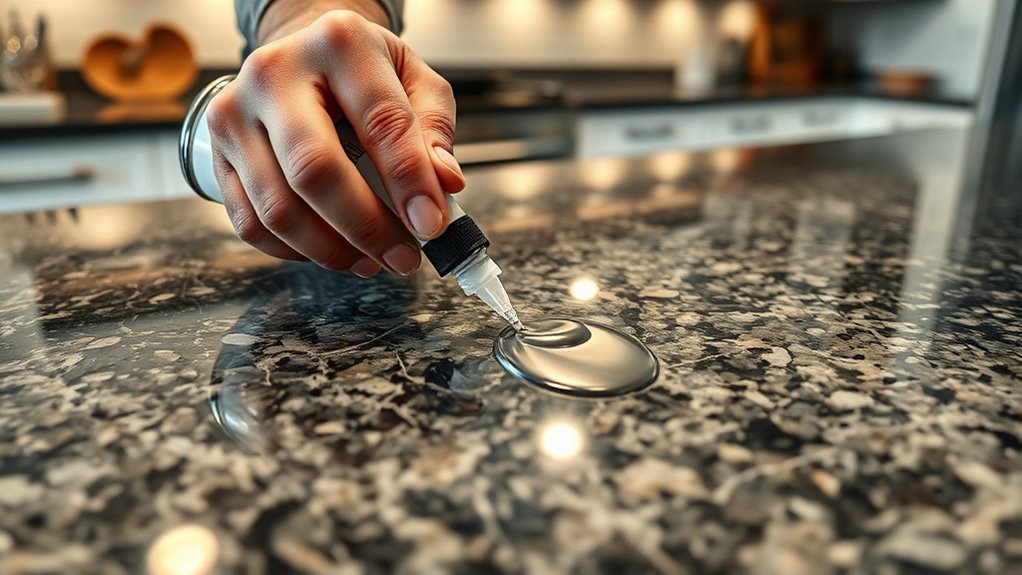
Are your countertops and surfaces prepared to withstand daily wear and tear? If not, it’s time to consider sealing them properly. Sealing creates a protective barrier that prevents moisture from seeping into the material, which can cause stains, warping, and damage over time. The first step is guaranteeing you have the right cleaning tools to prep your surfaces. Use a gentle, non-abrasive cleaner and a soft cloth or sponge to thoroughly remove dirt, grease, and residue. This step is vital because any leftover debris can compromise the effectiveness of the sealant. Once your surfaces are spotless and dry, you’re ready to apply sealing products.
Choosing the right sealing product depends on the material of your countertops or surfaces. For natural stone like granite or marble, opt for a high-quality penetrating sealer designed specifically for porous stones. For quartz or engineered surfaces, check if the manufacturer recommends a particular sealing product, as some materials are less porous and may not require sealing as frequently. When applying sealing products, follow the manufacturer’s instructions carefully. Typically, you’ll pour a small amount of the sealer onto the surface and spread it evenly with a clean, lint-free cloth or applicator pad. Be thorough, paying special attention to edges and corners where moisture often seeps in. Work in small sections to guarantee even coverage and avoid missed spots.
After applying the sealer, it’s essential to give it time to set and cure. Most products require at least 24 hours before exposure to water or heavy use. During this curing period, avoid using harsh cleaning tools or applying additional cleaning products that might interfere with the sealant. Regular maintenance is key to prolonging the lifespan of your sealing job. Use soft, non-abrasive cleaning tools and mild cleaners that won’t strip the sealant over time. Periodic reapplication may be necessary, especially in high-traffic areas or on surfaces exposed to frequent moisture.
As an affiliate, we earn on qualifying purchases.
Frequently Asked Questions
How Often Should I Reseal My Countertops?
You should reseal your countertops every 1-3 years, depending on sealing maintenance and usage. Regularly check for signs of wear or water absorption to know when DIY resealing is needed. If water no longer beads on the surface, it’s time to reseal. Proper maintenance guarantees your countertops stay protected from moisture, stains, and damage, keeping them looking great and lasting longer.
What Types of Sealers Are Best for Different Materials?
Think of your countertops as a warrior needing armor. For granite, choose penetrating sealers that soak in deep, offering enduring protection. For marble, opt for high-quality film-forming sealers to shield delicate surfaces. Quartz surfaces benefit from water-based sealers, which preserve their sleek look. Use sealing techniques suited to each material—like brushing or spraying—and always follow manufacturer instructions to guarantee your surfaces stay resilient and beautiful.
Can Sealing Prevent Stains From All Liquids?
Sealing substantially reduces liquid penetration, but it can’t guarantee complete stain resistance from all liquids. Some substances, like wine or oil, can still seep through or stain unsealed areas. You’ll want to choose the right sealer for your surface and apply it properly to maximize protection. Keep in mind, regular re-sealing may be necessary to maintain stain resistance, especially in high-use areas.
Is Sealing Necessary for Newly Installed Surfaces?
Imagine spending thousands on a beautiful marble countertop only to see stains from spills within weeks. Sealing techniques are essential for newly installed surfaces, as they help protect against moisture and stains, ultimately boosting surface longevity. Without sealing, your investment risks damage and discoloration. As a result, sealing is a crucial step in maintaining the beauty and durability of your surfaces, ensuring they stay pristine for years to come.
How Do I Know if My Surface Needs Resealing?
You’ll know your surface needs resealing if water soaks in or beads less than before, indicating reduced surface porosity. Check for stains or dull spots that don’t respond to cleaning, which suggest the sealant application has worn off. To be sure, perform a simple water test—drop a few drops on the surface; if it absorbs quickly, it’s time for resealing to restore proper protection.
As an affiliate, we earn on qualifying purchases.
Conclusion
By sealing your countertops and surfaces, you’re preventing moisture from sneaking in like a ninja in the night. It’s an easy step that saves you from endless stains, warping, and damage—saving your beautiful surfaces from turning into a soggy disaster. Think of it as armor for your home’s most used areas, keeping them pristine and protected. Don’t wait until a spill becomes a nightmare—seal today and keep your surfaces looking flawless for years to come!
As an affiliate, we earn on qualifying purchases.
sealing products for engineered surfaces
As an affiliate, we earn on qualifying purchases.
As an affiliate, we earn on qualifying purchases.
Halloween Picks
halloween
As an affiliate, we earn on qualifying purchases.