
TL;DR

Get garden gear delivered free with Prime
- Fast, free delivery on millions of items
- Prime Video, Amazon Music and more included
- Member-only deals all year
An Amateur Gardening report published Oct. 7 advises gardeners to protect tender plants before winter weather damages them. It recommends lifting pelargoniums, storing gladioli corms in a frost-free, dry place and potting up tender bedding plants, while noting that timing depends on local conditions.
Amateur Gardening published advice on Oct. 7 for protecting tender plants before winter, recommending that gardeners lift pelargoniums and gladioli and move vulnerable bedding plants into sheltered storage. The guidance matters because frost and damp soil can damage or kill these plants, though the report says gardeners should time the work according to local conditions.
The report says pelargoniums rarely survive winter outdoors and recommends lifting them and potting them in peat-free multipurpose compost. Water them well after potting, then limit further watering while the plants are dormant; the article says they may not need water again for weeks. It advises cutting shoots back to the lowest healthy leaf bud, a step presented as a way to reduce mould risk and leave a neater shape for renewed growth.
Gardeners can use the removed pelargonium shoots as cuttings, according to the report. It recommends placing them in seed and cutting compost and growing them on a light windowsill indoors. For gladioli, the advice is to lift the corms because they can rot in damp soil, cut the stems back by half, and store the corms somewhere dry and frost-free.
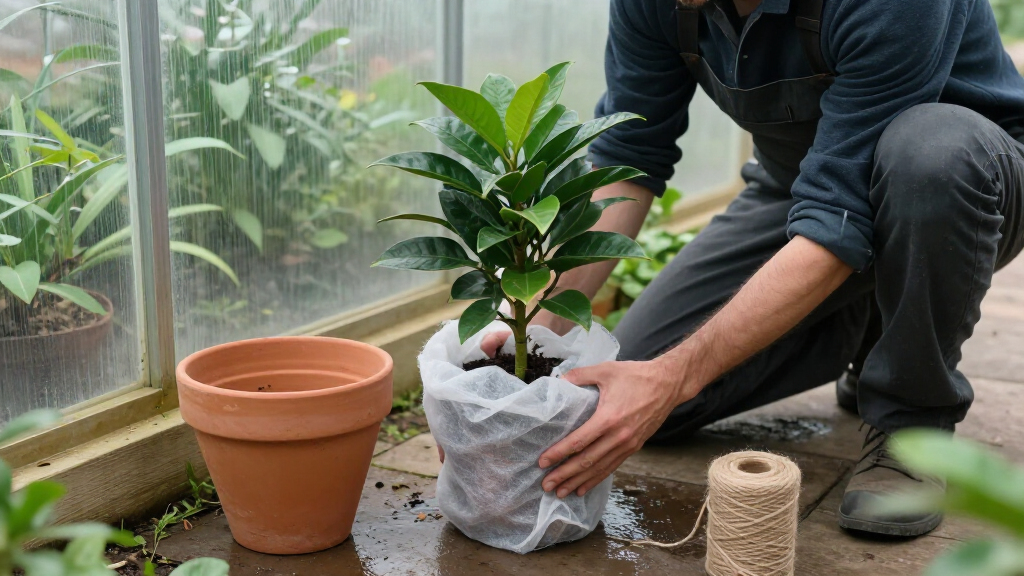
The report says to keep healthy new bulblets attached to mature gladiolus corms and discard older corms that are soft or shrivelled. It also describes potting tender perennial bedding plants, including petunias, lobelia and calibrachoas, for greenhouse storage. The author says she cut these plants back, watered them well, and then watered little until growth resumed in spring.
Protecting Plants From Winter Loss
These steps can help gardeners preserve plants for another growing season instead of replacing them after winter damage. Wet conditions pose a particular risk to gladiolus corms, while pelargoniums are described as unlikely to make it through winter outdoors. Moving plants into suitable shelter also gives gardeners a chance to retain young bulblets or propagate pelargoniums from cuttings.
The recommendations are not a fixed calendar for every garden. The report links timing to regional weather and exposure: acting earlier may make sense in colder northern areas or exposed gardens, while gardeners experiencing warm, dry conditions may be able to wait. That distinction matters because the article does not present one date as right for all locations.
As an affiliate, we earn on qualifying purchases.
Autumn Timing Depends on Weather
The report, written by gardening expert Ruth Hayes, was published on Oct. 7, 2026, during the early-autumn period when gardeners may need to prepare vulnerable plants for colder months. Hayes says winter conditions are difficult to predict, mentioning possible heavy rain, a late cold snap, or a dry season. Those are scenarios, not forecasts for the coming winter.
Hayes refers to a March 2018 cold snap and to heavy rain in the previous year as examples of weather that can affect gardens. The article does not provide a local forecast or report a specific cold-weather event. Its practical focus is on reducing exposure to frost and damp by lifting plants or storing them under cover before conditions become damaging.
“I’m not a betting woman but even if I were, I’d not place a wager on what weather this winter will bring.”
— Ruth Hayes, Amateur Gardening
As an affiliate, we earn on qualifying purchases.
Local Conditions Set the Deadline
The report does not specify a single date by which all gardeners should lift or pot up these plants. Local temperatures, rainfall and garden exposure affect when action is appropriate, and the article gives no region-by-region thresholds. It also does not predict what weather winter 2026-27 will bring.
The suggested storage methods are presented as gardening advice, not as a guarantee that every plant will survive. Outcomes may vary with plant health and the conditions in each greenhouse or indoor space. The source does not provide measured survival rates or detailed temperature and humidity ranges.
tender bedding plant greenhouse storage
As an affiliate, we earn on qualifying purchases.
As an affiliate, we earn on qualifying purchases.
Watch Weather and Spring Growth
Gardeners following the report’s advice should monitor local conditions and move plants before frost or persistent damp threatens them. For plants already in storage, the article recommends restrained watering while they are dormant, with watering increasing again when growth resumes in spring. It does not give a fixed spring date, so gardeners will need to watch the plants for signs of new growth.
Further timing and care details may depend on local forecasts and the needs of individual plants. The source points readers to Amateur Gardening for additional gardening advice, but it gives no scheduled follow-up report or specific next publication date on winter plant care.
As an affiliate, we earn on qualifying purchases.
Key Questions
Which plants does the report advise protecting?
It discusses pelargoniums, gladioli, petunias, lobelia and calibrachoas. The recommended approach differs by plant: lift pelargoniums and gladioli, and pot tender bedding plants for sheltered storage.
How should gladiolus corms be stored?
After lifting, cut the stems back by half and store the corms in a dry, frost-free place. Keep healthy new bulblets attached and discard old corms that are soft or shrivelled, according to the report.
Should pelargoniums be watered during winter storage?
The report says to water them well after potting, then water very little while they are dormant. It says they may go for weeks without further watering; resume more regular care when growth restarts.
When should gardeners begin preparing tender plants?
There is no universal date in the report. It advises waiting a few weeks if conditions remain warm and dry, while gardeners in northern or exposed locations may want to act earlier.
Source: rss
Fall Picks
fall essentials
As an affiliate, we earn on qualifying purchases.