TL;DR

Get garden gear delivered free with Prime
- Fast, free delivery on millions of items
- Prime Video, Amazon Music and more included
- Member-only deals all year
Tree of heaven can produce new shoots from its roots after cutting or mowing, so removing visible growth may make an infestation harder to control. A Country Living report recommends identifying the tree first, choosing a method based on its size and continuing to monitor the area; herbicides should be used only according to their labels.
A Country Living guide advises homeowners not to cut or mow tree of heaven as a control measure because the invasive tree can respond by sending up new shoots from its roots. The report says effective control depends on identifying the tree correctly, choosing a removal method suited to its size and monitoring for regrowth rather than treating removal as a one-time job.
Tree of heaven is a fast-growing invasive tree that produces many seeds and can compete with native plants, according to the report. It is also a preferred host for the spotted lanternfly, another invasive species. The guide cautions that cutting down a mature tree or mowing shoots may leave the root system alive, allowing it to produce root suckers and potentially increasing the number of shoots over time.
Correct identification matters before any treatment. Tree of heaven has compound leaves, with leaflets that are mostly smooth-edged and usually have one to four small teeth near the base. A gland sits beneath each tooth. The report says sumac and black walnut can be confused with it; their leaflets are serrated and lack those glands. Crushed or broken tree of heaven leaves and branches also tend to have a foul odor, described in the report as like burnt or rancid peanut butter.
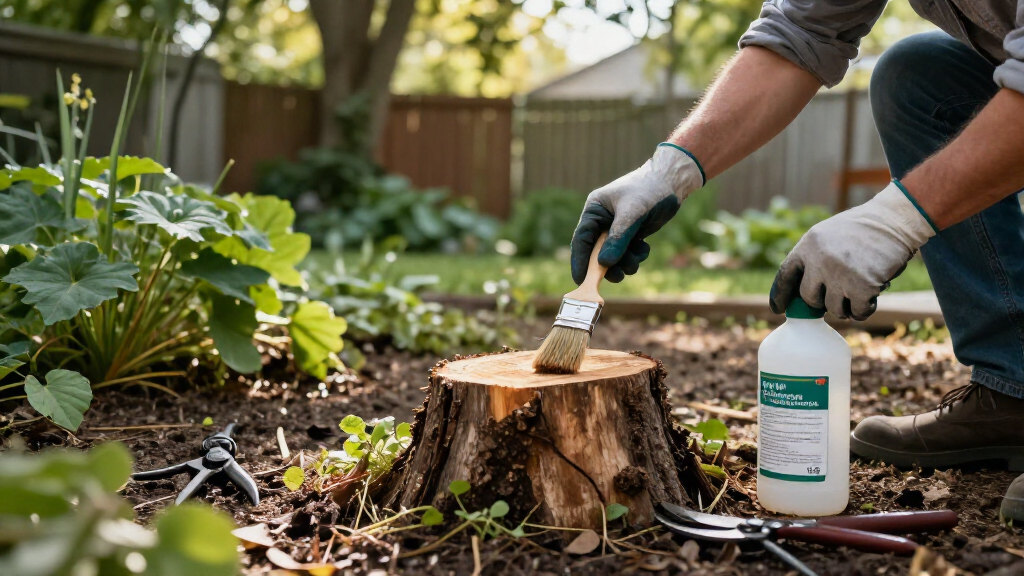
The guide outlines four approaches: hand-pulling very small seedlings, foliar herbicide treatment for larger seedlings or small trees up to 10 feet tall, basal-bark treatment for trunks up to 6 inches in diameter, and hack-and-squirt treatment for larger trees. It says to pull seedlings only when soil is moist and to remove the entire root. It warns against pulling root suckers, which may break and leave fragments behind.
Why Cutting Can Encourage Regrowth
The risk of root-driven regrowth changes the usual impulse to cut down an unwanted tree. Removing the trunk or mowing visible shoots may clear the surface temporarily without killing the plant below ground. If the roots remain active, new shoots can emerge, making the problem more widespread and adding work for homeowners and land managers.
Control also matters beyond an individual yard. The report identifies tree of heaven as a competitor with native plants and a host for spotted lanternfly. A poorly chosen approach could leave the tree alive while disturbing nearby vegetation or spreading shoots. Matching treatment to the tree’s size, protecting desirable plants and checking the site afterward are central to the guidance.
tree of heaven identification field guide
As an affiliate, we earn on qualifying purchases.
As an affiliate, we earn on qualifying purchases.
Choosing a Method by Tree Size
The report separates treatment options by the size and form of the growth. Very small seedlings may be pulled by hand if the complete root can be removed. For larger seedlings whose roots cannot be extracted, or trees up to 10 feet tall, it describes applying herbicide to the foliage so it can move toward the roots. Spray drift can injure nearby plants, so the report says to take surrounding vegetation into account.
For trees with trunks up to 6 inches in diameter, the guide describes applying an herbicide mixture around the bark from ground level to 12 to 18 inches up the trunk when foliar application is not an option. For larger trees, it describes making spaced cuts around the trunk, leaving live tissue between them, and applying herbicide into the cuts. These are methods presented by the report, not a substitute for the product label or professional advice.
Season matters as well. The guide says herbicide applications are generally most effective from mid- to late summer until fall color begins, when the tree is moving carbohydrates toward its roots. It advises holding off if the tree is flowering, typically in spring or early summer. Seedlings are best pulled when the soil is moist. Local conditions and product directions still apply.
“Cutting or mowing can cause the tree to send up root suckers.”
— Country Living report
garden hand weeder for removing small tree seedlings with roots
As an affiliate, we earn on qualifying purchases.
As an affiliate, we earn on qualifying purchases.
What Treatment Cannot Guarantee
The report does not give a guaranteed timeline for eradication or say that any single method will eliminate every tree. It says established trees are difficult to eradicate in one treatment and that an initial application may only weaken the root system. The degree and timing of regrowth can depend on the plant and site; the supplied material does not quantify those differences.
Herbicide products and rules also vary. The report does not name a specific product or provide universal mixing instructions. It says to use only a product labeled for tree of heaven and for the chosen application method, and to follow label directions for protective equipment, weather, mixing rates and permitted use sites. Local regulations and the risks to nearby plants must be checked before application.
herbicide dye marker for targeted invasive tree treatment
As an affiliate, we earn on qualifying purchases.
As an affiliate, we earn on qualifying purchases.
Monitor and Seek Local Help
After treatment, keep checking the area for new shoots and follow up according to the product label or advice from a qualified professional. If the first treatment only weakens the roots, additional control may be needed. Avoid cutting or mowing emerging growth as a substitute for a plan that addresses the root system.
The report recommends contacting an arborist or invasive plant specialist for a large tree near a home, power lines or valuable landscaping, or when an infestation covers a wide area. A local cooperative extension can also help interpret herbicide labels and provide region-specific guidance. Any herbicide use should follow the label, include required protective equipment and avoid contact with desirable plants.
protective chemical resistant gloves and safety glasses for herbicide application
As an affiliate, we earn on qualifying purchases.
As an affiliate, we earn on qualifying purchases.
Key Questions
Why shouldn’t I cut down tree of heaven?
The report says cutting or mowing can prompt root suckers—new shoots growing from the root system. The trunk may be gone while the roots remain alive.
How can I distinguish tree of heaven from sumac or black walnut?
Look for mostly smooth-edged leaflets with small teeth near their bases and a gland beneath each tooth. The report says sumac and black walnut have serrated leaflets and lack those glands. A foul odor from crushed leaves or branches can also be a clue, but identify the plant before treatment.
When should I apply herbicide?
The guide says applications are generally most effective from mid- to late summer until fall color begins, and advises against treating while the tree is flowering. Always follow the product label and local rules; timing can depend on the product and conditions.
When should I call a professional?
Contact an arborist or invasive plant specialist if a large tree is near a home, power lines or valuable landscaping, or if the infestation covers a wide area. A cooperative extension can help with local identification and label questions.
Source: rss
Fall yard work Picks
leaf blowers
As an affiliate, we earn on qualifying purchases.