
TL;DR

Get garden gear delivered free with Prime
- Fast, free delivery on millions of items
- Prime Video, Amazon Music and more included
- Member-only deals all year
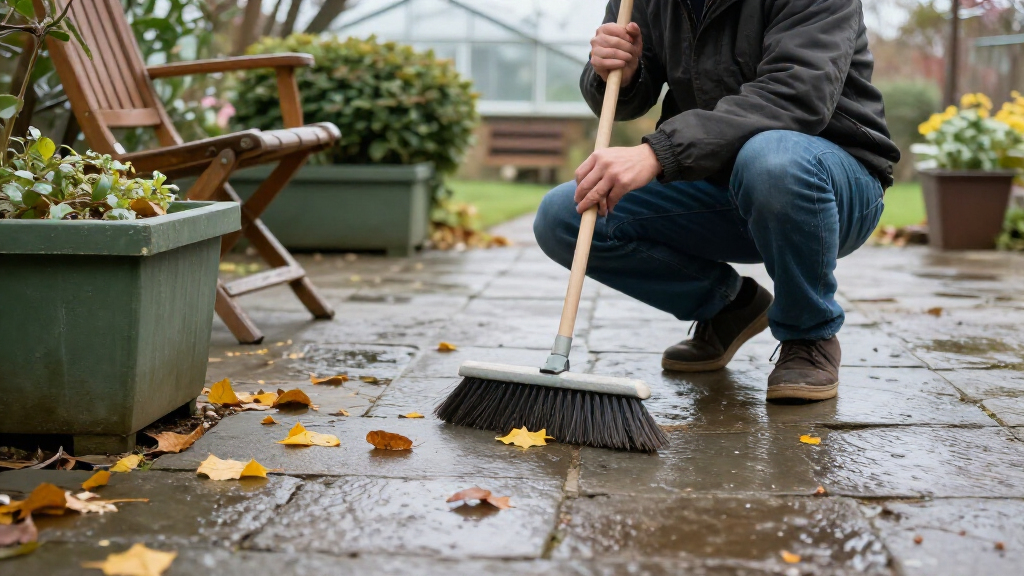
Garden experts advise clearing wet leaves from patios and paths because they can make surfaces slippery, stain porous paving and encourage moss and algae. The source report does not cite a study or quantify the risks; it presents expert advice on routine garden maintenance.
Garden experts are advising homeowners to sweep wet fallen leaves from patios, warning that leaf-covered paving can become slippery after rain and that decomposing leaves may stain porous surfaces or encourage moss and algae. The advice, reported by Ideal Home, concerns a routine autumn maintenance issue that can affect both safe use and the appearance of outdoor paving.
Amber Tunney, a plant buyer at Cherry Lane Garden Centres, said wet leaves can make patios slippery and recommended sweeping them regularly, particularly after heavy rain. Leaves can collect on paving during autumn and remain damp in rainy weather, leaving a layer underfoot that may be difficult to spot on a busy path or patio.
Andrew White, an outdoor expert at Harbour Lifestyle, said wet leaves can also affect the look and condition of paving. As they break down, he said, they can stain porous paving and encourage moss and algae to develop. The report does not quantify how quickly staining or growth occurs, and the outcome may depend on the paving and local conditions.
The practical recommendation in the report is to remove leaves when they appear, rather than letting them sit through damp weather. They can be swept or collected with a rake or leaf grabber. The report says powerful leaf blowers or garden vacuums may handle wet leaves, though they can be harder to clear than dry ones. Collected leaves need not go to waste: Tunney suggested adding them to compost or using them to make leaf mould for improving garden soil.
Keeping Patio Paving Safer
The advice matters because leaves can turn an everyday route across a garden into a slip risk, while prolonged damp contact may leave visible marks or support surface growth. Clearing them is a small maintenance task that can help keep patios usable and limit avoidable cleaning later. The source report offers expert guidance, not evidence of a measured reduction in falls or paving damage, so the scale of those outcomes is not established.
There is also a practical trade-off: leaves are useful garden material once collected. Composting or making leaf mould can put them to use elsewhere, while keeping them off paved areas addresses the specific concerns raised by the experts.
Products Worth Considering

Orbit B-hyve XR Smart Indoor/Outdoor Sprinkler Controller, 16 Zones

Orbit B-hyve Smart Indoor/Outdoor 12-Zone Sprinkler Controller

Greenworks 40V Cordless Leaf Blower/Vacuum with 5.0 Ah Battery and Charger
As an affiliate, we earn on qualifying purchases.
Why Damp Leaves Affect Paving
The Ideal Home report frames the issue around autumn weather, when fallen leaves, wind and rain can combine to leave patios covered in damp debris. It distinguishes paved areas from other parts of a garden: some gardeners leave leaves in beds or natural areas, but the report says experts recommend removing them from patios and paths because of the risks underfoot and to paving.
The recommendations are based on comments from two named garden and outdoor specialists. The supplied report does not cite laboratory testing, a safety study, or a comparison of different paving materials. Its central guidance is simple: check paved areas after wet weather and clear fallen leaves rather than allowing them to accumulate.
“Wet leaves can make patios very slippery, so it’s best to sweep them up regularly, especially after heavy rain.”
— Amber Tunney, plant buyer at Cherry Lane Garden Centres
How Much Damage Leaves Cause
The report does not provide measurements for how often leaf-covered patios cause falls, how long leaves must remain in place before staining occurs, or how likely moss and algae are to form. It also does not compare porous and nonporous paving beyond White’s specific warning about porous surfaces. The advice is attributed to experts, but the supplied material does not include independent testing or a formal risk assessment.
It is also unclear which removal method works best for different patio sizes or paving types. The report notes that wet leaves are harder to clear with blowers and vacuums than dry leaves, but gives no product-performance data or specific operating guidance.
Check Paving After Rain
The immediate step recommended by the experts is to inspect patios and paths after rain and sweep away accumulated leaves. Homeowners can collect them manually or use suitable garden equipment, taking care to follow the equipment maker’s instructions. Leaves gathered from paved areas can be composted or used to make leaf mould, according to Tunney.
The report sets no formal deadline or follow-up date; this is ongoing seasonal advice rather than a newly announced policy or product test. Whether leaves have affected a particular patio will depend on its surface, how long the debris has remained and local weather conditions.
Key Questions
Why should wet leaves be cleared from a patio?
Experts cited by Ideal Home say wet leaves can make paving slippery. They also warn that leaves breaking down on porous paving may cause stains and encourage moss or algae.
When should fallen leaves be swept up?
Amber Tunney recommends sweeping regularly, especially after heavy rain. The report does not set a fixed schedule; checking paved areas when leaves collect is its practical guidance.
Can wet leaves be removed with a leaf blower or vacuum?
The report says wet leaves are harder to clear with a blower or vacuum than dry leaves, though powerful models may handle them. It does not compare products or give performance measurements.
What can be done with leaves after clearing the patio?
Tunney suggests adding collected leaves to a compost heap or gathering them to make leaf mould, which she says can improve garden soil.
Source: idealhome.co.uk