
TL;DR

Get garden gear delivered free with Prime
- Fast, free delivery on millions of items
- Prime Video, Amazon Music and more included
- Member-only deals all year
Country Living tested cayenne solution, vinegar, dog hair and Irish Spring soap shavings on pumpkins over 12 days, alongside an untreated control. Cayenne was the reported winner while it was reapplied regularly, but squirrels began eating it by day 12. The small test does not establish how reliably any method will work in other yards.
Country Living’s 12-day test of four home remedies for keeping squirrels from eating pumpkins found that a cayenne pepper solution performed best while it was reapplied after rain or every other day. The result offers a practical option for people displaying pumpkins outdoors, but the treated pumpkin was eventually eaten, and the small trial does not show how well the method will work in other settings.
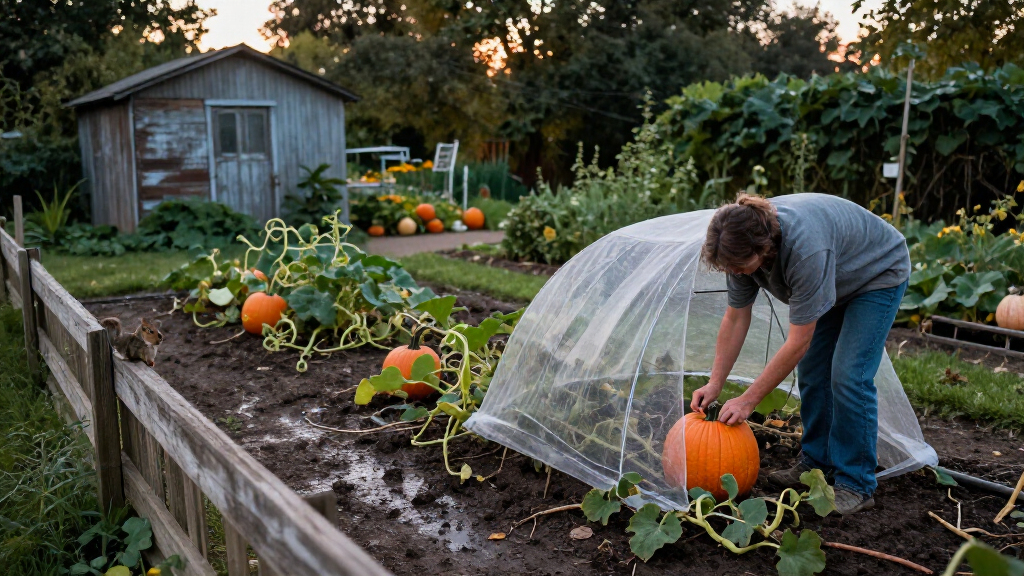
With a neighbor’s permission, the magazine placed four treated pumpkins and one untreated control in a yard where squirrels had been eating the neighbor’s holiday display. The remedies were fresh dog hair, white vinegar, a cayenne solution and Irish Spring soap shavings. The report describes this as a home test, not a controlled scientific study.
For the cayenne treatment, the testers mixed 2 tablespoons of powdered cayenne with 16 ounces of water. The powder clogged their spray bottle, so they poured the mixture over the pumpkin. They reapplied it every other day or after rain, with the final application on day 7. The pumpkin remained untouched through day 11, but squirrels began eating it by day 12.
Vinegar was the runner-up: the pumpkin received a fine spray of straight white vinegar, reapplied on the same schedule through day 7. A squirrel appeared to take a small bite around day 4 or 5; the pumpkin was otherwise largely untouched through day 12. The dog-hair pumpkin had been heavily eaten by day 5 and was decaying by day 12. The soap-shaving pumpkin remained untouched for more than 10 days, but squirrels ate it on day 11. That trial began later, leaving the pumpkin alone for five days after the other test pumpkins were gone.
Which Treatments Lasted Outdoors
The test gives pumpkin owners a side-by-side comparison of familiar, low-cost approaches, including how the treatments affected the display. Cayenne and vinegar did not visibly change the pumpkins, according to the report. Soap shavings appeared bright green and were difficult to clean up, while dog hair was conspicuous around the pumpkin’s base.
The practical distinction is that none of the methods prevented damage indefinitely. Cayenne’s best result depended on repeated applications, and the other treatments also had limitations. Readers can use the findings as a starting point, but the outcome may vary with local squirrel behavior, weather, placement and the availability of other food.
Products Worth Considering

Orbit B-hyve XR 8-Zone Indoor/Outdoor Smart Sprinkler Controller
Orbit B-hyve XR Smart Indoor/Outdoor Sprinkler Controller, 16 Zones

Orbit B-hyve Smart Indoor/Outdoor 12-Zone Sprinkler Controller
As an affiliate, we earn on qualifying purchases.
The Untreated Pumpkin Test
The untreated control was gnawed within hours, according to Country Living. By day 3, squirrels had scooped it out, and by day 5 it was gone. The dog-hair pumpkin began to be eaten on that same fifth day.
The report raises the possibility that the control pumpkin provided an easier food source and delayed attacks on some treated pumpkins. However, the testers said their setup could not establish whether the control influenced the other results. The soap test also began later than the others, so its timing is not directly comparable across the full trial.
Limits of the Yard Trial
The supplied report describes one yard, five pumpkins and a 12-day period; it does not report repeated trials or a comparison across locations. It also does not establish whether rain, changing scent strength, individual squirrel behavior or the untreated pumpkin affected the outcomes. The soap pumpkin’s later start further limits direct comparison.
Country Living reported that the cayenne pumpkin was eventually eaten and that the vinegar-treated pumpkin had a small bite. It remains unclear how often the methods would need to be reapplied in different weather, whether they would deter squirrels over a longer period, or whether a decoy pumpkin would protect a porch display.
A Decoy Pumpkin Follow-Up
Country Living said its next experiment would place a decoy pumpkin in a far corner of the yard to test whether it draws squirrels away from display pumpkins in busier areas, such as a porch or sidewalk. The source does not provide a date or results for that test.
For now, the report’s strongest finding is limited to its own setup: cayenne solution performed best while regularly reapplied, but did not keep squirrels away for the entire test. Any broader claim about which deterrent works best remains unconfirmed.
Key Questions
Which squirrel deterrent performed best in the test?
Cayenne pepper solution was Country Living’s winner. The testers mixed 2 tablespoons of powdered cayenne with 16 ounces of water and reapplied it every other day or after rain. Squirrels began eating the pumpkin by day 12.
Did any method protect a pumpkin for the full test?
No method kept a pumpkin untouched for the entire reported test period. The cayenne pumpkin was untouched through day 11 but was being eaten by day 12; squirrels also ate the soap-treated pumpkin on day 11.
How did vinegar compare with cayenne?
The vinegar-treated pumpkin had an apparent small bite around day 4 or 5 and remained largely untouched through day 12. Country Living ranked it second, while the cayenne pumpkin remained untouched through day 11.
Can the test show whether a decoy pumpkin works?
No. The control pumpkin was eaten quickly, but the test could not determine whether it diverted squirrels from the treated pumpkins. Country Living said it planned a separate decoy-pumpkin experiment.
Source: countryliving.com