TL;DR

Get garden gear delivered free with Prime
- Fast, free delivery on millions of items
- Prime Video, Amazon Music and more included
- Member-only deals all year
Gardening Know How reports that spreading a small amount of lard, tallow or vegetable shortening on rough tree bark or a fencepost may give smaller songbirds another place to feed. The technique is presented as a way to reduce competition at conventional feeders, but the source does not provide research measuring its effects on bird survival or feeder access.
Gardening Know How has recommended smearing a small amount of suitable fat onto rough tree bark or a fencepost as an additional feeding option for small songbirds in fall and winter. The report says the vertical surface may be harder for larger, dominant birds to use, potentially giving species such as chickadees, nuthatches and wrens access to high-energy food when feeders are crowded.
The method involves pressing roughly a golf-ball-sized portion of lard, tallow or vegetable shortening into bark furrows or cracks, ideally on a mature tree or older fencepost. The source recommends a placement of about 5 to 6 feet above the ground and on the shady side, where sun is less likely to soften the fat. The stated preparation time is about two minutes.
The article describes the approach as a way to complement, not replace, ordinary bird feeders. It names smaller or more cautious birds including brown creepers, titmice and nuthatches, while also saying woodpeckers may visit. Its explanation is that clinging birds can feed on a vertical surface that larger birds may be less able to use. These are the report’s practical claims; the supplied material includes no trial data comparing bird visits or food intake.
Food choice and placement matter. The source advises using unsalted fat without certain synthetic preservatives, and says to apply only what birds can eat during daylight to limit attraction of nocturnal animals. In warmer regions, it recommends mixing the fat with cornmeal to make it firmer; the report also warns that people in bear country should wait until bears are hibernating before putting out fat.
A Second Feeding Surface for Small Birds
The recommendation addresses a familiar issue for people who feed birds: competition at shared feeders. If dominant birds crowd a fat ball or suet feeder, a separate surface may give smaller birds another place to feed. The report’s suggestion could be useful to households with suitable trees or posts, particularly when temperatures fall and food is harder to find.
The practical stakes should not be overstated. The source says fat can provide high-energy food and argues that the arrangement helps smaller birds get a share, but it does not establish how often birds use the method, whether they consume more food overall, or whether it affects winter survival. The development is best understood as a low-effort feeding tip rather than a proven intervention.
The article also points to a possible safety advantage over mesh fat-ball holders, saying a smear avoids the risk of small birds becoming caught in the netting. That claim does not mean every holder presents a hazard, but it gives readers another reason to consider a feeding surface that does not use mesh.
Products Worth Considering

Greenworks 48V (2 × 24V) 20-Inch Brushless Cordless Push Lawn Mower with Two 4.0Ah Batteries and Dual-Port Charger

Weber Original Kettle Premium 22-Inch Charcoal Grill, Black

Husqvarna Automower 550 Robotic Lawn Mower
As an affiliate, we earn on qualifying purchases.
How the Bark Method Works
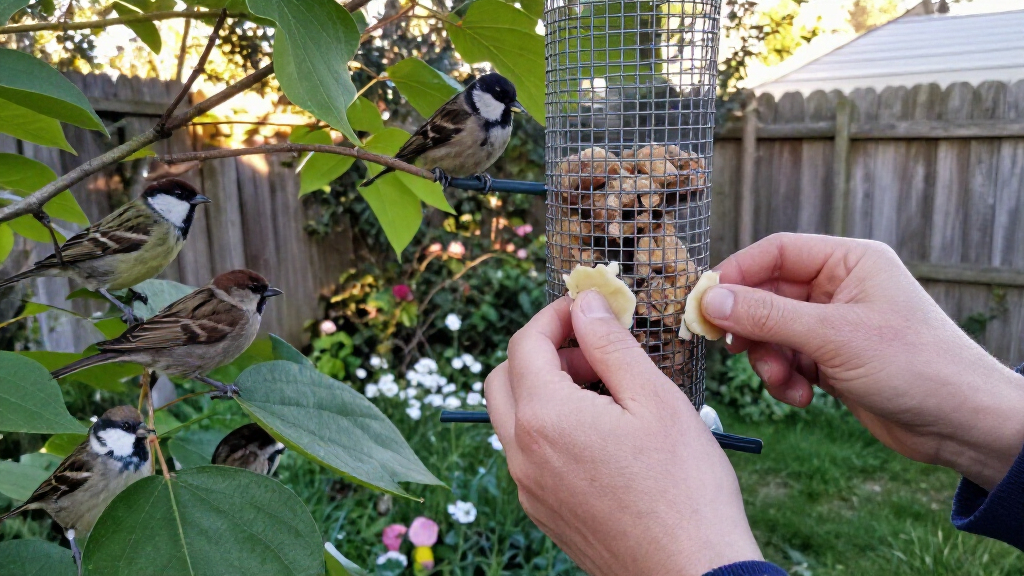
Fat balls and suet feeders are commonly used to provide birds with energy in colder weather. The Gardening Know How report says these feeders can be dominated by larger birds, including starlings and grackles, leaving less opportunity for smaller or more timid species. Its proposed alternative draws on birds’ ability to cling to trunks and other vertical surfaces while foraging.
The source offers three possible fats: lard, rendered tallow or vegetable shortening. It describes lard as soft and easy to press into bark, tallow as another energy-rich option, and vegetable shortening as usable but less nutritious. It cautions readers to check labels: avoid products with added salt or sodium and, for lard, products containing preservatives such as BHT, BHA or propyl gallate. The supplied material does not cite an independent wildlife or veterinary authority for these recommendations.
For a firmer mixture, the report suggests combining fat with cornmeal, especially in warmer climates where it may soften. It also provides a bark-butter recipe using fat, unsalted peanut butter, oat flour and cornmeal. Any added peanut butter should not contain salt, sugar or xylitol, according to the source. These recipe details are advice from the original report, not independently tested findings in the material provided.
“Any tree or fencepost will do”
— Gardening Know How report
Evidence and Local Conditions
The supplied report does not give a publication date, identify a scientific study or provide measurements showing that the method increases smaller birds’ access to food. It is therefore unclear how reliably the approach changes feeding patterns, which species will use a particular site, or whether it offers a measurable benefit beyond adding another food surface.
Results may also depend on local weather, the tree or post, nearby wildlife and the birds present. The source gives broad guidance for colder and warmer regions but does not specify temperature thresholds, how often to replace the fat, or how to prevent spoilage in every climate. Its advice about predators and bears is general and may not cover local wildlife rules or recommendations.
Practical Steps Before Feeding
The report does not announce a formal study or scheduled follow-up. For readers considering the method, its immediate recommendation is to choose a rough, shaded surface and a small quantity of unsalted, suitable fat, then watch whether birds use it and remove or replenish food as conditions require. In warm weather, the source advises firming the mixture with cornmeal rather than leaving soft fat exposed.
People should also account for local wildlife and safety conditions. The source says to avoid putting out food that remains uneaten overnight and, in bear country, to wait until late November or December when bears are in full hibernation. The supplied material does not establish a universal schedule, so readers may need to follow local wildlife guidance. Whether this technique consistently helps smaller birds remains a question for direct observation or further evidence.
Key Questions
What is the tree-smearing method?
It is a feeding tip from Gardening Know How: press a small amount of lard, tallow or vegetable shortening into rough bark or a fencepost so birds that cling to vertical surfaces can feed.
Which birds might use the fat?
The report names nuthatches, chickadees, titmice, wrens and creepers, and says woodpeckers may also visit. It does not provide data predicting which species will use a particular yard.
What kind of fat does the report recommend?
It lists lard, tallow and vegetable shortening, and advises avoiding products with added salt or sodium. For lard, it also recommends checking for synthetic preservatives. These are the source’s recommendations, not independently verified findings in the supplied material.
How should the fat be placed?
The article suggests pressing about a golf-ball-sized amount into a rough tree or post, roughly 5 to 6 feet high and on the shady side. It advises using only an amount birds can finish during daylight.
Is the method proven to help small birds survive winter?
The supplied report offers the method as practical advice but provides no research data showing that it improves food access by a measured amount or increases survival. Its effectiveness in individual settings remains uncertain.
Source: gardeningknowhow.com