
TL;DR

Get garden gear delivered free with Prime
- Fast, free delivery on millions of items
- Prime Video, Amazon Music and more included
- Member-only deals all year
Homes & Gardens has published a roundup of 16 agaves suited to drought-tolerant gardens, highlighting their varied sizes, colors and uses. The report says many agaves suit USDA zones 8–11 and advises protecting plants from winter cold and keeping water away from the crown.
Homes & Gardens has published a guide to 16 agaves for drought-tolerant gardens, describing how their distinctive forms and colors can serve as focal points in water-wise planting. The report also outlines uses for different sizes, from large landscape specimens to compact plants suited to containers, and offers general winter-care advice.
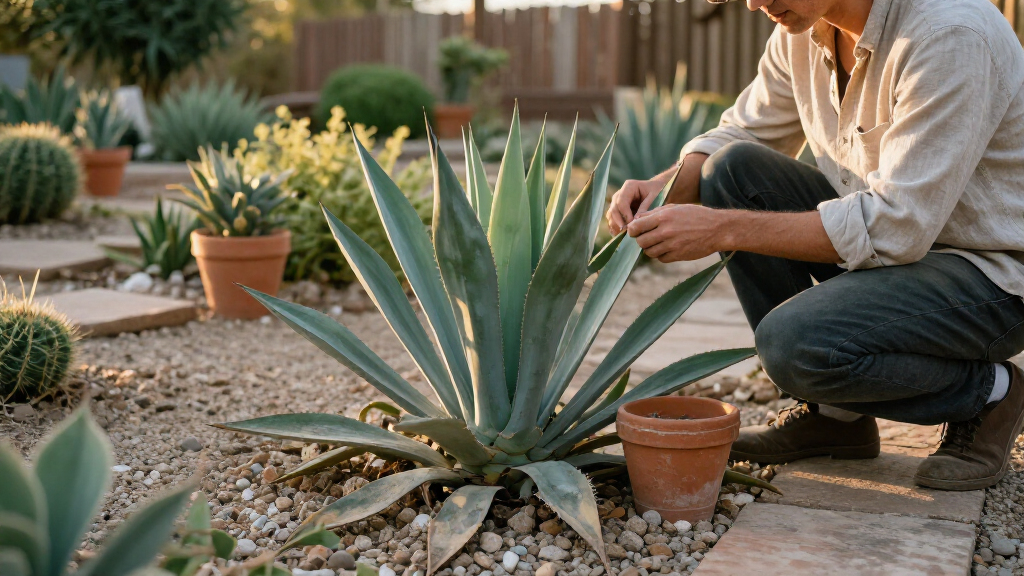
The report presents agaves as plants that can add structure to gravel gardens, patios and drought-tolerant borders. It says their height and spread can make them prominent features among other planting, while their ability to withstand dry conditions and heat makes them candidates for gardens where water use is a concern. A Pasadena garden pictured in the source pairs agaves with cacti and other desert plants.
Examples include the Century Plant, described as reaching 4–6 feet tall, and Twin Flower Agave, which the report says produces masses of yellow blooms. For smaller spaces, it points to colorful or compact options: Moonglow Mangave, a hybrid of agave and manfreda with spotted blue-green leaves; Desert Diamond Agave, described as having green-and-white rosettes; and Sabertooth Tiger Agave, presented as a container-growing choice.
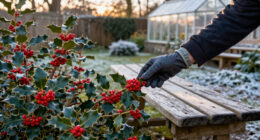
The article says agaves are generally hardy across USDA zones 8–11, while noting that winter protection may be needed. It recommends moving potted plants to a frost-free location and covering in-ground plants with frost cloth in cold conditions. The report also warns that the crown should be kept dry to reduce the risk of rot and decay.
Agaves Offer Structure With Less Water
The roundup is relevant to gardeners planning for hot, dry conditions because it connects plant selection with both water-wise design and practical placement. Large agaves can anchor a planting scheme, while smaller varieties can be grown in pots on patios or in areas where a full-sized specimen would not fit.
The range described also shows that drought-tolerant planting need not rely on a single look. The report highlights differences in size, leaf color and flowering, giving readers options for combining sculptural forms with other plants. Its winter guidance qualifies the appeal: drought tolerance does not mean every agave can be left unprotected in every climate.
Products Worth Considering

Rachio 3 Smart Sprinkler In-Ground WiFi Irrigation Controller, 8-Zone

Weber Spirit E-325 3-Burner Gas Grill with Sear Zone

Orbit B-hyve XR 8-Zone Indoor/Outdoor Smart Sprinkler Controller
As an affiliate, we earn on qualifying purchases.
Choosing Agaves for Garden Conditions
The source frames agaves as part of a broader desert-style planting approach, alongside cacti and other plants adapted to dry conditions. It suggests using them in gravel gardens, borders and patio containers, and notes that some may be grown as houseplants. The guide’s 16 selections are presented as a shopping and inspiration roundup rather than a comparative trial.
Climate remains a key factor. The report gives USDA zones 8–11 as a general hardiness range and recommends winter protection, especially for plants exposed to frost. For container plants, relocation to a frost-free place is one suggested option; for plants in the ground, the source mentions frost cloth and keeping the crown from becoming wet.
““Their impressive height and spread can make them a natural focal point amongst planting.””
— Homes & Gardens
Variety-Specific Care Still Matters
The source does not provide the full names and care profiles for all 16 selections in the supplied material, nor does it compare their growth rates, mature dimensions or water needs. Its hardiness range is presented as general guidance, not a guarantee for every variety or location. The publication date is also not included in the source material, and no independent testing or horticultural expert commentary is provided.
Readers should check the identity and growing requirements of a specific agave before buying, particularly its mature size and tolerance of local winter temperatures. The report’s examples do not establish that every named plant will thrive in every drought-tolerant garden.
Check Local Conditions Before Planting
Gardeners considering an agave can use the roundup as a starting point, then confirm a chosen variety’s mature size and climate needs with the nursery or plant label. Placement should account for the plant’s eventual spread, whether it will grow in a container or in the ground, and the possibility of frost.
For winter, the source advises moving pots to a frost-free location or covering in-ground plants with frost cloth, while keeping water off the crown. The article also points readers toward companion planting for a desert garden; the supplied material does not specify further updates or a follow-up report.
Key Questions
What is the Homes & Gardens report about?
It is a roundup of 16 agaves presented as options for drought-tolerant gardens, with examples for larger landscape features and smaller container plantings.
Are agaves suitable for water-wise gardens?
The report describes agaves as able to withstand dry conditions and heat, making them possible choices for water-wise planting. Needs vary by variety and growing conditions.
How should agaves be protected in winter?
The guide says to move potted agaves to a frost-free location and cover in-ground plants with frost cloth when needed. It also advises keeping the crown dry to help prevent rot and decay.
Which agaves does the report name?
Examples in the supplied report include Century Plant, Twin Flower Agave, Moonglow Mangave, Desert Diamond Agave and Sabertooth Tiger Agave.
Source: homesandgardens.com