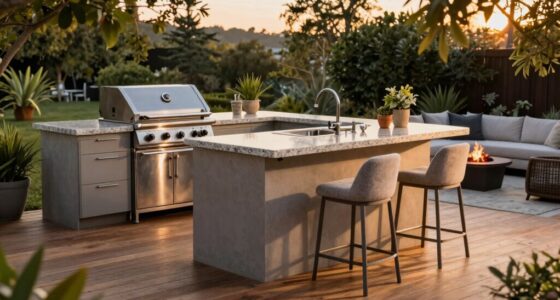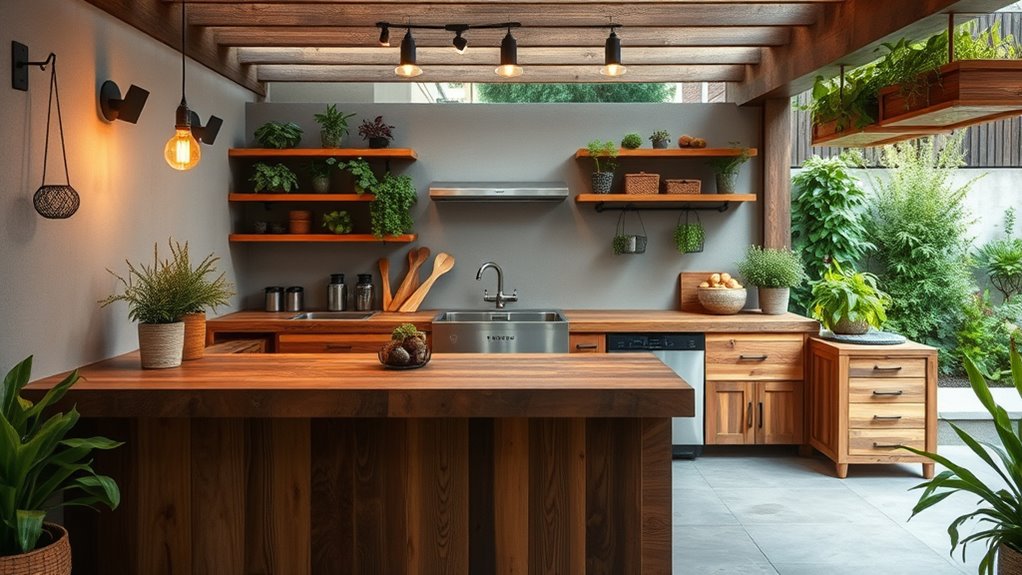

To create an eco-friendly outdoor kitchen, choose sustainable materials like reclaimed wood, bamboo, recycled metal, and weather-resistant stone that last longer and reduce waste. Design your layout to minimize movement and maximize natural light and airflow, improving efficiency. Incorporate solar-powered lighting and appliances to lower energy use, and focus on durable surfaces to cut down on replacements. If you want to discover how to combine style and sustainability seamlessly, explore the full details ahead.
Key Takeaways
- Use reclaimed wood, bamboo, recycled metal, and sealed stone for durable, eco-friendly countertops and cabinetry.
- Design compact, efficient layouts that minimize waste, optimize natural light, and streamline workflow.
- Incorporate solar-powered lighting and appliances, with natural ventilation and shading to reduce energy consumption.
- Choose weather-resistant, long-lasting materials to decrease maintenance, replacement, and environmental impact.
- Integrate sustainable features that enhance usability, longevity, and harmony with outdoor environments.

Creating an eco-friendly outdoor kitchen is a smart way to enjoy your outdoor space while reducing your environmental impact. By choosing sustainable materials and designing efficient layouts, you can create a space that’s both functional and environmentally conscious. The key is to focus on materials that are renewable, durable, and have minimal negative effects on the planet. For example, opt for reclaimed wood or bamboo for countertops and cabinetry, as these materials grow quickly and can be repurposed, reducing waste. Recycled metal and concrete are also excellent choices for appliances and surfaces, providing longevity while lowering your carbon footprint. Using sustainable materials not only minimizes environmental harm but also adds a unique, rustic aesthetic that complements outdoor settings.
When designing your outdoor kitchen, consider implementing efficient layouts that minimize waste and energy use. An effective layout keeps everything within reach, reducing unnecessary movement and saving time and energy during food prep and cooking. Incorporate a compact work triangle between your grill, sink, and prep area to streamline your workflow. This setup reduces the need for excessive transportation of items, conserving energy and making your outdoor kitchen more practical. Additionally, plan for proper ventilation and shading to decrease reliance on energy-consuming fans or fans, allowing your kitchen to stay cool naturally. Smart placement of appliances and storage can also enhance energy efficiency and make maintenance easier, prolonging the lifespan of your fixtures. Efficient layout plays a crucial role in sustainable outdoor kitchen design by optimizing energy use and convenience.
Incorporating sustainable materials and efficient layouts isn’t just about reducing environmental impact; it also enhances the usability and longevity of your outdoor kitchen. Use materials that withstand weather elements, such as sealed stone or treated wood, to avoid frequent replacements and minimize waste. Position your appliances thoughtfully to maximize natural light and airflow, decreasing the need for electricity and artificial lighting. To further boost sustainability, consider integrating solar-powered lighting and appliances, turning your outdoor kitchen into an entirely eco-friendly space. With these strategies, your outdoor kitchen will be both a beautiful and responsible addition to your home, providing endless outdoor entertainment while respecting the environment.

PICNIC TIME Picnic Table Portable Folding Table with Umbrella Hole and Bench Seats for Four for Tailgating, Picnics, and Beach, Collapsible to Suit-Case Style for Easy Transport, Lightweight, (Black)
Ultimate Outdoor Dining: The Oniva Folding Picnic Table is a versatile portable camp table featuring integrated bench seats...
As an affiliate, we earn on qualifying purchases.
Frequently Asked Questions
How Can I Incorporate Solar Power Into My Outdoor Kitchen?
You can incorporate solar power into your outdoor kitchen by installing solar panels in ideal placement, like on your roof or nearby structures, to maximize sun exposure. Consider battery storage options to store excess energy for nighttime use. Make certain to connect your panels to a reliable inverter and plan your layout to keep wiring neat and accessible. This setup ensures an eco-friendly, efficient outdoor cooking space that harnesses renewable energy.
What Are the Best Low-Maintenance Sustainable Materials for Outdoor Countertops?
Did you know that recycled countertops can reduce waste by up to 90%? For a low-maintenance, sustainable outdoor kitchen, consider recycled materials like glass or composite surfaces, which are durable and eco-friendly. Natural stone surfaces, such as granite or slate, also offer longevity with minimal upkeep. Both options withstand weather, resist stains, and add a timeless look, making them ideal choices for sustainable outdoor countertops.
How Do I Ensure Proper Drainage With Eco-Friendly Outdoor Kitchen Layouts?
To guarantee proper drainage, incorporate permeable paving in your outdoor kitchen layout, allowing rainwater to seep through and reduce runoff. Additionally, consider rainwater harvesting systems to collect and reuse water, promoting sustainability. Position your kitchen on slightly sloped ground for natural drainage, and include drainage channels where necessary. These strategies help manage water effectively, preventing pooling and supporting eco-friendly practices in your outdoor space.
Can I Use Recycled Furniture in My Outdoor Kitchen Design?
Imagine stepping into your outdoor space, where recycled furniture and upcycled decor blend seamlessly with nature’s beauty. Yes, you can definitely use recycled furniture in your outdoor kitchen design—it’s eco-friendly and adds character. Upcycled decor not only reduces waste but also creates a unique, personalized vibe. Just make certain the furniture is weather-resistant, and you’ll enjoy a sustainable, stylish space that reflects your commitment to the environment.
What Eco-Friendly Lighting Options Are Suitable for Outdoor Kitchens?
You should definitely consider solar-powered fixtures and LED landscape lighting for your outdoor kitchen. Solar-powered lights harness sunlight, reducing your energy footprint, and are easy to install without wiring. LED landscape lighting provides bright, energy-efficient illumination that lasts longer and uses less power. Together, these options create an eco-friendly ambiance, save you money on electricity, and promote sustainability while enhancing your outdoor space’s functionality and aesthetic appeal.
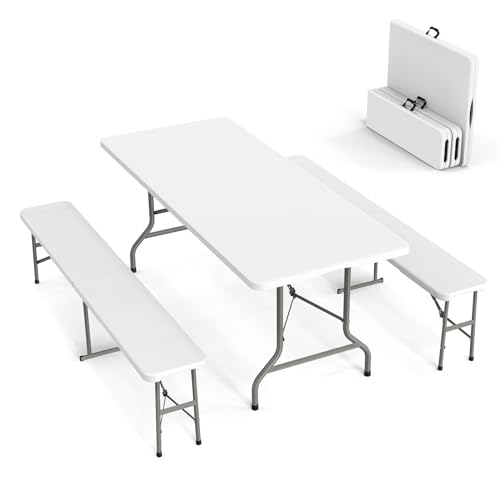
VINGLI Picnic Table Set with 2 Benches, 6 Feet Camping Table Chair Set,3-Piece Folding Furniture for Indoor or Outdoor Use, Smooth Tabletop, White
Quality and Sturdy: This 6ft long table and bench three-piece set is made with high capacity HDPE waterproof...
As an affiliate, we earn on qualifying purchases.
Conclusion
By choosing sustainable materials and thoughtful layouts, you create an outdoor kitchen that’s both eco-friendly and inviting. It’s a rare balance—where durability meets design, and function pairs with conscience. While some see outdoor spaces as mere extensions of their homes, you see a chance to reduce your footprint and enjoy nature’s beauty. Embrace this harmony; your eco-conscious outdoor kitchen isn’t just a trend, it’s your legacy of sustainability in every gathering and meal.

Ortus Collective 6FT Folding Table Set with 2 Folding Benches, Heavy Duty HDPE Materials, Locking Safety Design, 3-Piece Portable Folding Furniture for Camping, Picnic, Party, Indoor & Outdoor,Black
3-Piece Heavy-Duty Set: This picnic table set combines our 6-foot folding table (330 lbs capacity) with a matching...
As an affiliate, we earn on qualifying purchases.

Bonnlo White Folding Picnic Table Set with 2 Benches, 6 Feet Camping Table Chair Set, Modern Portable 3-Piece Furniture for Indoor/Outdoor Use, White Folding Picnic Table with Smooth Tabletop
Easy to Setup: Setting up this table and bench set is a breeze with just three simple steps....
As an affiliate, we earn on qualifying purchases.