To protect your outdoor kitchen from lightning, make certain all electrical appliances and panels are properly grounded by connecting them to a dedicated grounding rod. Installing outdoor-rated surge protectors can block voltage spikes caused by storms, while unplugging devices when storms approach adds extra safety. Regularly inspect and maintain your grounding and surge protection systems to keep everything secure. Learning more about these safety measures can help you safeguard your outdoor space effectively.

Get garden gear delivered free with Prime
- Fast, free delivery on millions of items
- Prime Video, Amazon Music and more included
- Member-only deals all year
Key Takeaways
- Properly ground solar panels and outdoor appliances by connecting frames and components to a dedicated grounding rod.
- Install outdoor-rated surge protectors on all electrical outlets and appliances to block voltage spikes during storms.
- Regularly inspect and maintain grounding systems and surge protectors to ensure ongoing lightning safety.
- Avoid using outdoor electrical outlets and unplug devices during thunderstorms to reduce surge risk.
- Incorporate comprehensive storm safety practices, including proper grounding, surge protection, and storm preparedness measures.
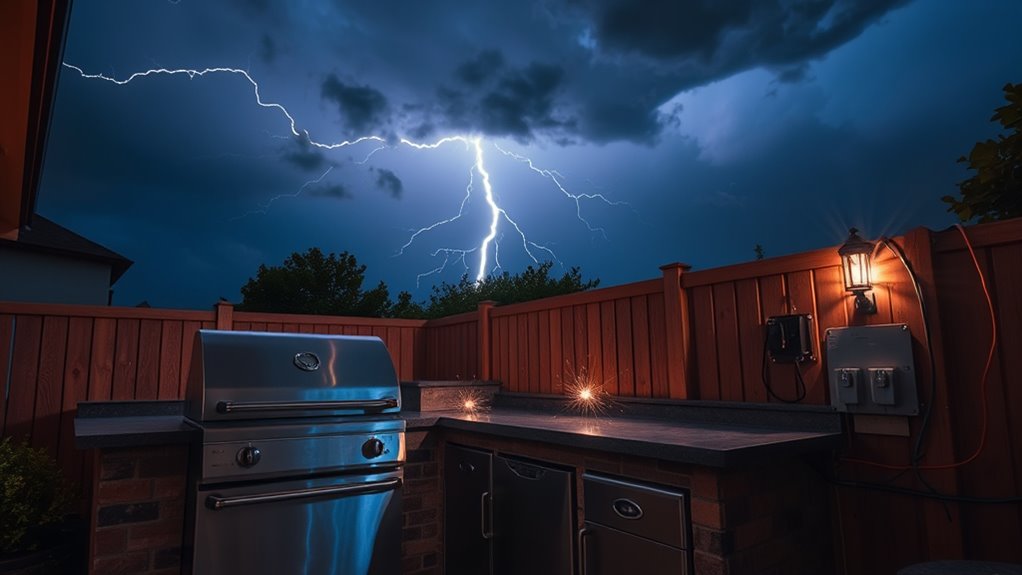
Outdoor kitchens offer a fantastic way to enjoy cooking and entertaining, but they also come with safety concerns—especially during thunderstorms. Lightning strikes can cause serious damage to your outdoor appliances and pose risks to anyone nearby. To protect yourself and your equipment, understanding how to implement proper lightning protection measures is essential. Two key aspects to focus on are solar panel safety and outdoor appliance grounding. These help reduce the risk of electrical shock, fire, and damage caused by electrical surges during storms.
When it comes to solar panel safety, you need to ensure your solar power system is properly grounded. Solar panels, particularly those installed in outdoor kitchens, are vulnerable to lightning strikes because they’re exposed to the elements. Without adequate grounding, a lightning strike can send a damaging surge through the system, potentially destroying the panels or other connected electronics. Proper grounding involves connecting the solar panel’s metal frames and electrical components to a grounding rod or system that directs excess electrical energy safely into the ground. This not only minimizes the risk of damage but also reduces the chance of electrical shock if someone touches the panels or related wiring during a storm. Regular inspection and maintenance of grounding systems are vital for ongoing protection.
Outdoor appliance grounding is equally critical. All electrical appliances, from grills to outdoor lighting, should be grounded according to local electrical codes. This usually means connecting the appliance’s grounding prong to a grounding system that’s properly installed and maintained. Grounding provides a safe path for electrical surges caused by lightning strikes, preventing the surge from traveling through the appliance and into a person’s body or causing a fire. It’s wise to have a licensed electrician inspect your outdoor electrical system regularly to ensure your grounding connections remain secure and compliant with safety standards.
In addition to grounding, consider installing surge protectors designed for outdoor use. These devices can intercept and block voltage spikes caused by lightning, further safeguarding your appliances and electrical system. Also, avoid using outdoor electrical outlets during thunderstorms, and unplug devices when storms are imminent. Keep in mind that grounding and surge protection are ongoing safety measures; they need regular inspection and maintenance to remain effective. Incorporating holistic health and safety approaches can further enhance overall outdoor safety during storms.
outdoor surge protector for appliances
As an affiliate, we earn on qualifying purchases.
As an affiliate, we earn on qualifying purchases.
Frequently Asked Questions
Can Outdoor Kitchen Appliances Be Damaged by Nearby Lightning Strikes?
Yes, your outdoor kitchen appliances can be damaged by nearby lightning strikes. Lightning strike risks threaten outdoor appliance durability, especially if they aren’t properly grounded or protected. When a lightning hits close by, surges can travel through power lines or wiring, causing power surges that damage your appliances. To safeguard your outdoor kitchen, you should install grounding systems and surge protectors, reducing the chances of costly repairs or replacements.
How Often Should Outdoor Grounding Systems Be Inspected or Maintained?
You should inspect your outdoor grounding system at least once a year to ensure it remains effective. Regular grounding system maintenance is vital, especially after severe weather events or if you notice signs of corrosion or damage. By adhering to proper inspection frequency, you prevent potential issues that could compromise lightning protection. Keep records of inspections, and consult a professional if you notice any abnormalities, guaranteeing your outdoor kitchen stays safe and protected.
Are There Specific Surge Protectors Designed for Outdoor Kitchen Equipment?
Imagine your outdoor kitchen as a fortress, ready to withstand nature’s surprises. Yes, specialized surge protectors are designed for outdoor appliance safety, ensuring your equipment stays safe during thunderstorms. These protectors are built to withstand the elements, providing reliable surge protection. By installing the right outdoor surge protector, you create a shield against voltage spikes, keeping your outdoor appliances protected and your outdoor cooking adventures worry-free.
What Are the Signs of Inadequate Lightning Protection in an Outdoor Kitchen?
You might notice signs of inadequate lightning protection if your outdoor kitchen experiences frequent electrical surges, causing flickering lights or malfunctioning appliances. Storm damage could also occur more often, with damaged wiring or scorch marks on equipment. Unexplained power outages or persistent electrical issues are warning signs. These issues indicate your setup isn’t effectively protecting against lightning strikes or electrical surges, so consider enhancing grounding and surge protection to safeguard your outdoor space.
Can DIY Grounding Solutions Provide Sufficient Lightning Protection?
DIY grounding solutions might seem like a quick fix, but they often fall short of providing adequate lightning safety for your outdoor kitchen. While you can try to implement DIY grounding, proper lightning protection requires precision, adherence to safety standards, and expert knowledge. Without proper grounding, you risk damage to your appliances and personal safety. Trust professional lightning protection systems to ensure reliable grounding and safeguard your outdoor space effectively.
grounding rod for outdoor kitchen
As an affiliate, we earn on qualifying purchases.
As an affiliate, we earn on qualifying purchases.
Conclusion
Think of your outdoor kitchen as a sturdy tree standing tall in a storm. Just as roots anchor a tree and protect it from lightning strikes, proper grounding and surge protection keep your outdoor space safe. Without these defenses, your kitchen is vulnerable to lightning’s unpredictable fury. By installing effective grounding and surge protection, you’re planting strong roots that shield your oasis from stormy surprises, ensuring your outdoor haven remains secure and enjoyable, no matter what the skies release.
outdoor electrical outlet surge protector
As an affiliate, we earn on qualifying purchases.
As an affiliate, we earn on qualifying purchases.
As an affiliate, we earn on qualifying purchases.
Fall yard work Picks
leaf blowers
As an affiliate, we earn on qualifying purchases.