
Many outdoor kitchen safety mistakes happen when you overlook essential precautions until it’s too late. You should regularly clean your grill, check for leaks, and guarantee burners work properly. Keep a fire extinguisher nearby and never leave the grill unattended. Clear flammable materials from the area, and shut off the gas after cooking. Staying vigilant and prepared can prevent accidents. If you want to know more about keeping your outdoor space safe, you’ll find it helpful to explore further.
Listen free for 30 days with Audible
Thousands of audiobooks and originals — cancel anytime.
As an affiliate, we earn on qualifying purchases.
Key Takeaways
- Regularly clean and inspect grills to prevent grease buildup, rust, and equipment failure.
- Keep fire extinguishers accessible and know emergency shutdown procedures.
- Never leave the grill unattended during operation to prevent flare-ups and accidents.
- Clear the area of flammable materials and maintain proper ventilation, especially on windy days.
- Educate all users on fire safety protocols and conduct routine safety drills.
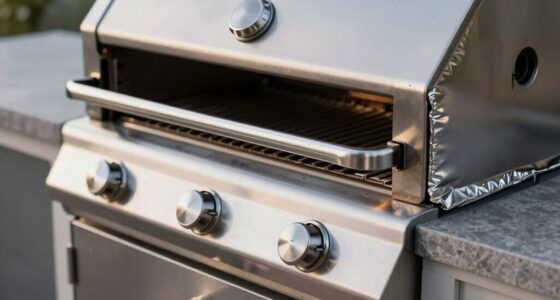
Creating an outdoor kitchen can be a fantastic way to enjoy cooking and entertaining outside, but it’s essential to prioritize safety to prevent accidents. One of the most critical aspects is maintaining your grill properly. Regular grill maintenance isn’t just about keeping your equipment clean; it’s about ensuring everything functions safely. Grease buildup, rust, or damaged parts can cause flare-ups or even fires. Before each use, check for leaks or cracks in hoses, and make sure burners are working correctly. Cleaning the grill grates and removing ash buildup reduces the risk of flare-ups, which can quickly escalate into dangerous fires. Remember, a well-maintained grill runs more efficiently and reduces the chances of accidental fires, making your outdoor cooking safer for everyone.
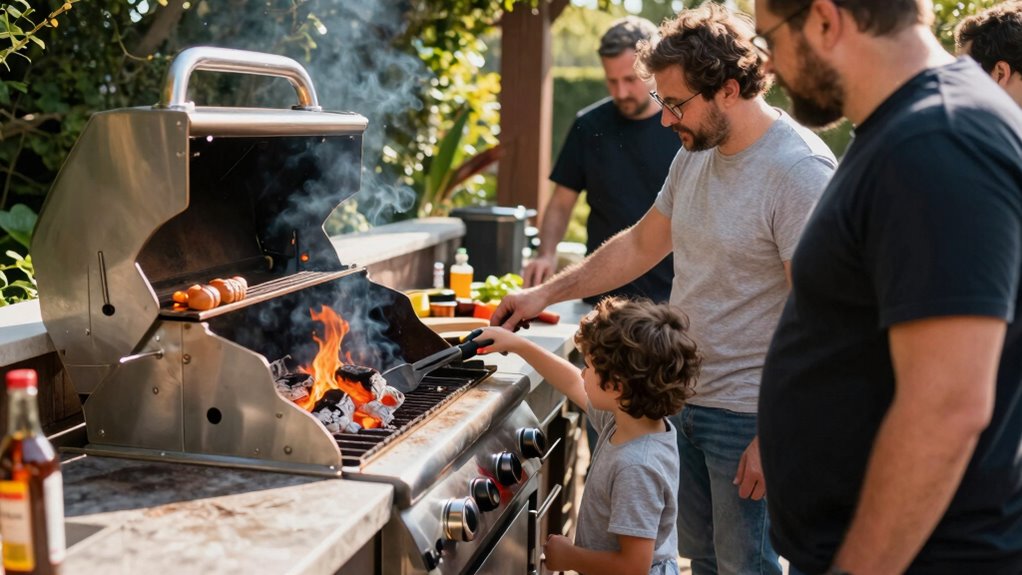
Fire safety is another crucial consideration that many overlook until it’s too late. Keep a fire extinguisher nearby — within easy reach but away from the grill itself, so it’s accessible if needed. Never leave your grill unattended when in use; a moment of distraction can lead to a fire or injury. Make sure the area around your outdoor kitchen is clear of any flammable materials, like paper, leaves, or wooden furniture that could catch fire from stray sparks or heat. When you’re finished cooking, double-check that the grill’s gas supply is turned off completely, and allow it to cool down before covering or storing it. If you’re using charcoal, dispose of ashes properly and only after they’re thoroughly cooled to prevent accidental fires. Additionally, understanding the contrast ratio of your outdoor projector can help you choose the right setup for evening movie nights, ensuring your images remain vibrant and clear even in ambient light.
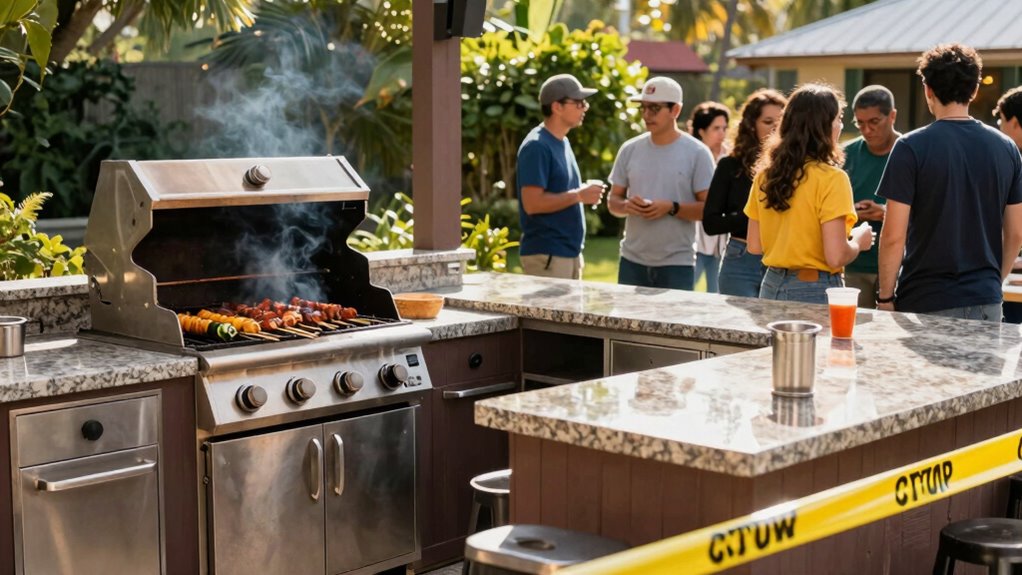
To further enhance safety, consider installing surveillance cameras or outdoor lighting to monitor your cooking area, especially during late-night gatherings. Many people learn the importance of these safety rules only after experiencing a close call or a small fire. To avoid this, always stay vigilant, especially during peak grilling times or windy days when sparks can travel farther. It’s also helpful to keep a fire safety plan in mind, so everyone knows what steps to take in case of an emergency. Proper knowledge of fire safety procedures can significantly reduce the risk of accidents and ensure quick responses when necessary. Additionally, having fire safety equipment readily available, such as fire blankets or extinguishers, can be a lifesaver in critical moments. It’s also wise to educate everyone involved about fire safety protocols, such as how to shut off gas lines and what to do in case of an emergency. By integrating good grill maintenance and fire safety practices into your outdoor kitchen routine, you’re considerably reducing the risk of accidents. Taking these precautions now means you can focus on enjoying your outdoor space without worry, knowing you’ve minimized the chances of preventable mishaps. Safety isn’t just an afterthought; it’s the foundation of a fun, worry-free outdoor cooking experience.
As an affiliate, we earn on qualifying purchases.
Frequently Asked Questions
How Often Should Outdoor Kitchen Equipment Be Inspected for Safety?
You should inspect your outdoor kitchen equipment at least once a month to guarantee safety. Follow proper cleaning protocols during each inspection to prevent buildup and detect potential hazards early. Adhere to maintenance schedules recommended by the manufacturer, checking gas lines, burners, and electrical components regularly. This proactive approach helps prevent accidents, keeps your outdoor kitchen in top condition, and ensures you enjoy safe, worry-free cooking adventures.
Are There Specific Fire Extinguisher Types Recommended for Outdoor Kitchens?
You should use a Class B or multipurpose ABC fire extinguisher in your outdoor kitchen, as these are best for grease and electrical fires. Regular fire extinguisher maintenance guarantees it’s ready to use, and proper extinguisher placement—near the grill and cooking area—quickly addresses fires. Keep the extinguisher accessible, visible, and check it monthly to confirm it’s in working condition, enhancing your outdoor kitchen safety.
What Are Common Overlooked Hazards in Outdoor Kitchen Setups?
You might overlook hazards like unstable surfaces or hidden pests that threaten your outdoor kitchen’s safety. While focusing on grilling safety, don’t forget about pest prevention, which can attract insects or rodents near food prep areas. These overlooked dangers can cause accidents or contamination. Stay vigilant—fortify your setup, keep surfaces level, and regularly inspect for pests. A little extra caution ensures your outdoor cooking remains safe and enjoyable.
How to Handle Electrical Issues Safely in Outdoor Kitchens?
To handle electrical issues safely in outdoor kitchens, guarantee proper electrical grounding to prevent shocks. Keep cords well-managed, avoiding tangles or exposure to water, which can cause short circuits. Use outdoor-rated extension cords and appliances, and regularly inspect them for damage. Always unplug devices when not in use, and turn off power sources during maintenance. Following these safety tips keeps your outdoor cooking area secure and minimizes electrical hazards.
What Safety Measures Are Needed for Outdoor Refrigeration Units?
You need to regularly inspect your outdoor refrigeration unit for refrigerant leaks and guarantee all electrical connections are secure. Keep the insulation well-maintained to prevent energy loss and protect the compressor. Also, clear the area around the unit to avoid debris buildup, which could cause overheating. Always turn off the unit before performing maintenance, and consult a professional if you notice any refrigerant leaks or electrical issues for safe handling.
As an affiliate, we earn on qualifying purchases.
Conclusion
So, next time you’re flipping burgers under the open sky, remember these safety rules. Ignoring them might turn your backyard barbecue into a fiery disaster or a soggy mess—because nothing says “fun” like a kitchen mishap that ruins your weekend. Play it safe, follow the rules, and avoid becoming the star of the next cautionary tale. After all, the only thing you want to smoke is the brisket, not your eyebrows.
outdoor kitchen safety fire extinguisher
As an affiliate, we earn on qualifying purchases.
As an affiliate, we earn on qualifying purchases.
grill cleaning brush and scraper
As an affiliate, we earn on qualifying purchases.
As an affiliate, we earn on qualifying purchases.
Flea & tick season Picks
flea and tick prevention
As an affiliate, we earn on qualifying purchases.