
To think about plumbing safety in freeze-prone areas, you should prioritize insulating pipes, especially in unheated spaces like basements or garages. Know how to quickly shut off the water supply and label the shut-off valve for easy access. Drain outdoor faucets, disconnect hoses, and leave a small drip indoors during cold weather. Regularly inspect your system for leaks or weaknesses, and take proactive steps to protect all fixtures. Continuing will help you discover essential tips to keep your plumbing safe year-round.
Key Takeaways
- Prioritize pipe insulation to prevent freezing and reduce damage risk during cold weather.
- Know the location and operation of emergency shut off valves for quick response.
- Drain outdoor faucets and disconnect hoses before temperatures drop below freezing.
- Regularly inspect plumbing for leaks, corrosion, or weak spots to catch issues early.
- Combine insulation, shut off knowledge, and maintenance for a comprehensive winterization plan.
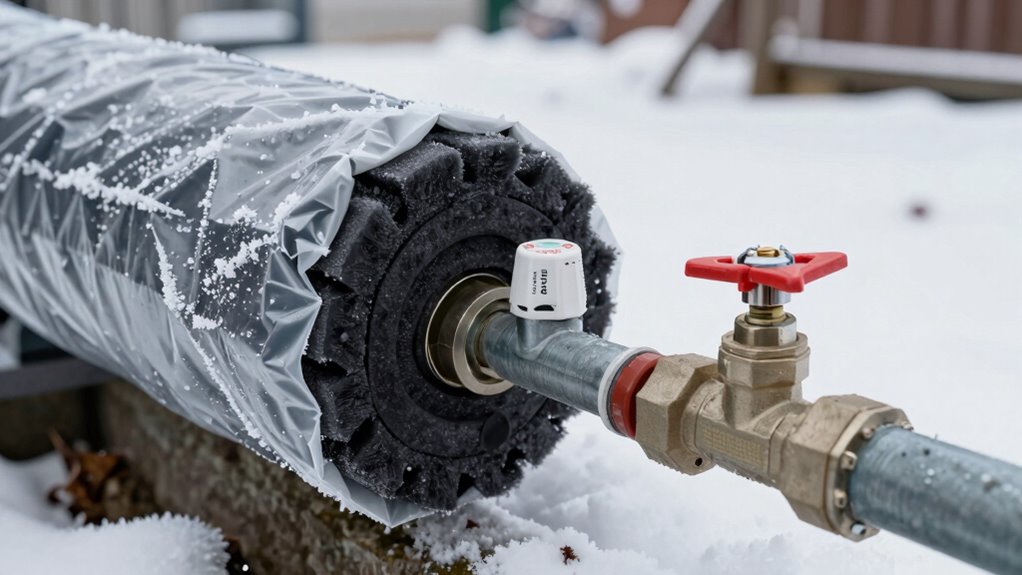
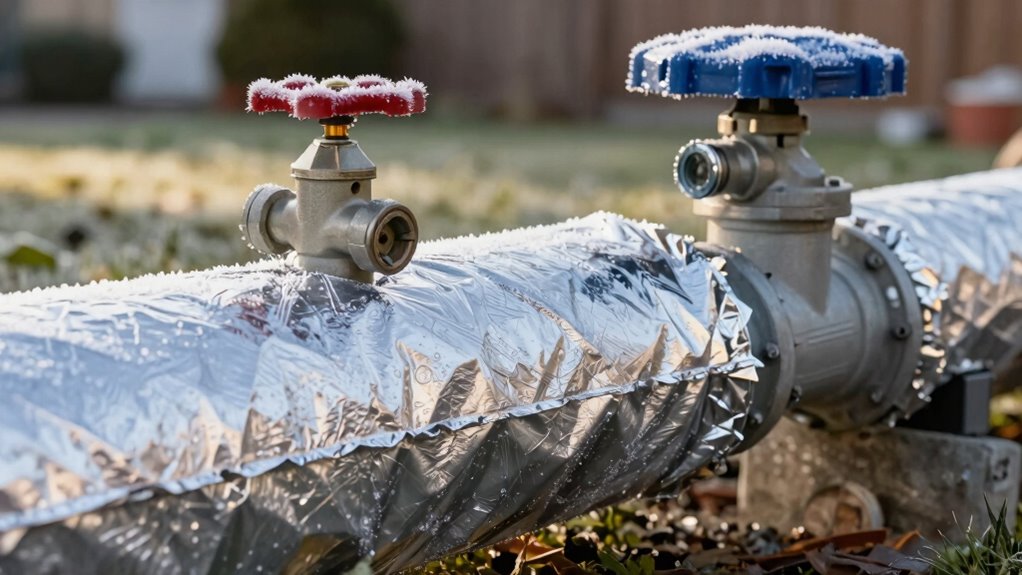
When temperatures drop in freeze-prone areas, your plumbing system becomes vulnerable to costly damage. Freezing water expands and can cause pipes to burst, leading to water damage and expensive repairs. To prevent this, you need to think proactively about plumbing safety. One of the simplest yet most effective steps is installing pipe insulation. Pipe insulation acts as a barrier, helping keep the water inside your pipes warmer and reducing the risk of freezing. It’s especially crucial for pipes located in unheated spaces like basements, attics, or garages. Proper insulation can buy you essential extra hours during a cold snap, giving you time to take additional precautions before pipes freeze completely.
Installing pipe insulation helps prevent freezing and burst pipes in unheated spaces during cold weather.
In addition to insulation, you should familiarize yourself with the location of your home’s emergency shut off valve. When a pipe bursts or starts leaking, shutting off the water supply immediately can minimize water damage and prevent flooding. Make sure you know how to turn off your main water supply quickly, and consider labeling the shut off valve clearly for easy access in emergency situations. Keep the shut off valve accessible at all times, and practice shutting it off so you’re prepared if a problem arises unexpectedly. This quick action can save you from costly repairs and extensive water damage. Understanding plumbing system components can also help you better navigate potential issues and maintenance needs. Being aware of potential weak spots in your plumbing system can further reduce the risk of emergencies during winter. Regular maintenance and inspections can help identify issues early before they turn into emergencies.
Beyond pipe insulation and knowing your emergency shut off, there are other actions you should take to safeguard your plumbing. Drain outdoor faucets and disconnect hoses before the first hard freeze to prevent frozen or burst pipes outside. For indoor pipes, leave a small drip running during extremely cold nights; moving water is less likely to freeze. Seal any gaps or cracks around pipes that lead outside or into unheated spaces to prevent cold air from seeping in and chilling your pipes. Additionally, investing in quality plumbing materials can help reduce the likelihood of leaks and corrosion that could worsen during winter. Regularly inspecting your plumbing system and addressing issues promptly can also help maintain its integrity throughout the cold months. Incorporating energetic alignment principles, such as visualizing a protected and safe plumbing system, can further enhance the effectiveness of your winterization efforts.
Maintaining your plumbing system is also vital. Regularly check for leaks, corrosion, or weak spots, especially before winter hits. Insulation isn’t a substitute for proper maintenance; it’s an added layer of protection. If you’re unsure about any aspect of winterizing your plumbing, consulting a professional plumber can provide peace of mind. They can assess your system, recommend the right insulation materials, and ensure your emergency shut off is functioning correctly. By combining these precautions—pipe insulation, knowledge of your shut off valve, proper maintenance, and winterizing outdoor fixtures—you significantly reduce the risk of freezing-related damage. Thinking ahead and taking these proactive steps will help you protect your home and avoid the headaches of burst pipes during the coldest months.

Duck Brand Foam Pipe Covers, Pipe Insulation Foam Tubes for Hot and Cold Water Pipes, Pre Slit and Self Sealing Adhesive Edge, 0.75 in. x 1 Ft., 6 Sticks Per Package, 6 Feet Total, Black
- Suitable for Hot and Cold Pipes: Insulates hot and cold water pipes
- Pre-Slit for Easy Installation: Pre-slit design for quick setup
- Self-Sealing Edges: Securely seals around pipes
As an affiliate, we earn on qualifying purchases.
As an affiliate, we earn on qualifying purchases.
Frequently Asked Questions
How Can I Prevent Pipes From Freezing Without Professional Help?
To prevent pipes from freezing without professional help, start by insulating exposed pipes using pipe insulation, especially in unheated areas. Don’t forget to insulate outdoor faucets with faucet covers or insulated caps. Keep your home heated to a consistent temperature, even at night. Letting a faucet drip slightly also prevents freezing by keeping water moving. These simple steps protect your plumbing and avoid costly repairs.
What Are the Best Materials for Freeze-Resistant Plumbing?
Ironically, your best bet for freeze-resistant plumbing is using pipe materials like PEX or copper, which handle cold better than traditional options. PEX, in particular, offers superior insulation effectiveness, reducing the risk of freezing. Copper is durable but needs extra insulation. Combining these materials with proper insulation can keep your pipes safe in cold weather, making your plumbing less of a winter worry.
How Often Should I Inspect My Plumbing System in Cold Climates?
You should inspect your plumbing system at least twice a year, especially before winter and during early spring. During inspections, focus on pipe maintenance by checking for cracks, leaks, or signs of freezing. Keep an eye on water pressure; high pressure can stress pipes and cause damage. Regular inspections help you identify issues early, ensuring your plumbing stays functional and safe in cold climates.
Can Insulation Alone Protect My Pipes From Freezing?
Insulation alone isn’t a knight in shining armor, but it’s a vital part of your defense. Pipe insulation and thermal blankets help keep pipes warm, but they might not fully prevent freezing during severe cold snaps. To protect your plumbing, combine insulation with other methods like heating tapes or keeping a trickle of water flowing. Think of insulation as a cozy sweater—helpful, but sometimes you need extra layers.
What Emergency Measures Should I Take if a Pipe Bursts?
If a pipe bursts, you should first turn off your main water supply to prevent further flooding. Grab your emergency kit, which includes tools and supplies for burst repair. Then, carefully drain remaining water from the pipe to reduce damage. Use repair tape or a pipe clamp from your kit for a quick fix, and call a professional plumber if needed. Acting swiftly minimizes damage and gets your water flowing again.
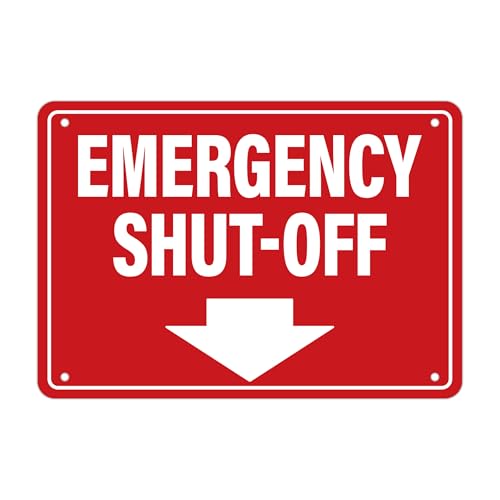
Emergency Shut-Off Sign Sticker with Down Arrow, Waterproof Durable Emergency Stop Stickers, Shut Off Valve Sign for Powered Machinery and Equipment
- Package Includes Emergency Shut-Off Sign: Adhesive-backed, 9.8×6.8 inches, matte finish
- Clear Emergency Identification: Bold text with down arrow for quick recognition
- Durable Vinyl Material: Resistant to bending, breaking, and fading in extreme temperatures
As an affiliate, we earn on qualifying purchases.
As an affiliate, we earn on qualifying purchases.
Conclusion
By taking these simple precautions, you’ll protect your plumbing from the brutal winter’s wrath, turning a potential disaster into a minor hiccup. Think of your pipes as delicate glass sculptures—handle them with care, and they’ll serve you reliably for years. Don’t let a burst pipe turn your home into a flooded disaster zone; instead, stay vigilant and prepared. With proactive steps, you’ll keep your plumbing safe and your winter worry-free—like a fortress against nature’s icy fury.

PILISPARK ASSE 1019-A Outdoor Faucet Repair Kit with Teflon Tape, Vacuum Breaker Replacement Kit Anti-Siphon Frost-Free Hose Bib Sillcock Valve Replacement(1 Pack)
- Universal faucet repair kit: Suitable for anti-siphon and frost faucets
- High-quality materials: Made from steel, aluminum, rubber, copper, plastic, graphite
- Complete repair components: Includes vacuum breaker and handle replacement parts
As an affiliate, we earn on qualifying purchases.
As an affiliate, we earn on qualifying purchases.

Tiiyee Water Leakage Detection, Wall Pipe Leak Detector Underground Monitor
- Advanced Leak Detection Technology: Precise underground water leak detection
- Wireless Sound Amplifier: Listen for subtle water leak sounds
- Easy to Use: Simple operation for leak detection
As an affiliate, we earn on qualifying purchases.
As an affiliate, we earn on qualifying purchases.