TL;DR

Get garden gear delivered free with Prime
- Fast, free delivery on millions of items
- Prime Video, Amazon Music and more included
- Member-only deals all year
A Homes & Gardens gardening report recommends nine plants for fall interest, including Arkansas bluestar, ornamental grasses, red chokeberry and late-flowering perennials. Designers cited in the report say these plants can add foliage color, plumes, berries and structure as summer blooms fade; performance depends on local conditions and plant suitability.
Homes & Gardens has published a list of nine plants that gardening professionals recommend for fall interest, focusing on species whose foliage, flowers, berries or seedheads become especially prominent as summer ends. The report says these choices can help gardeners maintain color and texture as many summer perennials fade, though results depend on growing conditions and regional climate.
The list includes Arkansas bluestar (Amsonia hubrichtii), whose fine foliage turns yellow, orange and red in autumn, and Korean feather reed grass (Calamagrostis brachytricha), which develops feathery plumes that mature to silvery tan. New York landscape designer Kat Aul Cervoni told the publication she values bluestar for its fall color and soft texture, and the grass for movement in a planting as other perennials lose vigor.
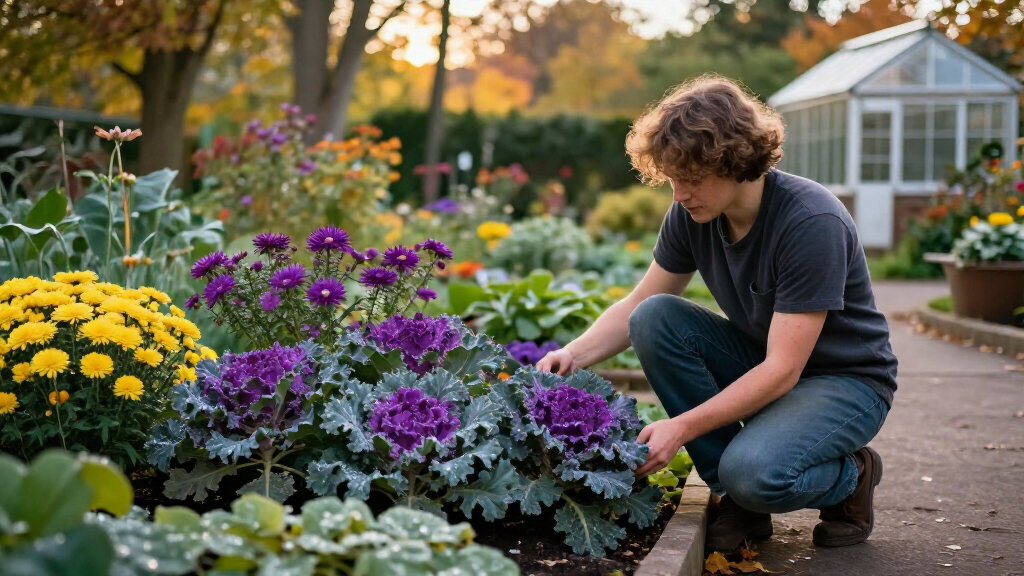
Red chokeberry (Aronia arbutifolia) is included for its red autumn leaves and glossy berries, which the report says can remain into winter and provide food for songbirds. Pink muhly grass (Muhlenbergia capillaris) produces pink plumes in late summer that carry into fall. The article also names Japanese anemone, sedum, beautyberry, ornamental cabbage and asters among its nine choices, citing their late flowers, berries, foliage or form.
The recommendations combine ornamental qualities with practical considerations. The report notes, for example, that red chokeberry prefers moist soil and can become a substantial shrub, while pink muhly grass does best in full sun and well-drained soil. It describes the plants as options for seasonal garden interest, not as a guarantee that every species will thrive in every location.
Extending Color Beyond Summer
The advice addresses a common design challenge: keeping beds visually engaging after peak summer flowering. Plants selected for autumn foliage, berries and seedheads can add interest even as earlier blooms decline, and grasses can provide movement and texture alongside late-season color. The report’s recommendations give gardeners a range of forms, from shrubs to perennials and grasses, rather than relying on flowers alone.
Some choices can also serve functions beyond appearance. The report identifies red chokeberry as a native shrub in eastern North America whose berries are eaten by songbirds. Gardeners still need to check whether a plant’s needs match their site, including sun exposure, moisture, soil and hardiness zone, before planting.
Products Worth Considering

Orbit B-hyve XD 4-Port Smart Hose Watering Timer with Wi-Fi Hub

Orbit B-hyve Smart Indoor/Outdoor 12-Zone Sprinkler Controller

Husqvarna 122C 22-cc 2-Cycle Gas String Trimmer, 17-Inch Curved Shaft
As an affiliate, we earn on qualifying purchases.
How the Nine Plants Were Chosen
The source is a Homes & Gardens gardening report that draws on recommendations from landscape designers and professional gardeners. Its central point is that a garden’s strongest season need not end with summer: some plants reach their most striking stage later, after foliage changes color, plumes mature or berries appear.
The article’s examples cover several kinds of seasonal display. Arkansas bluestar and red chokeberry are presented for autumn foliage; Korean feather reed grass and pink muhly grass for plumes and movement; and the remaining selections for late flowers, berries or distinctive seasonal form. The source provides specific growing notes for some plants, but it does not offer a comparative trial or claim that the choices outperform summer plants in every garden.
““The fall foliage will knock your socks off.””
— Kat Aul Cervoni, founder of Staghorn Living, quoted by Homes & Gardens
Local Growing Conditions Matter
The source does not specify a publication date in the material provided, and it does not establish that all nine plants will look better in fall in every climate or garden. Flowering and color can vary with local weather, exposure, soil and care. The supplied report gives detailed descriptions for four plants but only identifies the remaining five by name, so their specific growing requirements and regional suitability are not fully documented here.
The headline’s comparison is a horticultural judgment, not the result of a measured comparison between seasons. The report attributes its recommendations to gardening professionals, but it does not provide experimental data or a universal ranking.
Check Fit Before Planting
Gardeners considering the list should check each plant’s hardiness range, mature size, sun needs and moisture requirements against their own site. The source gives some zone and care information for individual examples, but not a full planting guide for all nine. Local extension services, nurseries and regional gardening references can help clarify whether a selection is suitable.
As the season changes, gardeners can also observe which plants already in their beds develop strong foliage color, seedheads or berries, then plan future additions around those features. The report offers suggestions rather than a prescribed planting schedule; it does not identify a forthcoming test, update or other next milestone.
Key Questions
Which plants are named in the report?
The nine are Arkansas bluestar, Korean feather reed grass, red chokeberry, pink muhly grass, Japanese anemone, sedum, beautyberry, ornamental cabbage and asters.
Why can these plants stand out in fall?
The report points to changing foliage, mature grass plumes, late blooms and berries as features that become prominent in autumn, when many summer flowers are fading.
Are all nine suitable for every garden?
No. Suitability depends on climate, hardiness zone, sun, soil, moisture and available space. The report gives some care details, but gardeners should verify requirements for their own location.
Does the report prove these plants look better in fall?
No. It presents professional recommendations and descriptions of seasonal features, not a controlled comparison or universal ranking. The claim is a design judgment that may vary by garden and region.
Source: homesandgardens.com