TL;DR
A Gardening Know How report highlights Dakota Johnson’s Los Angeles poolside garden, featured in Architectural Digest’s Open Door series, where 20-30 identical terracotta planters are lined in a row. The report argues that repetition of one material, size, and plant type creates a calm, cohesive look that works in any garden.
Actress Dakota Johnson’s Los Angeles poolside garden, featured in Architectural Digest’s Open Door video series, has drawn attention for a container display that defies standard design advice: a row of at least 20 to 30 matching terracotta planters along a curved retaining wall. A report by Gardening Know How argues the approach — sticking to one material, near-identical sizes, and repeated plantings — produces a cohesive, calming effect that gardeners can copy in almost any space.

Get garden gear delivered free with Prime
- Fast, free delivery on millions of items
- Prime Video, Amazon Music and more included
- Member-only deals all year
According to the Gardening Know How report, most garden designers advise mixing container shapes, sizes, heights, and colors to create visual interest. Johnson’s garden, which frames her pool along a retaining wall originally designed in 1947 by Carl Mason, does the opposite: every pot is made from the same unglazed terracotta, in nearly the same shape and size, repeated along the full length of the wall.
The report’s author writes that this repetition gives the display a unified look rather than reading as a collection of individual plants and objects. Terracotta specifically earns praise for its natural texture and tone, with each pot aging at a slightly different rate and developing its own patina, so the row looks “grown rather than placed there.”
Planting choices follow the same logic. Johnson reportedly planted similar shrubs, including roses and azaleas, repeatedly across all the pots rather than varying the plantings. For sunny poolside locations, the report recommends succulents and drought-tolerant shrubs such as agave, aeonium, jade, and trailing rosemary, which tolerate heat and reflected light; for shadier patios, ferns, hostas, or clipped box balls. The report stresses that the specific plant matters less than committing to one type.
Why One-Pot Repetition Beats Eclectic Mixing
The report’s core argument is that most gardeners instinctively treat each container as its own composition, mixing glazed with unglazed finishes or tall with short pots. The result, the author writes, often looks like “a display at your local garden center” rather than a designed space. Repetition, by contrast, creates rhythm and lets the eye rest as it moves along the row.
This matters for practical gardeners because the approach is inexpensive and low-skill: it requires buying multiples of the same pot rather than curating a varied collection. The report’s summary advice is blunt: choose a material, commit to it, and buy more pots than you think you need. The technique also translates across climates and garden sizes, provided the scale of the pots matches the space.
Products Worth Considering

Orbit B-hyve XR 8-Zone Indoor/Outdoor Smart Sprinkler Controller
Orbit B-hyve XR 16-Zone Indoor/Outdoor Smart Sprinkler Controller

Orbit B-hyve Smart Indoor/Outdoor 12-Zone Sprinkler Controller
As an affiliate, we earn on qualifying purchases.
The Property and the Designer Backstory
Johnson’s garden sits on a Los Angeles property whose curved retaining wall dates to a 1947 design by Carl Mason, according to the report. The garden gained public visibility through the Architectural Digest Open Door video series, in which celebrities tour their homes. Gardening Know How’s piece uses the tour footage as the basis for its design analysis, contrasting Johnson’s minimalist repetition with the mixed-container approach most designers recommend for patios and poolside planting.
“Who needs eclectic when you can have calm, meditative, and soothing?”
— Gardening Know How report
Practical Limits of the Terracotta Approach
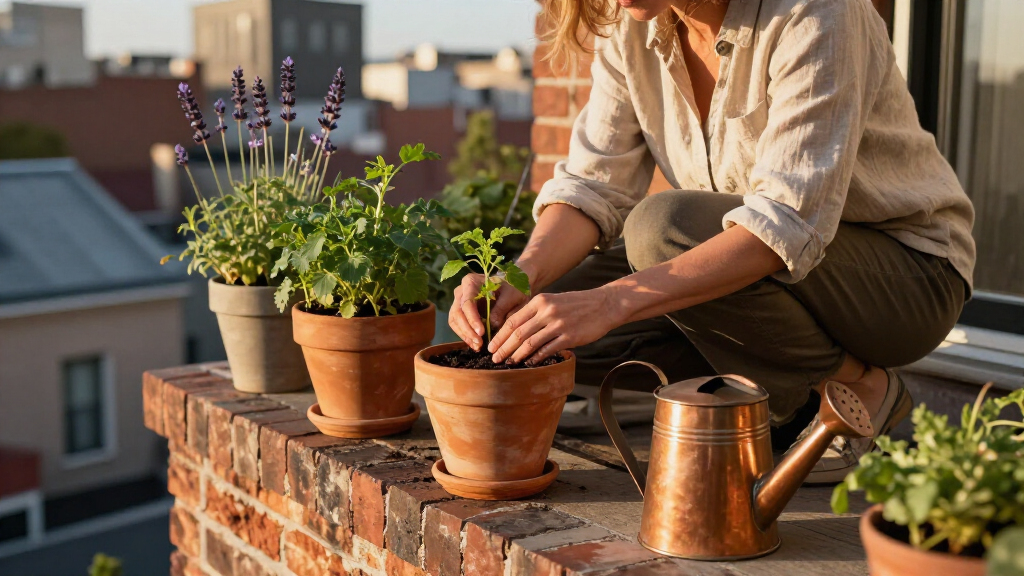
The report itself flags important caveats. Traditional terracotta is vulnerable to frost damage: water absorbed into the clay can expand and crack pots from the inside in colder climates. The author recommends bringing pots indoors through winter, using frost-proof terracotta fired at higher temperatures, or switching to double-walled resin pots with a terracotta finish.
The exact number of pots in Johnson’s garden is given only as “at least 20 or 30,” and the report does not specify pot dimensions, plant varieties beyond roses and azaleas, or maintenance requirements. The visual effect, as described, is the author’s assessment rather than a measured outcome.
How Gardeners Can Apply the Method
Readers wanting to copy the look can follow the report’s sequence: pick one pot material, size containers to the space — at least 12 inches in diameter for patio or poolside use — and repeat a single planting type across all pots. Gardeners who find strict uniformity too rigid can introduce a few oversized pots among medium ones without breaking cohesion, according to the report. As terracotta weathers, its developing patina is expected to strengthen rather than diminish the effect, though outcomes will vary by climate and sun exposure.
Key Questions
What is Dakota Johnson’s container garden idea?
Her Los Angeles poolside garden lines up at least 20-30 matching unglazed terracotta planters of nearly identical size along a retaining wall, planted with repeated shrubs such as roses and azaleas — relying on repetition rather than varied shapes and colors.
Why does repeating the same pots work better than mixing them?
According to Gardening Know How, repetition creates rhythm and cohesion, letting the eye rest as it moves along the row. Mixed containers often read as a garden-center display rather than a designed space.
What size should poolside or patio containers be?
The report recommends containers no smaller than 12 inches in diameter for poolside or patio arrangements, going larger where space allows, so pots don’t look swallowed by the surrounding hard surface.
Can terracotta pots stay outside in winter?
Not in hard-frost climates. Traditional terracotta absorbs water that can freeze, expand, and crack the pot. The report advises bringing pots indoors, buying frost-proof terracotta, or using double-walled resin pots with a terracotta finish.
What plants suit a sunny poolside row of terracotta pots?
The report suggests heat- and drought-tolerant options such as agave, aeonium, jade, and trailing rosemary, which tolerate reflected light and occasional pool splashes. For shade, ferns, hostas, or clipped box balls work — the key is repeating one type.
Source: rss