TL;DR

Get garden gear delivered free with Prime
- Fast, free delivery on millions of items
- Prime Video, Amazon Music and more included
- Member-only deals all year
A Gardening Know How report describes using a raw potato slice to draw fungus gnat larvae to the soil surface, where they can be spotted and removed with the slice. The method is a monitoring aid, not a complete treatment: it does not affect eggs, pupae or adult gnats.
Gardening Know How has reported that a slice of raw potato can help houseplant owners detect fungus gnat larvae hiding in potting soil. The slice attracts feeding larvae to its underside, where they can be seen and removed, but the report stresses that this is a monitoring trick, not a standalone cure.
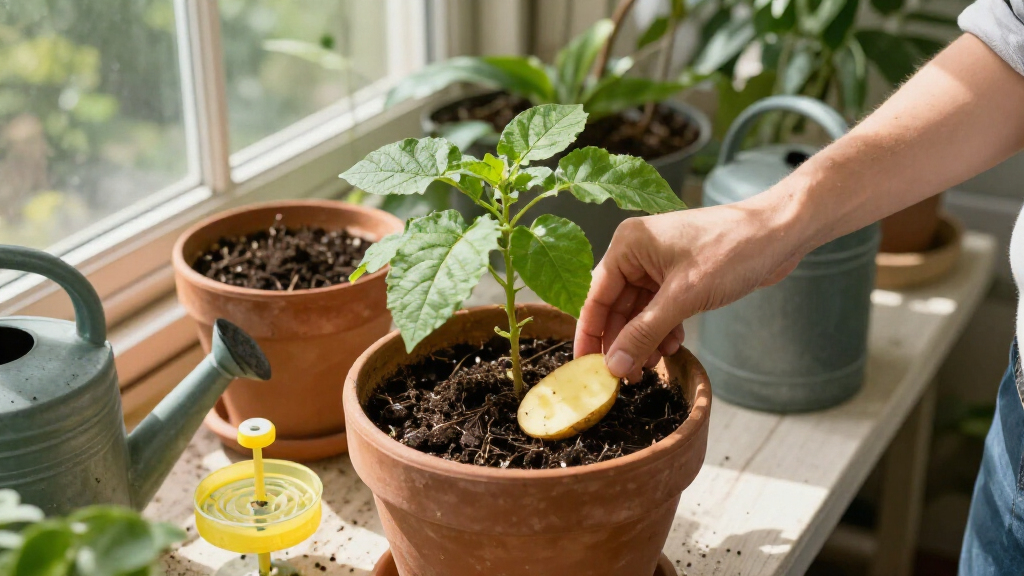
The method uses a raw potato cut into slices about ¼ inch (6.4 millimeters) thick. Place a slice cut-side down on the potting mix and press it lightly against the surface. After a day or two, lift it and inspect the underside and the soil beneath it for small, pale larvae with dark heads. The report says the larvae may take a few days to find the potato, so a clean first check does not establish that a pot is free of them.
Any larvae gathered on the slice can be discarded with it. The report advises replacing the potato rather than leaving it on the soil: raw potato can rot in damp mix, adding more decaying material. Eggs are not detected by this method, because they do not feed on the slice. Pupae and flying adults are not drawn out either, so the potato offers only a partial view of an infestation.
Fungus gnat larvae usually feed on fungi and decaying organic matter, but can also feed on fine plant roots. The report says a small infestation generally causes little harm, while larger numbers may damage roots and stunt growth, particularly in seedlings and young plants. It recommends interpreting the potato check alongside other signs, including adult gnats and persistently wet soil.
A Low-Cost Check, Not a Cure
The potato method gives plant owners a simple way to look for larvae without digging through a pot’s root zone. That can help distinguish a visible nuisance—the adults flying around—from the stage that may harm roots. It also gives a rough way to compare checks over time, provided slices are replaced and inspected consistently.
Its limits matter: a slice without larvae does not prove the soil is clear, and removing the larvae on one slice will not stop eggs, pupae or adults from continuing the life cycle. The report presents the trick as a monitoring step that may help identify a problem early, not as evidence that the infestation has been controlled.
For readers, the practical point is to avoid treating a single clean check as reassurance if gnats remain visible. Moisture management and other control methods may still be needed, and products should be used only as their labels allow.
Products Worth Considering

Orbit B-hyve Smart Indoor/Outdoor 12-Zone Sprinkler Controller

Orbit B-hyve XR 8-Zone Indoor/Outdoor Smart Sprinkler Controller
Orbit B-hyve XR 16-Zone Indoor/Outdoor Smart Sprinkler Timer
As an affiliate, we earn on qualifying purchases.
Why Larvae Stay in the Pot
Fungus gnats are small flies often associated with the genus Bradysia. According to the report, females can lay up to 200 eggs in damp potting mix. Larvae feed for a couple of weeks, then pupate near the soil surface; adults may appear about a week later. At room temperature, the report estimates a generation can take roughly three to four weeks.
The adults are conspicuous, but the immature stages remain mostly hidden in the soil. The report describes larvae as clear or whitish, legless and up to about ¼ inch (6 millimeters) long, with a shiny black head. Their small size and pale coloring can make them difficult to see against wet, dark potting mix.
The article links recurring problems with soil that stays damp. Houseplants may use less water during fall and winter as growth slows, while watering habits remain unchanged. The report suggests allowing the top inch of soil to dry before watering again, emptying saucers and checking that pots drain properly.
“The potato doesn’t poison anything – it just draws feeding larvae up from the roots.”
— Gardening Know How report
What a Clean Slice Cannot Show
The report does not provide controlled test results or quantify how many larvae a potato slice typically attracts, so its effectiveness as a detection method is not measured in the supplied material. It also does not set out a validated threshold for deciding whether a plant has an infestation based on the number of larvae found.
A slice with no visible larvae may mean there are few larvae, that they have not reached it, or that they are difficult to spot. The method does not show whether eggs or pupae are present. How quickly a particular infestation will respond to watering changes or additional controls can also vary by plant, soil and indoor conditions.
Monitor and Adjust Plant Care
The report advises repeating the potato check if adult gnats continue to appear, while removing and replacing slices so they do not decay in the pot. It also recommends adjusting watering, emptying saucers and checking drainage. Yellow sticky traps can catch adult gnats and provide an indication of adult activity, but they do not affect larvae in the soil.
If the problem persists, the report identifies products containing Bacillus thuringiensis subsp. israelensis (Bti) and beneficial nematodes as possible options. It says to check that a product’s label permits use on indoor potted plants and follow the directions. The supplied report does not establish that any particular treatment will work in every home; the next useful indicator is whether larvae and adult gnats decline during continued monitoring.
Key Questions
How do you use a potato slice to check for fungus gnat larvae?
Cut raw potato into slices about ¼ inch (6.4 millimeters) thick, place one cut-side down on the potting mix and check beneath it after a day or two. Look for pale, small larvae on the moist underside or the soil where the slice sat.
Does the potato trick get rid of fungus gnats?
Not by itself. The slice attracts feeding larvae, and discarding it can remove those gathered on it. It does not affect eggs, pupae or adult gnats, so the report describes it mainly as a way to detect and monitor larvae.
Does a clean potato slice mean the plant has no larvae?
No. Larvae may not have reached the slice, may be present in small numbers or may be hard to see. Eggs and pupae are not detected by this method. If adult gnats remain, the report advises checking again rather than treating one clean slice as proof the pot is clear.
What can help if fungus gnats keep appearing?
The report recommends letting the top inch of soil dry before watering, emptying saucers and checking drainage. It also describes sticky traps for adults and Bti or beneficial nematodes for larvae. Follow product labels and confirm that indoor potted-plant use is allowed.
Source: gardeningknowhow.com