
TL;DR

Get garden gear delivered free with Prime
- Fast, free delivery on millions of items
- Prime Video, Amazon Music and more included
- Member-only deals all year
Many hummingbirds move south as daylight shortens and food becomes scarce, with some reaching Mexico and Central America by November. Anna’s hummingbirds and some Allen’s hummingbirds may remain in parts of the West, so feeders, winter-blooming plants and undisturbed nesting cover can help local birds.
A Homes and Gardens report says many hummingbirds head south as fall brings shorter days and less food, while some remain in parts of the United States through winter. The seasonal shift matters to people hoping to support local birds: keeping feeders clean and available, planting winter nectar sources and protecting shrubs and trees can help birds that stay or pass through.
The report says ruby-throated, rufous and calliope hummingbirds generally migrate toward Mexico, with some continuing to Central America. By November, many migrating hummingbirds have reached those regions, although timing and routes vary among species. The birds’ movements are linked to seasonal food availability as well as shorter daylight hours.
Not every hummingbird leaves the United States. Anna’s hummingbirds are often present along the West Coast and in the Pacific Northwest during winter. The report describes their use of torpor—a temporary state in which body temperature and metabolism drop—as a way to conserve energy, particularly on cold nights. Allen’s hummingbirds have separate populations: some migrate to Mexico, while others remain in southern California year-round.
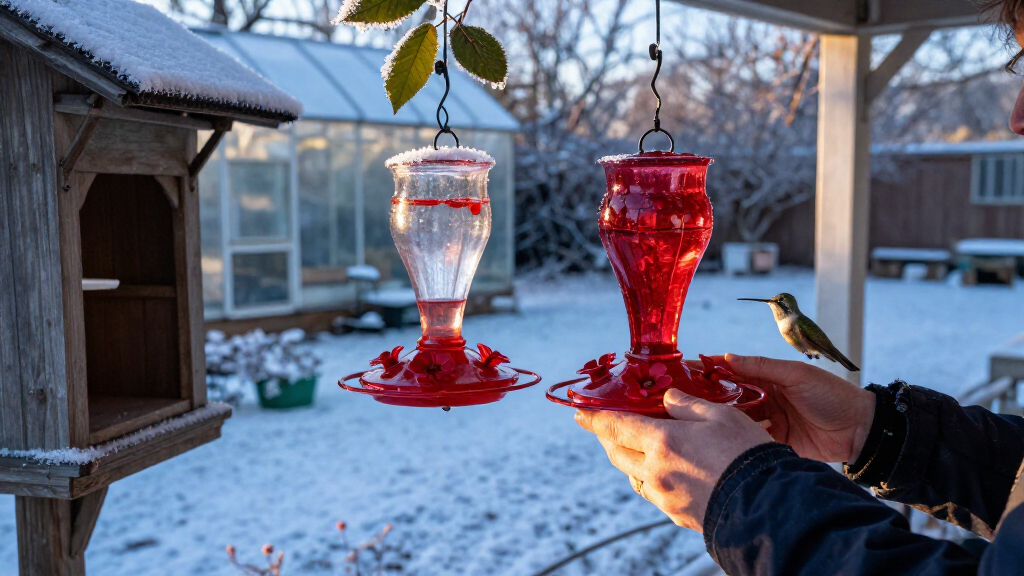
For winter support, the report recommends maintaining feeders and using a heated feeder where needed to keep nectar from freezing, along with safe winter bird-feeding practices. It also advises cleaning feeders regularly and replenishing them with hummingbird nectar. Winter-flowering plants, including camellias, can offer a natural food source. The report also urges gardeners to avoid pruning trees and shrubs when birds may be nesting in them, preserving potential shelter and nesting sites, especially as cold weather approaches.
Food and Shelter Through Winter
Winter can leave hummingbirds with fewer natural food sources, especially in colder parts of their range. A maintained feeder or flowering plant may provide additional nectar for a bird that remains locally or pauses during migration. These measures do not change migration patterns, but they can make a yard more supportive when birds are present.
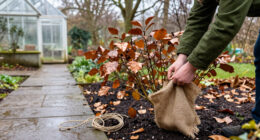
Gardening choices also affect more than feeding. Delaying pruning can preserve cover and potential nests, while leaving some fallen leaves and faded perennials can provide habitat for other wildlife. The report recommends these broader yard practices even where hummingbirds are not seen during winter.
Products Worth Considering

14 Pcs Polycarbonate Greenhouse Panels, 6' x 2' x 0.24'' Twin-Wall Panels, Polycarbonate Sheet for All Weather Outdoor Garden and Greenhouse

EGO POWER+ Cordless Leaf Blower, 615 CFM, with 2.5 Ah Battery (LB6151)

Greenworks 40V String Trimmer and Blower Combo with 2.0 Ah Battery
As an affiliate, we earn on qualifying purchases.
Migration Varies by Species
Hummingbird migration is not a single, uniform journey. The report describes a broad southward movement from parts of the United States and Canada during fall, with many birds reaching Mexico or Central America by November. Species and populations differ, however: some travel long distances, while others occupy milder western areas throughout the colder season.
That variation explains why a yard may lose its summer visitors while another still has hummingbirds in winter. Their disappearance is not, by itself, evidence that a homeowner scared them away. The report links the seasonal change to shorter daylight and food availability, and notes that individual movement depends on the species.
““It’s a sign that the seasons are shifting, with shorter daylight hours signaling to these tiny birds to move south in search of a more reliable food supply.””
— Homes and Gardens report
Local Visits Depend on Conditions
The report gives general migration patterns, not a forecast for a particular neighborhood or winter. Which birds will visit a specific yard, and when, depends on species, location and seasonal conditions. It does not provide population estimates or quantify how much feeders or winter blooms affect survival.
It also does not give detailed instructions for feeder cleaning, nectar preparation or heated-feeder safety. Gardeners should follow product directions for any equipment they use and avoid assuming that a feeder will prevent natural migration. A lack of sightings does not establish that hummingbirds are absent from the wider area.
Prepare the Yard for Cold Months
As temperatures fall, households can check feeders regularly, keep them clean and refill them when birds are present. In areas where nectar may freeze, a heated feeder is one option described by the report. Gardeners can also consider winter-blooming plants such as camellias and postpone pruning shrubs and trees that may offer shelter or contain nests.
People who do not see hummingbirds can still support other wildlife by leaving some fallen leaves and faded perennials or creating wildlife shelters, as the report suggests. Whether hummingbirds appear locally will become clearer over the winter; their presence should be treated as a local observation, not a guarantee that a particular species stays in the area.
Key Questions
Where do hummingbirds go in winter?
Many migrate south to Mexico and Central America. Some species and populations remain in parts of the United States, especially in milder western areas.
Which hummingbirds may stay in the United States?
Anna’s hummingbirds are often present along the West Coast and in the Pacific Northwest. Some Allen’s hummingbirds remain in southern California year-round, while another population migrates to Mexico.
How can I help hummingbirds during cold weather?
Keep feeders clean and filled when birds are visiting, and consider a heated feeder if nectar freezes. Winter-flowering plants can offer another food source; follow the feeder maker’s instructions for safe use.
Should I prune trees and shrubs in winter?
The report advises delaying pruning to avoid disturbing potential nests and to preserve shelter and cover for birds.
Does a missing hummingbird mean I scared it away?
Not necessarily. The report says that birds disappearing from a yard can reflect seasonal migration as daylight shortens and food becomes less available.
Source: homesandgardens.com