
TL;DR
Gardening Know How published a guide to seven shade-friendly perennials chosen for late-season flowers or foliage color. The supplied report details Japanese anemone and toad lily, but its source text cuts off before naming the other five plants, so their identities and guidance cannot be verified here.
Gardening Know How has published a guide to seven shade-friendly perennials that can offer flowers or colorful foliage into fall, giving gardeners options for beds where many summer blooms have faded. The supplied report identifies Japanese anemone and toad lily in detail, but the source text ends partway through the toad lily section and does not provide enough information to verify the other five plants.

Get garden gear delivered free with Prime
- Fast, free delivery on millions of items
- Prime Video, Amazon Music and more included
- Member-only deals all year
The guide says plant choice should reflect the actual light conditions in a yard, which may range from deep shade beneath dense tree cover to dappled light or partial afternoon shade. Its recommendations combine late-season flowering plants with perennials valued for foliage color and texture. That approach can extend visual interest beyond summer, though results depend on matching each plant to its growing conditions.
Japanese anemone (Anemone × hybrida) is described as a late-summer-to-fall bloomer, with white or soft-pink flowers on tall stems. The report recommends partial shade and moist, humus-rich soil that drains freely, and gives USDA zones 4–8 as its suitable range. It says plants may take a season to establish and can spread through underground runners.
Toad lily (Tricyrtis hirta) is presented as another late-season choice, with speckled, star-shaped flowers in purple, pink or white from late summer into mid-fall. The guide recommends partial or dappled shade and consistently moist, rich soil. It notes that the flowers are best appreciated close up, such as along a shady path or at the edge of a bed. The available source ends before completing its care advice.
Planning Shade Beds for Fall
The guide addresses a practical seasonal gap: shady beds may lose color as spring- and summer-flowering plants finish blooming. Choosing perennials with later flowers or foliage interest can help gardeners maintain color and texture into fall without assuming every shade plant will thrive in every low-light spot.
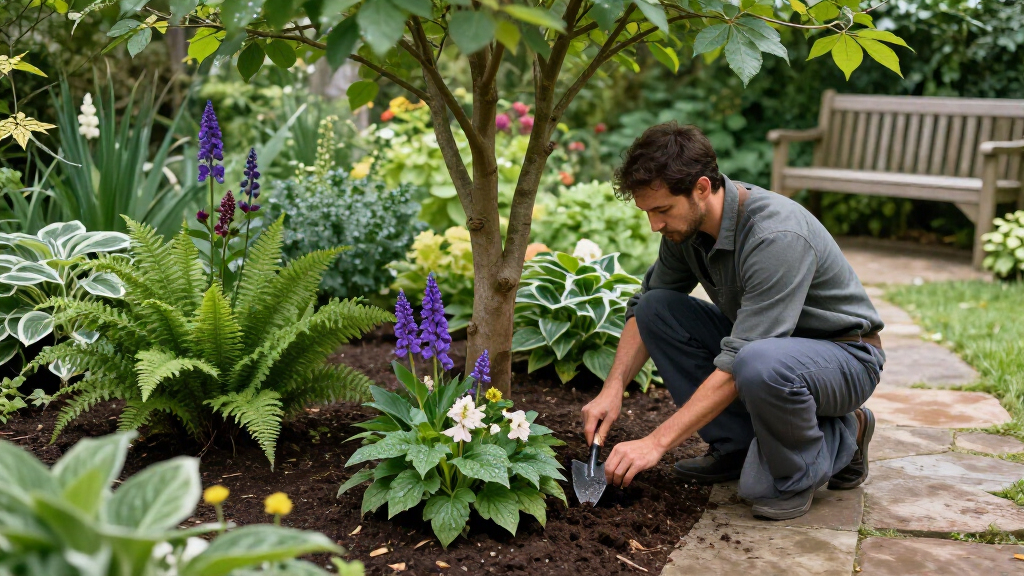
Its advice also highlights establishment and moisture. Tree roots can compete for water, while cooler weather can slow drying in shaded soil. The report recommends enriching beds with organic matter, maintaining water while new plants establish, and using mulch to help regulate soil moisture and temperature. These are general recommendations from the gardening article, not a guarantee of performance in every garden.
Products Worth Considering

Blackstone 2363 20 x 14-Inch Camping Griddle

EGO POWER+ LB7654 Cordless Leaf Blower with 5.0Ah Battery

EGO POWER+ LB5302 Cordless Electric Leaf Blower Kit with 2.5Ah Battery
As an affiliate, we earn on qualifying purchases.
How the Guide Defines Shade
The report distinguishes between deep shade, dappled sunlight and partial shade, rather than treating every dim garden area alike. That distinction matters to the two plants described: Japanese anemone and toad lily are recommended for partial or dappled shade, not identified in the supplied text as choices for the darkest conditions.
For planting preparation, the article recommends compost or other organic amendments and good drainage, while cautioning gardeners not to stop watering altogether in fall. It suggests additional mulch in colder USDA zones 3–5 and protection from intense late-afternoon sun in warmer zones 8–9. These are the source’s broad regional suggestions; local conditions and plant labels still matter.
“Matching each plant’s light preferences to your specific yard conditions is the secret to achieving long-lasting fall sparkle.”
— Gardening Know How report
Five Plants Missing From Source
The supplied source material does not include the complete list of seven plants. It stops during the toad lily care section, so the remaining five selections and their growing advice are not confirmed by the text available for this article. The source also gives no publication date, and it does not provide independent evidence or data comparing the plants’ flowering duration or performance.
Garden outcomes can vary with climate, soil, shade intensity and care. The guide’s hardiness zones and recommendations should be checked against local conditions and the instructions supplied with a specific cultivar.
Check the Full Plant List
Readers seeking all seven recommendations or the complete toad lily instructions will need to consult the full Gardening Know How report. Before planting, gardeners can check a plant’s label for its light needs, hardiness range and moisture requirements, then match those details to the intended site. Newly planted perennials may need continued watering and mulch as temperatures fall, with care adjusted for local weather and soil drainage.
Key Questions
Which shade plants are named in the available report?
The supplied text identifies Japanese anemone and toad lily. It refers to seven plants overall, but does not include the other five names.
When do Japanese anemones bloom?
The report says Japanese anemones can bloom from late summer through fall, depending on the cultivar. It recommends partial shade, moist soil rich in humus, and good drainage.
What conditions does toad lily prefer?
The guide recommends partial to dappled shade and consistently moist, rich soil for toad lily. It describes flowers appearing from late summer into mid-fall.
Should gardeners stop watering shade beds in fall?
No. The report says shaded soil may dry more slowly as temperatures drop, but newly planted perennials still need moisture to establish before freezing weather. Water according to local conditions and avoid waterlogged soil.
Source: rss