To master charcoal grilling, choose between lump charcoal for a natural, smoky flavor or briquettes for longer, steady heat. Control temperature by adjusting airflow through vents, opening for hotter and closing for cooler. Always prioritize safety by grilling outdoors, keeping tools handy, and fully extinguishing ashes before disposal. Proper maintenance keeps your grill in top shape and ensures great flavor. Keep exploring to discover more tips for perfecting your grilling skills.

Get garden gear delivered free — and shop member deals
- Fast, free delivery on millions of items
- Access to Prime Big Deal Days deals on October 6–7
- Prime Video, Amazon Music and more included
Key Takeaways
- Choose between lump charcoal for authentic flavor and briquettes for longer, consistent burns based on your cooking needs.
- Use adjustable vents to control airflow, increasing heat by opening vents or lowering it by closing them.
- Regularly clean ash and grease to maintain proper airflow, heat consistency, and flavor integrity.
- Operate your grill outdoors in well-ventilated areas, and fully extinguish ashes before disposal for safety.
- Maintain your grill regularly to prevent rust or damage, ensuring safe operation and optimal smoky flavor.
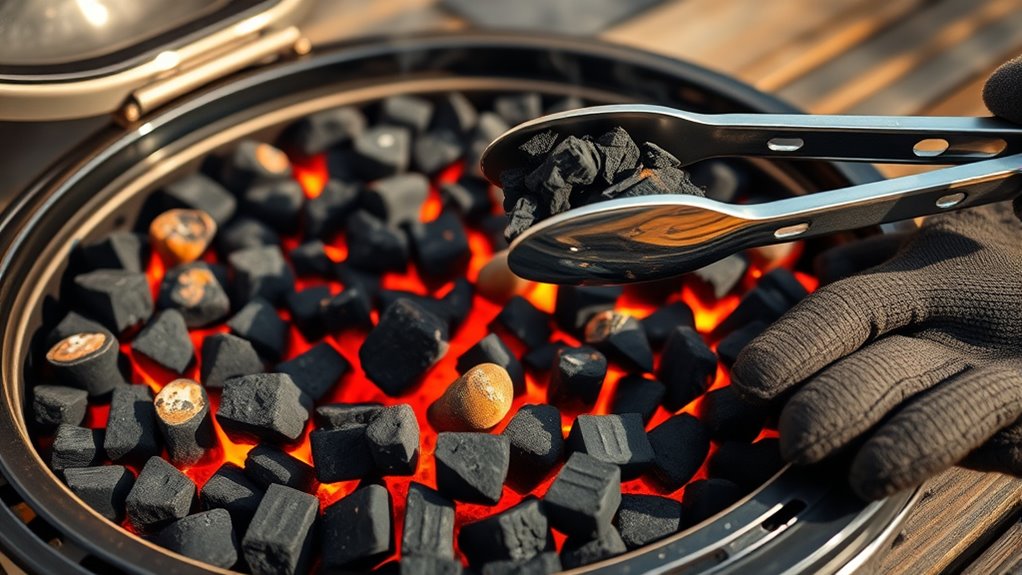
Have you ever wondered what makes charcoal grilling so popular among outdoor cooking enthusiasts? It’s the rich, smoky flavors that come from burning charcoal, which add depth and character to your food unlike any other method. Those flavors develop because charcoal produces a steady, high heat combined with a smoky aroma that infuses your meats and vegetables, elevating your grilling experience. But to get the most out of your charcoal grill, you need to understand proper grill maintenance. Regular cleaning and upkeep prevent buildup of grease and ash, which can affect heat consistency and flavor. Keeping your grill in top shape ensures you maintain that signature smoky taste every time you fire it up.
Charcoal grilling delivers rich, smoky flavors through steady heat and proper maintenance for optimal taste.
Choosing the right type of charcoal is the first step in mastering the art. Lump charcoal is favored for its natural composition and ability to burn hotter and cleaner, giving you a more authentic smoky flavor. Briquettes, on the other hand, are uniform in size and burn longer, making them ideal for longer cooks or when you want consistent heat. Regardless of your choice, proper grill maintenance involves cleaning out ash after each use to ensure proper airflow, which helps control heat and prevents flare-ups. A clean grill not only prolongs its lifespan but also guarantees that your smoky flavors remain pure, not muddled by old residue.
Controlling heat on a charcoal grill hinges on managing airflow and the amount of charcoal you use. Opening vents increases oxygen supply, raising the temperature, while closing them lowers the heat. You can also adjust the height of the cooking grate or use a two-zone setup—placing more coals on one side—to create a direct heat zone and a cooler indirect zone. This setup allows for versatile cooking, from searing steaks to slow-smoking ribs. Remember, consistent grill maintenance, such as periodically checking for rust or damage, ensures your vents and airways function at their best, giving you better control over heat and smoke levels. The more attention you pay to your grill’s upkeep, the more reliably you can produce that desirable smoky flavor.
Finally, safety is paramount when handling charcoal. Always operate your grill outdoors in a well-ventilated area, away from structures or overhanging branches. Use long-handled tools and heat-resistant gloves to prevent burns. Ensure your charcoal is fully extinguished before disposal by soaking ashes in water to prevent accidental fires. Regularly inspecting your grill for leaks, cracks, or rust not only prolongs its life but also keeps you safe during operation. Proper grill maintenance and careful heat control and safety precautions ensure consistent, flavorful results every time you fire up your charcoal grill.
charcoal grill with adjustable vents
As an affiliate, we earn on qualifying purchases.
As an affiliate, we earn on qualifying purchases.
Frequently Asked Questions
How Long Does Charcoal Typically Last During Grilling?
Charcoal usually lasts about 1 to 2 hours during grilling, depending on how much you use and your heat control. To maximize fuel efficiency, store your charcoal in a cool, dry place, which helps it burn longer. If you want your coals to last, consider using fewer briquettes or adjusting your vents to control airflow, which makes your fuel go further and keeps your grill hot for a longer period.
Can I Use Charcoal Indoors Safely?
While it’s generally not advisable to use charcoal indoors, if you choose to do so, guarantee excellent indoor ventilation and smoke management. Use a well-ventilated space, open windows, and consider a high-quality exhaust fan to prevent smoke buildup. Always prioritize safety, never leave the grill unattended, and keep a fire extinguisher nearby. Remember, proper precautions can help minimize risks but do not eliminate them entirely.
What Are the Best Ways to Extinguish Leftover Charcoal?
To safely extinguish leftover charcoal, start by spreading out the hot coals to cool them faster. You can then pour water over the ashes, ensuring complete safety extinguishing to prevent rekindling. Alternatively, use a metal container with a tight-fitting lid to smother the coals and allow them to cool naturally. Always prioritize charcoal disposal safety, never leave hot coals unattended, and wait until all ashes are completely cool before disposal.
How Do I Prevent Flare-Ups When Grilling With Charcoal?
Ah, the art of flare-up prevention is key to perfect grilling. To avoid flare-ups, keep excess fat trimmed and avoid overly greasy marinades. Use proper charcoal seasoning by building a stable bed of coals before cooking. Adjust air vents to control airflow, and don’t overcrowd the grill. These steps help maintain steady heat, preventing flare-ups and ensuring your meat stays tender and flavorful.
Is It Necessary to Pre-Soak Charcoal Before Use?
You don’t need to pre-soak charcoal before use. Pre-soaking offers limited benefits, mainly helping coal ignite faster, but it can also reduce the moisture impact, making the coals burn less efficiently. Moisture from soaking may slow down ignition and create excess steam, which isn’t ideal. Instead, use dry charcoal for quicker lighting and better heat control, ensuring your grill heats evenly and maintains consistent temperatures.
As an affiliate, we earn on qualifying purchases.
Conclusion
Now that you know the basics of charcoal grilling, you’re ready to ignite your culinary adventures. Think of your grill as a trusted ship, steering you through delicious flavors and smoky delights. With the right fuel, heat control, and safety tips, you’ll navigate every cookout with confidence. So fire up that grill, embrace the smoky voyage ahead, and let each meal be a flavorful voyage across the seas of taste. Happy grilling!
As an affiliate, we earn on qualifying purchases.
As an affiliate, we earn on qualifying purchases.
Fall Picks
fall essentials
As an affiliate, we earn on qualifying purchases.