Propane and gas grills give you precise temperature control, letting you manage heat easily for perfect results. They heat up quickly and maintain consistent temperatures, saving you time and energy. This efficiency means less waiting and more enjoying your outdoor cooking. Plus, with modern features like smart technology, future models will become even more efficient and easy to use. Keep exploring to discover more tips on mastering your grill’s temperature and saving fuel.

Get garden gear delivered free with Prime
- Fast, free delivery on millions of items
- Prime Video, Amazon Music and more included
- Member-only deals all year
Key Takeaways
- Propane and gas grills offer precise temperature control via simple knobs for optimal cooking results.
- Quick heating and consistent heat management enhance cooking efficiency and save time during outdoor grilling.
- Advanced technologies, like AI integration, improve temperature regulation and fuel efficiency in modern gas grills.
- Regular maintenance of burners and grates ensures even heat distribution and maximizes fuel efficiency.
- Accurate temperature control helps prevent overcooking or undercooking, ensuring better flavor and texture.
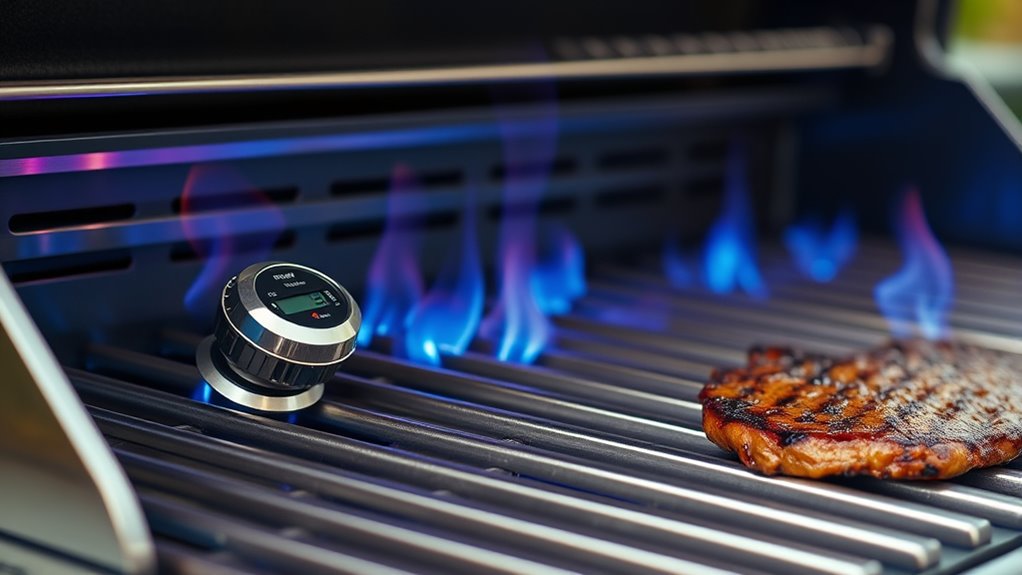
Have you ever wondered why propane and gas grilling are so popular among outdoor cooks? It’s because they offer unmatched convenience and control that make grilling almost effortless. One of the key reasons for their popularity is how easily you can manage temperature, guaranteeing your food cooks just the way you want. Unlike charcoal grills, gas grills heat up quickly and maintain consistent temperatures, giving you more precision with less fuss. This precise temperature control is essential when you’re aiming for perfectly grilled steaks, vegetables, or delicate seafood, as it helps prevent overcooking or undercooking. When you turn a knob, you’re adjusting the flow of propane or gas, making it simple to dial in the exact heat level you need, whether you’re searing or slow-cooking. This straightforward control enhances your grilling experience, allowing you to focus on flavor rather than battling fluctuating heat. Additionally, the integration of AI technology in grill design is beginning to optimize temperature regulation further, promising even better fuel efficiency and consistency in future models. This efficiency also translates into quicker cooking times, so you spend less time waiting for your grill to reach temperature or for the food to cook through, saving you energy and time overall.
Proper grill maintenance further boosts both temperature control and fuel efficiency. Regularly cleaning the burners, grates, and drip trays ensures ideal airflow and prevents clogs that could cause uneven heating or fuel wastage. When your grill is well-maintained, it runs smoothly, heats evenly, and uses fuel more effectively. Plus, checking for leaks and inspecting components regularly helps keep your grill safe and reliable, so you can enjoy grilling season after season without unexpected issues.
propane gas grill with precise temperature control
As an affiliate, we earn on qualifying purchases.
As an affiliate, we earn on qualifying purchases.
Frequently Asked Questions
How Do I Safely Store Extra Propane Tanks?
To safely store extra propane tanks, you should follow proper tank safety and storage tips. Keep tanks in a well-ventilated, outdoor area away from heat sources, flames, or direct sunlight. Store them upright and in a cool, dry place. Make sure tanks are tightly closed and check for leaks before storing. Always keep tanks away from living spaces, and never store them indoors or in enclosed areas to prevent hazards.
What Is the Best Way to Test for Gas Leaks?
To test for gas leaks, you should perform gas leak detection by applying a soapy water solution to the propane tank and hose connections. Turn on the gas slightly, then watch for bubbles indicating a leak. Always follow safety precautions by working in a well-ventilated area, wearing protective gear, and turning off the gas immediately if you detect a leak. Regular testing keeps your grilling safe.
How Often Should I Clean My Grill’s Burners?
You should clean your grill’s burners at least once a season, or more often if you use it frequently. Regular grill maintenance includes inspecting your burners for clogs or rust, which can hinder heat distribution. Remove and gently scrub the burners with a wire brush to guarantee proper gas flow. This helps maintain ideal temperature control and improves overall grilling efficiency, making your cookouts safer and more enjoyable.
Can I Use a Propane Grill in Cold Weather?
Yes, you can definitely use your propane grill in cold weather. Cold weather grilling might slightly affect propane performance, causing the tank to take longer to heat up or run out faster. To guarantee ideal results, keep the grill sheltered from strong winds, preheat thoroughly, and check your propane levels regularly. With proper care, you’ll enjoy delicious grilled meals even during chilly days.
What Are Signs of a Faulty Regulator?
Imagine your grill’s flame flickering like a candle struggling in the wind—that’s a sign of a faulty regulator. You might notice inconsistent gas flow, reduced flame size, or the smell of gas when the grill’s off. Regular regulator maintenance helps prevent these issues, but if problems persist, it’s time to substitute it. Keep an eye on gas flow issues to ensure safe, efficient grilling every time you fire it up.
As an affiliate, we earn on qualifying purchases.
Conclusion
Mastering propane and gas grilling means controlling your heat, maximizing efficiency, and turning every meal into a masterpiece. With careful attention to temperature and fuel management, you’ll discover the full potential of your grill—like a conductor guiding an orchestra. So, embrace the rhythm of your flames, and let each cookout be a symphony of flavor, precision, and confidence. After all, great grilling isn’t just an art; it’s a dance you lead with every spark.
grill burner and grate cleaning tools
As an affiliate, we earn on qualifying purchases.
As an affiliate, we earn on qualifying purchases.
outdoor propane tank storage safety
As an affiliate, we earn on qualifying purchases.
As an affiliate, we earn on qualifying purchases.
Columbus Day / Indigenous Peoples' Day Picks
long weekend sales
As an affiliate, we earn on qualifying purchases.