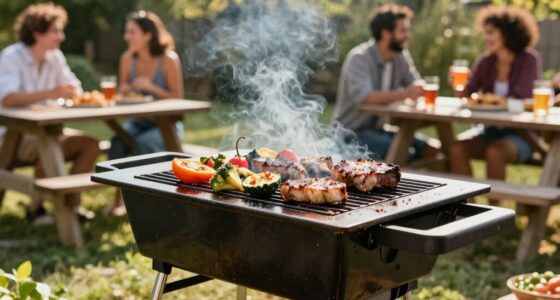
When cooking over fire pits, you’ll want versatile tools like grill grates, cast-iron skillets, skewers, and adjustable racks to control heat and cook safely. Use different zones for direct and indirect heat, and experiment with woods like hickory or apple to add smoky flavor. Keep safety in mind with proper surfaces and tools, and explore creative recipes like grilled kebabs or roasted veggies. Stay tuned for more tips to master your outdoor cooking adventures.

Get garden gear delivered free with Prime
- Fast, free delivery on millions of items
- Prime Video, Amazon Music and more included
- Member-only deals all year
Key Takeaways
- Use versatile tools like grill grates, cast-iron skillets, and skewers for various cooking methods over the fire pit.
- Incorporate racks, tripods, and adjustable stands to control heat levels and elevate cookware safely.
- Experiment with different woods such as hickory, mesquite, or apple to add smoky flavors to recipes.
- Create multiple cooking zones (direct and indirect heat) for precise temperature control and diverse dishes.
- Choose recipes that leverage open-flame cooking, like kebabs, roasted meats, and baked dishes, for flavorful outdoor meals.

Cooking over fire pits offers a primal and satisfying way to prepare meals outdoors, bringing friends and family together around a crackling flame. But before you plunge into outdoor cooking techniques, it’s essential to prioritize fire pit safety. Making sure your fire pit is on a stable, non-flammable surface and keeping a fire extinguisher nearby can prevent accidents. Always check local regulations and weather conditions before lighting a fire, and never leave it unattended. Using proper tools like long-handled tongs, spatulas, and heat-resistant gloves helps you handle food safely and keeps you a safe distance from the flames. These precautions not only protect you but also make your cooking experience more enjoyable and stress-free.
Prioritize fire safety, use proper tools, and never leave your fire unattended for a safe outdoor cooking experience.
When it comes to outdoor cooking techniques, mastering the use of fire pit tools can elevate your meals. A sturdy grill grate or a cast-iron skillet is essential for versatile cooking, allowing you to sear, sauté, or even bake over the open flame. You might also consider a roasting spit for turning larger cuts of meat, which adds a smoky flavor that’s hard to replicate indoors. Setting up different zones around your fire pit, like a direct heat area for searing and an indirect zone for slow cooking, helps you control temperature and cook various foods perfectly. Remember, controlling the fire’s intensity is key—adding or removing wood as needed—and keeping a close eye on your food prevents burning.
Using racks and stands designed for fire pits can also make outdoor cooking more efficient. For example, tripod stands or adjustable height racks allow you to position pots and pans at ideal heights, giving you better control over heat and cooking speed. You can even hang skewers or meat hooks to cook kebabs and roasts, which not only adds a fun element but also ensures even cooking. When trying new recipes, experiment with different woods like hickory, mesquite, or apple to infuse your dishes with unique smoky flavors. Whether you’re grilling vegetables, roasting marshmallows, or cooking a whole chicken, adapting your tools and techniques to the fire’s behavior is essential for delicious results. Additionally, using best hot rollers for long hair can help you prepare your hair for outdoor photos or events after your cooking session, ensuring you look great while enjoying your outdoor gathering.
In the end, the key to successful fire pit cooking is preparation and awareness. Respect fire pit safety guidelines, develop reliable outdoor cooking techniques, and use the right tools and racks to enhance your culinary adventures. With practice, you’ll master the art of outdoor cooking, creating memorable meals that bring everyone around the fire. The crackling sound, the aroma of smoky food, and the warmth of the flames combine for an experience that’s both primal and deeply satisfying, making every outdoor gathering special.
As an affiliate, we earn on qualifying purchases.
Frequently Asked Questions
What Are the Best Types of Wood for Fire Pit Cooking?
You should choose hardwoods like oak, hickory, or maple for fire pit cooking because they provide consistent heat and enhance flavor. These wood types burn longer and produce less smoke, making your food taste better. Avoid softwoods like pine or cedar, which can produce harsh flavors and excessive smoke. Using the right wood types guarantees maximum flavor enhancement and a more enjoyable cooking experience over your fire pit.
How Do I Prevent Flare-Ups When Cooking Over a Fire Pit?
To prevent flare-ups when cooking over a fire pit, you should maintain proper fire pit safety by controlling cooking temperature and managing flames. Keep a spray bottle of water handy to douse sudden flare-ups, and avoid adding too much wood at once. Use a grill grate to keep food away from high flames, and always stay attentive. These steps help guarantee safe, enjoyable cooking while minimizing flare-ups.
What Safety Gear Should I Wear While Cooking Over Fire?
Think of yourself as a firefighter facing a blaze—you need the right gear to stay safe. Wear fire-resistant gloves to protect your hands from heat and flames, and safety goggles to shield your eyes from sparks and smoke. These essentials act as your armor, keeping you secure while you cook over the fire. Always prioritize safety, so you can enjoy your fire pit cooking adventure without worry.
Can I Cook Delicate Foods Directly on the Fire?
Yes, you can cook delicate foods directly on the fire if you prioritize fire safety and food preservation. Use a gentle flame and keep a close eye to prevent burning or charring. Consider using a grill grate or foil to protect fragile items, ensuring even heat distribution. Always stay attentive, wear proper safety gear, and manage the fire carefully to keep your cooking safe and your food delicious.
How Do I Clean and Maintain Fire Pit Cooking Tools?
To keep your fire pit cooking tools in top shape, start with regular fire pit cleaning to remove ash and debris. After each use, scrub tools with warm soapy water and dry thoroughly to prevent rust. For tool maintenance, check for loose handles or rust spots and address them promptly. Proper cleaning and maintenance make certain your tools last longer, perform well, and stay safe for your next fire pit cooking session.
cast iron skillet for outdoor cooking
As an affiliate, we earn on qualifying purchases.
As an affiliate, we earn on qualifying purchases.
Conclusion
Cooking over fire pits is like dancing with flames — it’s both thrilling and rewarding. With the right tools, racks, and recipes, you’ll create delicious meals and unforgettable memories under the open sky. Embrace the smoky aroma and crackling sounds, knowing each fire-lit adventure brings you closer to nature and good company. So, gear up and enjoy the fiery journey ahead—your perfect outdoor feast awaits just beyond the flames.
fire pit adjustable cooking rack
As an affiliate, we earn on qualifying purchases.
As an affiliate, we earn on qualifying purchases.
As an affiliate, we earn on qualifying purchases.
Fall yard work Picks
leaf blowers
As an affiliate, we earn on qualifying purchases.