To grill seafood perfectly, start by marinating fish and shellfish for 15 minutes to boost flavor and tenderness, but avoid over-marinating. Always keep seafood refrigerated until cooking and pat it dry to prevent sticking. Oil your grill grates well and use tools like a fish basket for delicate items. Monitor cooking times closely—fish typically only need a few minutes per side—and check doneness with a thermometer. For more tips on safe and tasty seafood grilling, keep exploring the essentials.
Key Takeaways
- Oil grill grates well and use tools like foil or a fish basket to prevent sticking and fragile seafood breakage.
- Marinate seafood for 15 minutes to 1 hour in the refrigerator to boost flavor without compromising texture.
- Pat seafood dry before grilling to promote even searing and prevent sticking.
- Grill fish for a few minutes per side and shellfish even faster, monitoring closely to avoid overcooking.
- Use a meat thermometer to ensure seafood reaches a safe internal temperature of 145°F for optimal safety and texture.
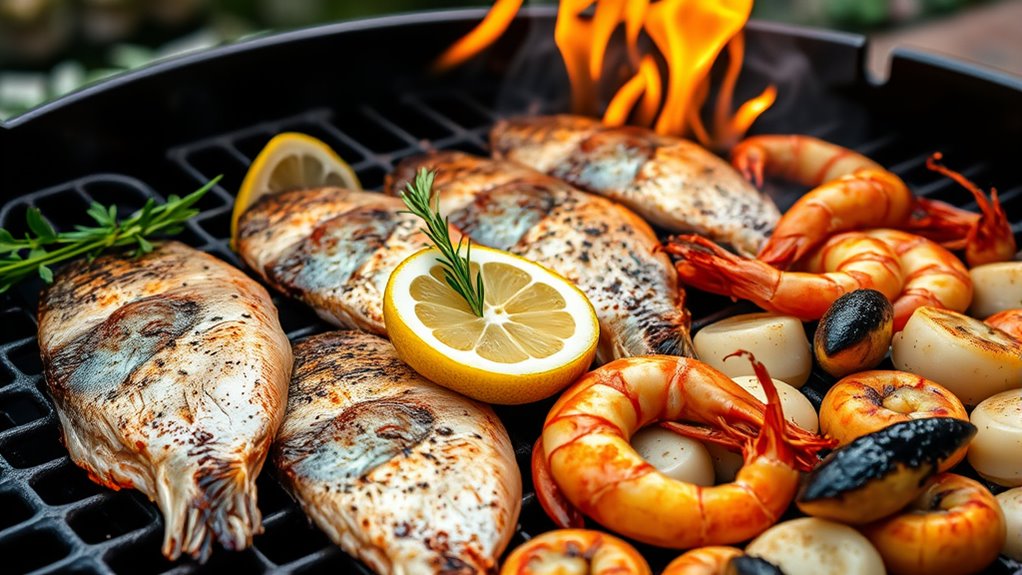
Grilling seafood is a quick and flavorful way to enjoy fresh catches, especially during warm weather. To get the best results, it’s essential to pay attention to marinade techniques and seafood safety. Marinades not only enhance flavor but can also help tenderize fish and shellfish, making your grilled dishes more delicious. When preparing a marinade, keep it simple but effective—combine ingredients like lemon juice, olive oil, garlic, herbs, and a touch of salt. Submerge the seafood in the marinade for at least 15 minutes or up to an hour, but avoid over-marinating, as the acid can start to break down the proteins excessively, leading to a mushy texture. Remember, always marinate seafood in the refrigerator to prevent bacterial growth, which ties into seafood safety.
Seafood safety is vital when grilling fish and shellfish. Start by purchasing fresh seafood from reputable sources and check for clear eyes, firm flesh, and a clean smell. Keep your seafood refrigerated until you’re ready to cook, and never leave it out at room temperature for more than two hours. When ready to grill, pat the seafood dry to promote even cooking and prevent sticking. Use a clean grill and utensils to avoid cross-contamination, especially if you’ve handled raw seafood before cooking. Cooking seafood to the proper internal temperature—145°F for most fish and shellfish—is essential to guarantee it’s safe to eat. Use a meat thermometer to verify doneness, and be mindful that overcooking can lead to dry, tough seafood, while undercooking poses health risks.
When it’s time to grill, oil the grates well to prevent sticking, and consider using a fish basket or foil for delicate items like fillets or shellfish. Turn the seafood carefully, using tongs or a spatula, to maintain its shape and avoid tearing. Watch closely, as seafood cooks quickly—fish fillets can be done in just a few minutes per side, and shellfish like shrimp or scallops tend to cook even faster. Once cooked, let the seafood rest briefly before serving to allow juices to redistribute. Pair your grilled seafood with fresh herbs, lemon wedges, or flavorful sauces for a complete, mouthwatering meal. By following proper marinade techniques and prioritizing seafood safety, you guarantee your grilling experience is both safe and satisfying, leaving everyone enthusiastic for the next cookout.
Frequently Asked Questions
How Do I Prevent Seafood From Sticking to the Grill?
To prevent seafood from sticking to the grill, use seafood grilling techniques like oil-based marinades or brushing the grill grates with oil before cooking. Make sure your grill is properly cleaned and preheated. Follow seafood safety tips by keeping seafood cold until grilling and not overcooking. You can also use a fish basket or foil to keep delicate pieces intact. This guarantees easy flipping and prevents sticking.
What’s the Best Way to Tell if Seafood Is Fully Cooked?
You’ll know seafood is fully cooked when you see doneness indicators like opaque flesh for fish, firm texture, or curled shells for shellfish. Use a food thermometer to check temperature guidelines—fish should reach 145°F, and shellfish varies but often around 130-140°F. Trust these signs to prevent undercooking or overcooking, ensuring your seafood is safe and delicious every time.
Can I Grill Frozen Seafood Directly?
Frozen seafood can be grilled directly, but it’s tricky! To tackle this, thaw it thoroughly or use indirect heat for even cooking. Keep in mind, grilling tips for frozen seafood emphasize patience—avoid rushing, which can cause uneven doneness. By brushing with oil and maintaining medium heat, you prevent sticking and ensure a flavorful finish. Remember, proper preparation transforms frozen seafood into fabulous grilled fare!
How Do I Prevent Seafood From Overcooking?
To prevent seafood from overcooking, keep an eye on cooking temperature and seafood thickness. Use medium-high heat and cook thinner pieces for just a few minutes per side, turning once. Thicker cuts need more time, but check for doneness early by looking for opaque flesh and firm texture. Remove seafood promptly once it reaches the right temperature, around 145°F, to guarantee it stays juicy and tender.
What Are Some Marinade Options for Seafood?
You can try marinade ingredients like lemon juice, garlic, olive oil, and herbs for a fresh, vibrant flavor. For a tangy kick, mix soy sauce, ginger, and sesame oil. For a smoky taste, use paprika, cumin, and a splash of vinegar. These flavor combinations enhance seafood without overpowering its delicate taste. Marinate for 15-30 minutes, then grill for the best results.
Conclusion
Now that you’re armed with these grilling secrets, imagine the sizzling sound as your seafood hits the hot grate, aroma filling the air, hinting at the perfect bite. Will the fish be tender and flaky or the shellfish perfectly charred? As you lift the lid, anticipation builds—will your next barbecue become a legendary feast? Get ready to savor that moment, because with these tips, your seafood masterpiece is just one grill away from unforgettable perfection.