When designing your outdoor kitchen for entertaining, focus on creating varied seating zones with built-in benches, lounge chairs, and bar stools that encourage conversation and comfort. Position furniture close to the cooking area to promote interaction, while keeping pathways clear for smooth traffic flow. Connect the space seamlessly with the rest of your yard using visual cues and easy progressions. To master the details and craft a space everyone loves, keep exploring the key principles yourself.

Get garden gear delivered free with Prime
- Fast, free delivery on millions of items
- Prime Video, Amazon Music and more included
- Member-only deals all year
Key Takeaways
- Incorporate diverse seating options near the cooking area to foster interaction and accommodate various group sizes.
- Arrange seating zones to promote conversation while maintaining clear pathways for smooth traffic flow.
- Position key kitchen elements along one side to prevent congestion and facilitate easy movement.
- Use visual cues like rugs or lighting to connect the outdoor kitchen seamlessly with other yard areas.
- Balance comfort, accessibility, and aesthetics to create an inviting, functional space that encourages social gatherings.

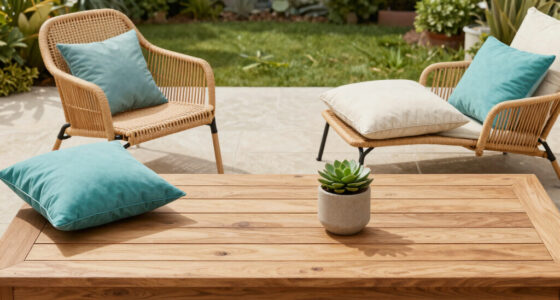
Creating an outdoor kitchen can transform your backyard into a versatile space for entertaining and relaxing. To make the most of this transformation, you need to carefully consider your seating arrangements and traffic flow. These elements are essential for creating a functional, inviting environment where guests feel comfortable and free to move around. When planning your seating, think beyond just placing chairs around a table. You want to encourage conversation and provide options for different group sizes. Incorporate a mix of built-in benches, lounge chairs, and bar stools to create varied seating zones. Position these seats close enough to the cooking area so guests can interact with the chef, but not so close that they obstruct movement or become crowded. Keep in mind that the arrangement should promote easy flow, allowing guests to circulate without bumping into each other or blocking pathways.
Traffic flow is often overlooked but is just as important as seating. Your outdoor kitchen should be designed with clear, unobstructed pathways that guide people naturally from entry points to cooking, dining, and lounging areas. Avoid placing furniture or fixtures in the middle of walkways; instead, create designated routes that keep traffic moving smoothly. For example, position your grill and prep stations along one side, with an open space leading to your dining area. This setup prevents congestion and makes it simple for multiple guests to gather around or move between zones. Consider the placement of key elements—such as sinks, refrigerators, and storage cabinets—to minimize the need for long, awkward trips across the space. Incorporating efficient layout principles can further optimize your outdoor kitchen for both usability and comfort.
Furthermore, think about how your outdoor kitchen connects with the rest of your yard. You want the flow to be intuitive so guests can easily transition from the garden or patio to the cooking zone without feeling cramped or lost. Use visual cues like rugs, lighting, or landscaping to delineate different zones subtly. When designing seating arrangements, keep sightlines in mind; ensure everyone has a clear view of the cooking area, the view beyond, and each other.
Ultimately, balancing seating and traffic flow creates a cohesive environment that enhances your outdoor entertaining experience. The goal is to foster social interaction while maintaining practicality. With thoughtful planning, your outdoor kitchen will become a favorite spot for friends and family, seamlessly blending comfort, convenience, and style.
Frequently Asked Questions
How Do I Choose the Best Seating Materials for Outdoor Use?
You should choose seating materials based on durability and style coordination. Opt for weather-resistant options like aluminum, teak, or synthetic wicker, which stand up to outdoor elements. These materials require minimal maintenance and last longer. Make sure they match your overall design aesthetic to create a cohesive look. Prioritize comfort and longevity, ensuring your outdoor space remains inviting and functional for entertaining year-round.
What Is the Ideal Layout for Maximizing Outdoor Entertaining Space?
You want a layout so perfect it feels like a tropical paradise, seamlessly blending landscape integration and weather resistance. Arrange your outdoor kitchen and seating in an open, flowing design that encourages conversation and movement. Position the grill and prep area centrally, with flexible seating around it. Keep pathways wide and unobstructed, so guests can mingle freely, while incorporating natural elements for harmony. This setup maximizes your entertaining space effortlessly.
How Can I Incorporate Lighting to Enhance Flow and Ambiance?
To enhance flow and ambiance, incorporate string lighting along pathways, over seating areas, and around your outdoor kitchen. This creates a warm, inviting glow that encourages socializing. Add ambient illumination with recessed or landscape lighting to highlight key features and guarantee safety. You can also install dimmable lights to adjust the mood for different occasions, making your outdoor space both functional and cozy.
What Are Common Mistakes to Avoid in Outdoor Kitchen Design?
You should avoid neglecting landscape integration, which can make your outdoor kitchen feel disconnected from your yard. Also, skimping on weatherproof finishes leads to damage over time. Make certain your design complements the surroundings and uses durable materials that withstand the elements. Don’t forget to plan for proper drainage and ventilation. These mistakes can detract from your outdoor space’s functionality and longevity, so address them early for a seamless experience.
How Do I Maintain Outdoor Seating and Furniture Over Time?
You might think outdoor furniture is low-maintenance, but regular seasonal maintenance is key. Protect your furniture by using covers during harsh weather and applying sealants if needed. Clean it periodically with gentle solutions to prevent dirt buildup. When not in use, store cushions indoors or in waterproof containers. This proactive approach guarantees your outdoor seating stays inviting and durable, making your entertaining space enjoyable for years to come.
Conclusion
Now that you’ve planned your outdoor kitchen with perfect seating and flow, you’re creating more than just a space—you’re building memories that will last a lifetime. Imagine hosting gatherings where laughter echoes through the stars and every meal feels like a celebration. With your thoughtful design, your outdoor oasis will become the heart of your home, transforming ordinary evenings into extraordinary moments. Get ready to impress everyone and make your outdoor space an unforgettable paradise!
Halloween Picks
halloween
As an affiliate, we earn on qualifying purchases.