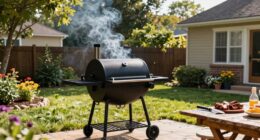

To manage heat in a kamado, start by adjusting the vents—opening the bottom increases oxygen and heat, while closing reduces it. Use the top vent to control smoke and heat escape, helping stabilize the temperature. Keep an eye on your fuel and charcoal placement to ensure even burning, and make small tweaks to vents, waiting a few minutes to see their effects. Continuing to explore how your grill responds will help you master steady, precise heat regulation.
Key Takeaways
- Use bottom vents to control oxygen flow, adjusting for desired temperature levels.
- Open or close the top vent to regulate smoke and heat escape, maintaining steady temperature.
- Make small, gradual vent adjustments and wait several minutes to observe effects.
- Maintain proper fuel placement and quality for consistent, even burning and temperature stability.
- Develop an understanding of your specific kamado’s behavior for precise heat management.
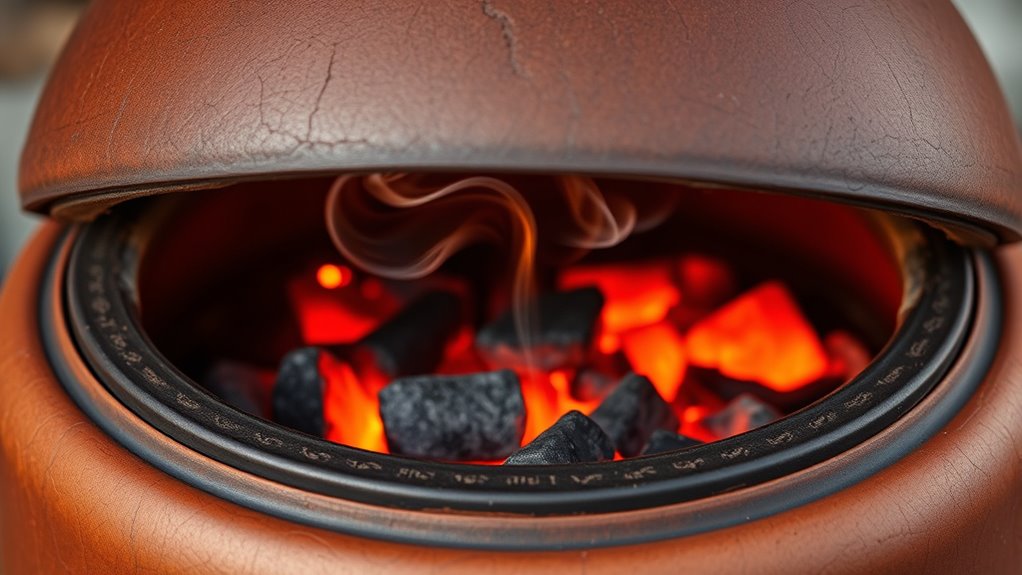
Managing heat on a kamado grill is vital for achieving perfect results, whether you’re smoking, grilling, or baking. The key to mastering your kamado lies in understanding how to control temperature effectively through proper airflow regulation. This process allows you to maintain consistent heat, which is essential for cooking techniques that require precision. When you open the lid or adjust the dampers, you’re directly influencing airflow, which in turn affects temperature control. A steady airflow ensures that heat circulates evenly inside the grill, preventing hot spots and cold zones that can ruin your dish.
Controlling airflow is essential for steady, even heat on your kamado grill.
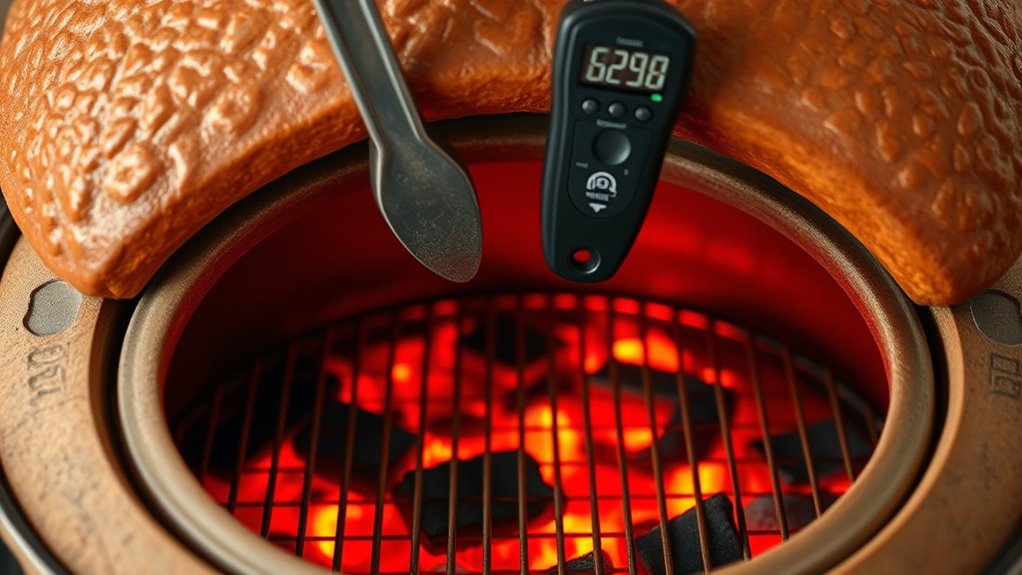
To start, familiarize yourself with the top and bottom vents. These are your primary tools for airflow regulation. Opening the bottom vent increases oxygen flow, which raises the temperature by fueling the fire. Conversely, closing it slightly reduces airflow, lowering the heat. The top vent works as a control for exhaust; opening it allows more smoke and heat to escape, helping to stabilize or reduce temperature, while closing it slightly traps heat and smoke inside. The balance between these vents is delicate but critical. You want enough airflow to keep the fire burning steadily without causing fluctuations or excessive oxygen that could make the fire burn too hot or too fast.
Temperature control also involves managing charcoal and fuel placement. Using high-quality lump charcoal and arranging it properly can make a big difference. For low and slow cooking, you want a smaller, steady bed of coals that burn evenly. For high-temperature grilling, you may need to add more fuel or adjust the placement to promote a hotter, more consistent fire. Keep an eye on your temperature gauge, but don’t rely solely on it; learn to read the visual cues like the color of the flames and the amount of smoke.
It’s important to make small adjustments rather than drastic changes. For example, a slight turn of the bottom vent can cause a significant change in heat, so make changes gradually and wait a few minutes to observe the effects. Every kamado is different, and with experience, you’ll develop an intuitive sense for how your specific grill responds to airflow regulation. Additionally, understanding the unique design elements of your kamado can help you better anticipate how it reacts to adjustments, leading to more precise temperature control. Remember, maintaining a steady temperature isn’t about chasing perfection instantly but about developing a feel for your grill’s behavior. With patience and practice, you’ll be able to control your kamado’s heat with confidence, ensuring your food turns out just as you envision.

SMOKEWARE SS Vented Chimney Cap (Kamado Joe)
Maintains vent setting when grill is opened and closed.
As an affiliate, we earn on qualifying purchases.
As an affiliate, we earn on qualifying purchases.
Frequently Asked Questions
How Does Ambient Temperature Affect Kamado Heat Control?
Ambient temperature profoundly impacts your kamado’s heat control by causing fluctuations that can make maintaining consistent temperatures tricky. When outdoor temps change, you need to adjust your vents more often. To counteract this, use insulation techniques like ceramic blankets or heat shields, which help stabilize the internal temperature. Staying attentive to ambient fluctuations allows you to fine-tune your vents and keep your cooking steady, no matter the weather.
What Are Common Mistakes in Managing Kamado Temperature?
Managing your kamado is like riding a bike—you need focus and balance. Common mistakes include not controlling airflow properly, leading to temperature fluctuations, and opening the lid too often, which causes heat loss. To avoid this, optimize airflow by adjusting the vents gradually and keep lid openings to a minimum. This helps maintain steady temps, ensuring your food cooks evenly and your grilling experience stays enjoyable.
How Often Should I Adjust Vents During Cooking?
You should adjust the vents as needed throughout your cooking, typically every 15 to 30 minutes. Start with your vent settings wide open for ignition, then gradually close them to regulate airflow and maintain your target temperature. Keep an eye on your thermometer, and make small vent adjustments to fine-tune heat levels. Regular vent adjustments guarantee steady airflow regulation, helping you cook evenly without drastic temperature fluctuations.
Can I Cook at Multiple Temperature Zones Simultaneously?
Think of your kamado as a symphony orchestra, where different sections play at different tempos. Yes, you can cook at multiple temperature zones simultaneously using dual zone cooking. By adjusting vents, you create distinct temperature zones—hot for searing and cooler for slow roasting. This approach lets you manage heat precisely, ensuring each dish gets the perfect environment without interference. It’s a versatile way to master your kamado’s full potential.
What Accessories Help Improve Heat Retention and Management?
To improve heat retention and management, you should use ceramic insulation and heat deflectors. Ceramic insulation helps keep the heat inside your kamado, making it more efficient and maintaining consistent temperatures. Heat deflectors distribute heat evenly across your cooking surface and prevent direct heat from causing hot spots. Together, these accessories enhance control, reduce fuel consumption, and guarantee better cooking results.

Replacement Kamado Classic Joe Charcoal Basket, Lump Ash Basket Fits Big Green Egg Grill, Large – Stainless Steel Charcoal Holder with Divider. Smoking Accessories also for other 18" Charcoal Grills
MULTIPLE GRILLING OPTIONS – This charcoal holder with a stainless divider, helps you achieve a small area of…
As an affiliate, we earn on qualifying purchases.
As an affiliate, we earn on qualifying purchases.
Conclusion
Mastering heat management is key to perfecting your kamado cooking. By maintaining steady temperatures, you’ll enjoy consistent results and avoid surprises. Did you know that a well-controlled kamado can stay within 5°F of your target temperature for hours? That’s the precision you need for tender ribs or perfectly smoked brisket. Keep practicing, stay attentive, and you’ll reveal the full potential of your kamado, making every cookout a delicious success.

B004JMZDB6
As an affiliate, we earn on qualifying purchases.
As an affiliate, we earn on qualifying purchases.

Quantfire Upgrade Replacement Thermometer for Kamado Joe,3.3" Grill Temperature Gauge Replacement for Kamado Joe Accessories 150-900°F with Waterproof and No-Fog Glass Lens
【Easy to Control Temperature】The thermometer adopts a large 3.3-inch glass surface, which can be easily read from a…
As an affiliate, we earn on qualifying purchases.
As an affiliate, we earn on qualifying purchases.