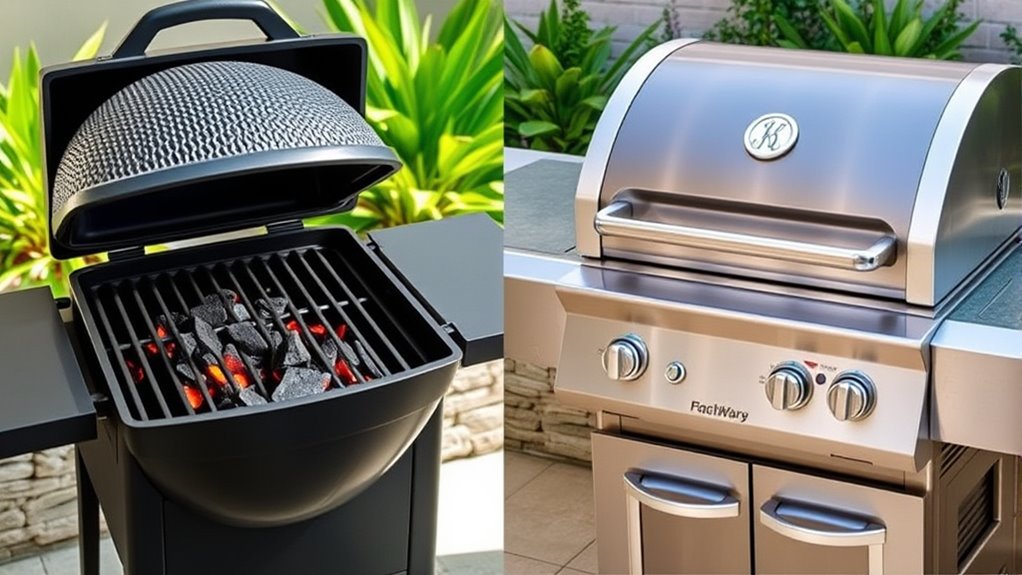
If you’re choosing between charcoal and gas grills for your outdoor kitchen, consider your priorities. Charcoal offers rich smoky flavor, high heat for searing, and an authentic grilling experience, but takes more time to set up and clean. Gas grills provide quick start-up, precise temperature control, and convenience, though they may lack the traditional smoky taste. To discover which suits your style and needs best, keep exploring the key differences below.
Key Takeaways
- Charcoal grills offer rich smoky flavor and high heat for authentic outdoor barbecue, while gas grills provide precise temperature control and convenience.
- Charcoal requires more setup, cleanup, and skill, whereas gas grills ignite quickly and are easier to maintain.
- For searing steaks and creating crispy crusts, charcoal is preferred; gas grills excel at quick, consistent cooking.
- Charcoal produces a deep smoky aroma ideal for traditional grilling, while gas offers cleaner, milder flavors with added smoke options.
- Overall, charcoal suits those valuing flavor and traditional experience, while gas is better for convenience and quick meal preparation.

When choosing between charcoal and gas grills, understanding their differences can help you make the best decision for your grilling style. One of the key factors to contemplate is how each type manages grill temperature and the resulting smoke flavor. Charcoal grills tend to reach higher temperatures more quickly, giving you that intense heat needed for searing steaks or creating a crispy crust. However, controlling the grill temperature on a charcoal setup requires some skill, as you need to adjust the amount of charcoal or manipulate the airflow with vents. Gas grills, on the other hand, offer precise temperature control at the turn of a dial, making it easier to maintain a consistent heat for longer cooking sessions. This consistency is particularly useful when you’re cooking delicate foods or multiple items at once.
When it comes to smoke flavor, charcoal grills excel because they generate a rich, smoky aroma that many barbecue enthusiasts crave. The smoke produced by burning charcoal and wood chips infuses your food with a deep, complex flavor that is difficult to replicate with gas. If you love that authentic smoky taste, a charcoal grill can truly enhance your outdoor cooking experience. Gas grills, although capable of adding some smoke flavor when used with wood chips or smoker boxes, generally produce a cleaner, milder taste. They’re better suited if you prefer a more neutral flavor profile or if you’re looking for convenience without sacrificing too much on flavor.
Another aspect to consider is how these differences impact your overall grilling sessions. Charcoal grills often require more time to set up and clean, given the need to handle ash and lighter fluid or starters. The process can be messier and more labor-intensive, but many grillers find the ritual part of the experience enjoyable. Gas grills are more straightforward—they ignite quickly and clean up with ease, making them ideal for quick weeknight dinners or when you’re short on time.
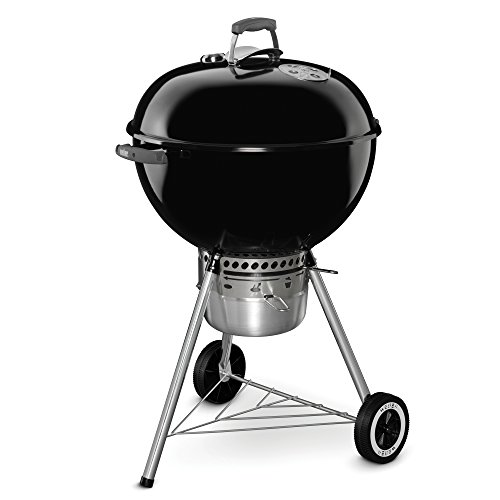
Weber Original Kettle Premium Charcoal Grill, 22-Inch, Black – Outdoor BBQ Grill with Built‑In Thermometer, Heat Control Dampers & One‑Touch™ Cleaning System
- Cooking Capacity: Holds up to 13 burgers
- Durable Cooking Grate: Premium steel construction
- Easy Ash Cleanup: Removable high-capacity ash catcher
As an affiliate, we earn on qualifying purchases.
As an affiliate, we earn on qualifying purchases.
Frequently Asked Questions
Which Grill Type Offers Better Heat Retention for Searing?
For better heat retention and searing performance, charcoal grills are your best bet. They tend to deliver higher, more consistent heat, allowing you to achieve those perfect sear marks. Gas grills, while convenient, often struggle with heat consistency at high temperatures. If you prioritize intense, even heat for searing, charcoal offers superior heat retention, helping you cook steaks and burgers to perfection every time.
How Eco-Friendly Are Charcoal and Gas Grills?
While neither grill type is perfectly gentle on the environment, gas grills tend to have a lighter footprint due to cleaner emissions and more efficient fuel use. Charcoal grills, however, produce more smoke and particulate matter, impacting air quality. For a greener choice, seek out models that use renewable options like biofuels or sustainably sourced charcoal, helping you reduce your environmental impact while enjoying outdoor cooking.
Can You Convert a Charcoal Grill to Gas?
Yes, you can convert a charcoal grill to gas with a proper gas conversion kit. First, check if your grill model supports gas conversion, as some are designed specifically for charcoal. You’ll need to purchase a compatible gas conversion kit, which includes all necessary parts like burners and regulators. Follow the manufacturer’s instructions carefully to guarantee safe installation. This allows you to enjoy the convenience of gas grilling without replacing your entire grill.
What Safety Precautions Are Needed for Each Grill Type?
You should always keep a fire extinguisher nearby and verify it’s suitable for grease and electrical fires. For charcoal grills, avoid inhaling smoke by cooking in well-ventilated areas and never leave it unattended. For gas grills, check hoses for leaks before use, and keep a safe distance from structures. Always stay alert to prevent smoke inhalation and be prepared to act quickly if a fire occurs.
How Does Grill Maintenance Differ Between Charcoal and Gas?
You’ll find that maintaining a charcoal grill mainly involves regular ash cleanup to prevent buildup and guarantee proper airflow. For gas grills, you focus on gas leak prevention by inspecting hoses and connections regularly. Both require cleaning grates and burners, but gas grills need more frequent checks for leaks, while charcoal grills demand thorough ash removal. Proper maintenance keeps your grill safe, efficient, and ready for your next cookout.

Monument Grills Mesa Series, 3+1 Outdoor Barbecue Stainless Steel Propane Gas Grill, 3 Burners & 1 Side Burner 48,000 BTU Patio Garden Grill with Knob Controls, Mesa305
- Large Cooking Area: 570 sq. inches total cooking space
- Stainless Steel Burners: 3 main burners + 1 side burner
- High BTU Output: 48,000 BTU total power
As an affiliate, we earn on qualifying purchases.
As an affiliate, we earn on qualifying purchases.
Conclusion
Ultimately, choosing between charcoal and gas grills depends on what kind of grilling experience you crave. Do you want the smoky flavor and traditional feel of charcoal, or the convenience and quick heat of gas? Picture yourself firing up your outdoor kitchen—are you craving the nostalgic aroma or the effortless sizzle? Whichever you pick, both can turn your backyard into a delicious haven. So, which grill will make your outdoor cooking truly sizzle?

Kaluns Universal Stainless Steel Smoker Box, Gas or Charcoal Grill Smoke Box, Works with Wood Chips, add Delicious Smoked Flavor, Hinged Lid,Warp Free Grill Accessories
- Adds Smokey Flavor to Any Grill: Enhances meats with delicious smoke in 10 minutes
- Heavy-Duty Stainless Steel Construction: Warp-free, rust-resistant, easy to clean
- Compact Size Fits All Grills: Holds 6.35 oz of wood chips
As an affiliate, we earn on qualifying purchases.
As an affiliate, we earn on qualifying purchases.
Weber Original Kettle Premium Charcoal Grill, 22-Inch, Black – Outdoor BBQ Grill with Built‑In Thermometer, Heat Control Dampers & One‑Touch™ Cleaning System
- Cooking Capacity: Holds up to 13 burgers
- Durable Cooking Grate: Premium steel construction
- Easy Ash Cleanup: Removable high-capacity ash catcher
As an affiliate, we earn on qualifying purchases.
As an affiliate, we earn on qualifying purchases.