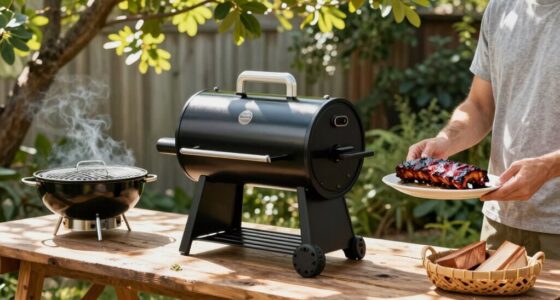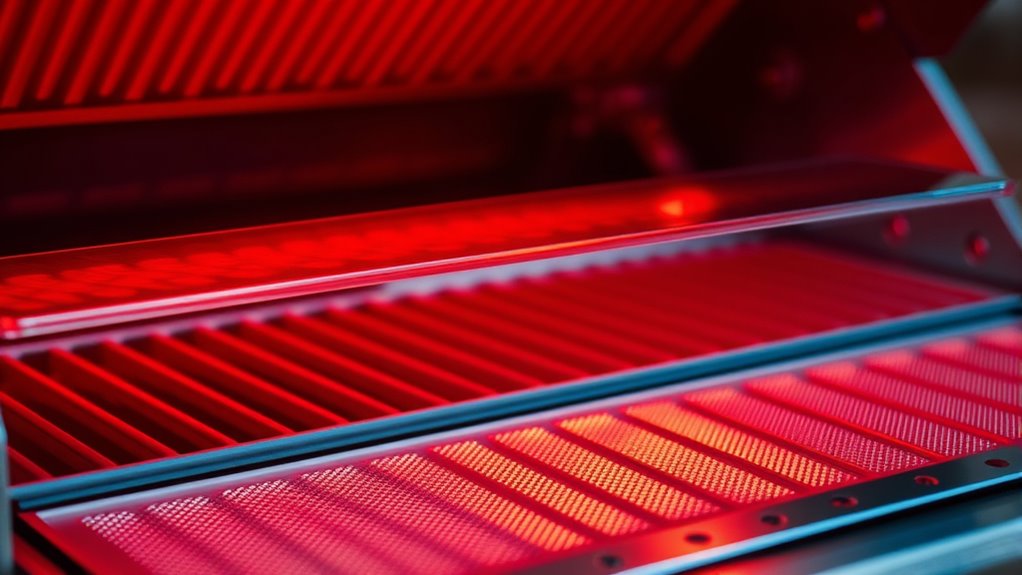

Infrared grilling technology heats instantly, allowing you to cook your food faster while achieving perfect searing and juicy results. It uses direct radiant heat to minimize fuel waste and reduce overall cooking time, saving you money. The high temperatures guarantee even cooking and flavorful crusts, though it may require some learning to master the controls. If you keep exploring, you’ll discover how this modern approach can revolutionize your outdoor cooking experience.

Get garden gear delivered free with Prime
- Fast, free delivery on millions of items
- Prime Video, Amazon Music and more included
- Member-only deals all year
Key Takeaways
- Infrared grills heat instantly, reducing cooking time and ensuring quick, even results for various foods.
- They use less fuel by delivering intense, direct heat, leading to cost savings and environmental benefits.
- Infrared technology enables better searing and flavor development while minimizing flare-ups and charring.
- The learning curve involves understanding optimal settings and adapting to new cooking techniques.
- Despite higher initial costs, they offer long-term efficiency, speed, and high-quality grilling performance.
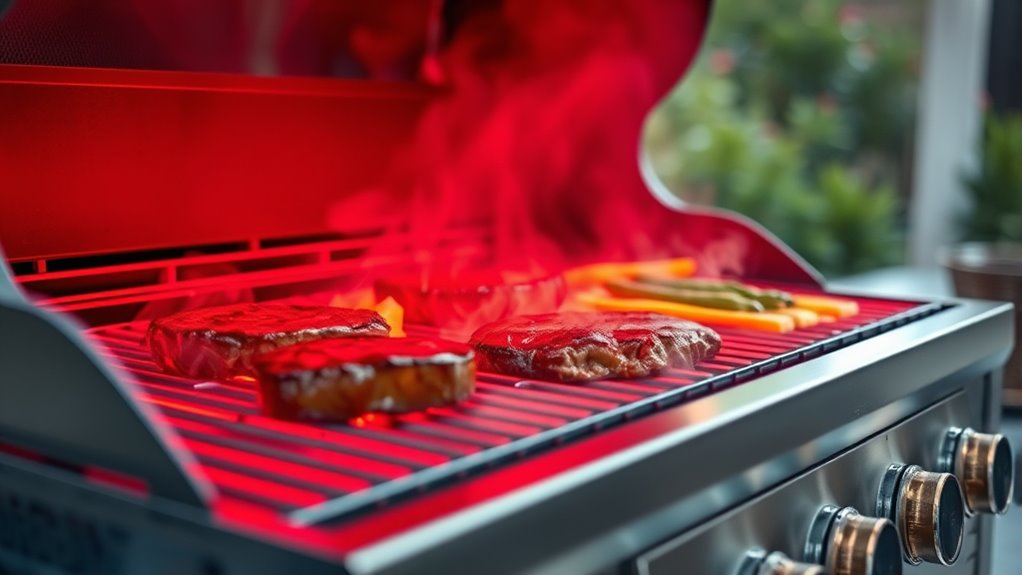
Infrared grilling technology has revolutionized outdoor cooking by offering a faster, more efficient way to cook your favorite foods. Unlike traditional grills that rely on conduction and convection, infrared grills use radiant heat, which directly transfers energy to your food. This method markedly increases cooking speed, allowing you to prepare meals in a fraction of the time compared to conventional grilling. With infrared, you don’t have to wait for the entire grill to heat up; the heat is immediately concentrated, so you can start grilling sooner. This efficiency not only saves you time but also helps you get dinner on the table quicker, making it ideal for busy evenings or impromptu cookouts.
Infrared grills heat instantly, cooking faster and saving time during busy outdoor cookouts.
One of the key advantages of infrared grilling is its fuel efficiency. Because infrared burners produce intense heat directly at the surface, less fuel is wasted heating the entire cooking chamber. This means you can achieve high temperatures using less propane or natural gas, which translates into cost savings over time. The rapid heating capability also means you don’t need to keep the grill on for long periods, further conserving fuel. If you’re environmentally conscious or want to reduce your outdoor cooking expenses, infrared grills provide a compelling option. They deliver consistent, high heat with minimal fuel consumption, giving you more control over your energy use without sacrificing performance.
As you consider infrared grilling, the speed of cooking becomes a standout benefit. Foods cook evenly and quickly, thanks to the direct heat transfer. Whether you’re grilling steaks, vegetables, or seafood, you’ll notice a shorter cooking time and better searing capabilities. The high heat ensures that your food develops a flavorful crust while remaining juicy inside. Plus, because infrared heat is so intense, you’re less likely to experience flare-ups caused by dripping fats—this means less charring and a more controlled cooking environment. It’s perfect if you want to sear foods quickly or achieve restaurant-quality results at home.
However, it’s important to recognize some considerations. Infrared grills tend to be more expensive upfront than traditional models. They also require a bit of learning to master the ideal temperature and cooking techniques. But once you get the hang of it, you’ll appreciate how much faster and more fuel-efficient your outdoor cookouts become. Additionally, the technology behind infrared grills shares similarities with Volkswagen Tuning, where optimizing performance and efficiency is key. Overall, infrared grilling technology offers a modern, efficient way to enjoy outdoor cooking, with the benefits of increased speed and fuel savings making it worth exploring for any grilling enthusiast.
Frequently Asked Questions
How Does Infrared Grilling Compare to Traditional Charcoal Grilling?
Infrared grilling heats up quickly and offers better temperature control than traditional charcoal grilling, allowing you to cook your food precisely. It also retains more flavor by searing the meat’s surface, locking in juices and enhancing taste. Unlike charcoal, infrared grills produce less smoke and ash, making cleanup easier. If you want consistent results and delicious flavor retention, infrared grilling is a modern, efficient alternative to charcoal grilling.
Are Infrared Grills Energy-Efficient for Regular Use?
Infrared grills are generally energy-efficient for regular use because they heat up quickly and retain heat better, reducing overall energy consumption. This efficiency can lower your environmental impact by using less fuel or electricity. You might find that infrared grilling requires fewer resources over time, making it a sustainable choice for frequent grilling. Plus, their fast heating means less wasted energy, helping you cook efficiently while being eco-friendly.
Can Infrared Technology Be Used for Indoor Grilling Safely?
Yes, infrared technology can be used for indoor grilling safely if you guarantee proper indoor safety measures. Keep ventilation requirements in mind, like using exhaust fans or open windows, to prevent smoke buildup. Choose grills specifically designed for indoor use, and always follow manufacturer instructions. This way, you can enjoy infrared grilling indoors without risking safety issues or poor air quality.
What Is the Maintenance Process for Infrared Grills?
You should regularly clean your infrared grill by wiping down the cooking surface with a damp cloth after each use, and perform thorough cleaning with mild soap and water weekly. Check your cleaning routines to prevent grease buildup, which can affect performance. Replace worn-out parts like heating elements or thermometers as needed to keep your grill functioning efficiently. Proper maintenance ensures even cooking and extends your grill’s lifespan.
Do Infrared Grills Require Special Fuel or Accessories?
Imagine you’re upgrading to an infrared grill, and you wonder if it needs special fuel or accessories. Generally, infrared grills don’t require special fuel; they typically use standard propane or natural gas. However, some models might need specific accessories like compatible grates or covers. Always check the manufacturer’s instructions to verify accessory compatibility and avoid issues. You won’t need special fuel, but the right accessories can enhance your grilling experience.
Conclusion
So, now that you’re armed with the secret weapon of infrared grilling, prepare to revolutionize your backyard cookouts. Say goodbye to uneven flames and hello to perfectly cooked steaks—because who wouldn’t want to impress friends with a high-tech, futuristic grill? Just remember, with great heat comes great responsibility. Don’t get so caught up in the shiny new toy that you forget to actually enjoy the delicious results—and maybe, just maybe, clean the grill once in a while.
Columbus Day / Indigenous Peoples' Day Picks
long weekend sales
As an affiliate, we earn on qualifying purchases.