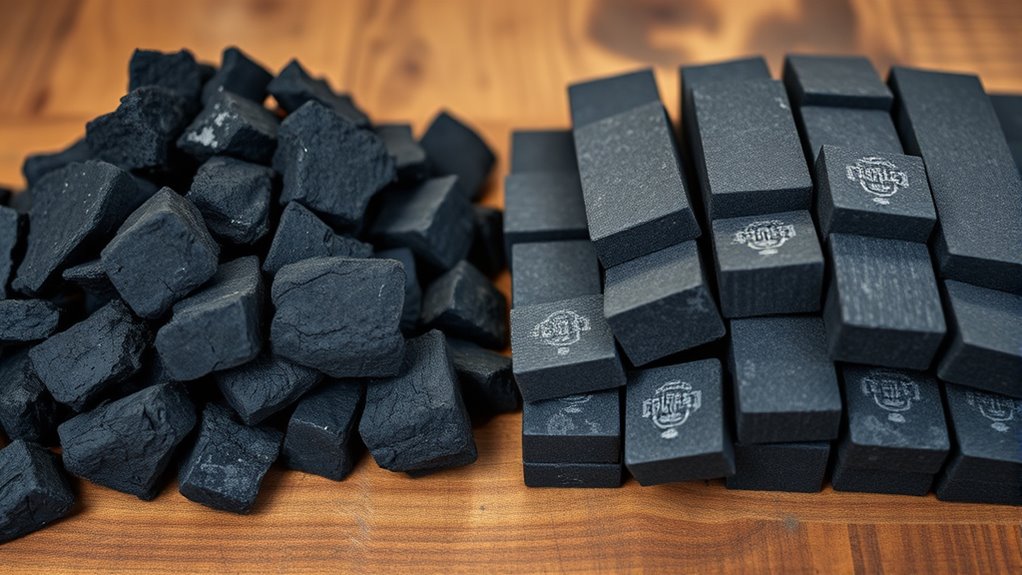

Lump charcoal offers a cleaner burn with a natural, pure flavor and heats quickly to high temperatures, perfect for searing and precise control. Briquettes burn longer and produce more consistent heat but may contain fillers and binders, which can impact flavor and create more ash. If you want authentic smoky taste and quick, intense heat, lump is ideal; for longer cooks and steady warmth, briquettes work well. To uncover more differences, keep exploring the options.
Key Takeaways
- Lump charcoal burns hotter and faster, ideal for high-heat cooking, while briquettes burn longer and more evenly.
- Lump charcoal’s natural wood origin produces a cleaner, crisper flavor with fewer chemicals than briquettes.
- Briquettes often contain fillers and binders, which can affect flavor and produce more chemical residue during burning.
- Lump charcoal’s irregular shape promotes even heat distribution and better control over cooking temperature.
- Briquettes are generally more affordable and consistent but may introduce unwanted flavors from additives.

Have you ever wondered which type of charcoal is best for your grilling needs? When choosing between lump charcoal and briquettes, one key factor to weigh is how each type burns. Lump charcoal is made from natural wood that’s been burned down to charcoal, so it tends to burn more naturally. This natural burning process means you often get a cleaner, crisper flavor, which many grill enthusiasts prefer. Additionally, lump charcoal ignites quickly and burns hotter, giving you more control over the temperature. Its ability to reach high heat makes it ideal for searing steaks or cooking foods that benefit from intense, direct heat. Because it’s made from natural wood, lump charcoal produces less ash and fewer chemicals, contributing to a purer grilling experience.
Another advantage of lump charcoal is its ability to provide a more consistent and uniform heat once it’s properly lit. When you load your grill with lump charcoal, the pieces tend to be irregular in shape and size, which can seem like a disadvantage at first. However, this irregularity actually helps distribute heat more evenly across the grill surface. As the lump burns, it maintains a steady temperature, allowing you to cook food more uniformly. This natural burning process also means you can anticipate how long your fire will last and adjust your cooking times accordingly. Many grillers find that lump charcoal offers a more predictable and manageable heat source, especially when combined with proper airflow management.
Despite these benefits, lump charcoal does have some downsides. Because it’s made from natural wood and contains no binders or fillers, it can be more expensive and may vary in size and quality from batch to batch. It also tends to burn faster than briquettes, so you might need to add more fuel during longer cooking sessions. Still, if you prioritize a natural, cleaner burn and a more direct, uniform heat, lump charcoal is often the preferred choice. It’s especially popular among those who enjoy high-temperature grilling and want to experience the pure flavor of their food. Ultimately, your choice depends on what you value most in your grilling experience. But if you’re looking for natural burning and consistent heat, lump charcoal is hard to beat.
Furthermore, advancements in on-device AI capabilities are making it easier for grillers to monitor and control their cooking process more precisely, ensuring optimal temperature management.
Frequently Asked Questions
Which Type Burns Longer, Lump Charcoal or Briquettes?
Briquettes burn longer than lump charcoal due to their uniform size and composition, providing more consistent burn time and temperature. When you use briquettes, you’ll enjoy better temperature consistency, which helps maintain steady heat for extended periods. Lump charcoal burns faster and hotter but doesn’t last as long. If you want longer burn time and consistent heat, briquettes are your best choice for a reliable grilling experience.
Are There Health Differences Between Using Lump Charcoal and Briquettes?
You’re walking a tightrope when it comes to health concerns with charcoal. Lump charcoal is usually cleaner, with fewer chemical additives, making it a safer choice for your health. Briquettes often contain binders and additives that could release chemicals when burned. While both are generally safe, choosing lump charcoal minimizes exposure to potential toxins, so you can enjoy grilling without worrying about introducing unnecessary chemicals into your food.
How Do Storage Needs Differ for Lump Charcoal Versus Briquettes?
You need to contemplate storage requirements because lump charcoal is more moisture sensitive than briquettes. Keep lump charcoal in a dry, airtight container to prevent it from absorbing humidity, which can hinder lighting and burn time. Briquettes are less affected by moisture, so they can be stored in a slightly less strict environment, but it’s still best to keep both in a cool, dry place to maintain their quality and longevity.
Can I Use Lump Charcoal and Briquettes Together?
Sure, you can mix lump charcoal and briquettes for a wild ride of combination grilling, like a flavor rollercoaster. It’s a bold move that blends the smoky intensity of lump with the steady heat of briquettes, creating a delicious chaos. Just watch the flames dance unpredictably, and enjoy the flavor blending. Remember, it’s your grill, so have fun experimenting and embrace the smoky symphony!
Which Option Is More Environmentally Friendly?
You’ll find lump charcoal is generally more eco-friendly because it’s made from renewable resources and contains fewer additives. It burns cleaner, producing less ash and fewer chemicals, which benefits the environment. Briquettes often contain binders and fillers that may not be eco-friendly. If you want an eco-conscious choice, opt for lump charcoal, as it aligns better with sustainable practices and reduces your carbon footprint during grilling.
Conclusion
Whether you prefer the natural aroma of lump charcoal or the consistent heat of briquettes, your choice shapes every bite. Coincidentally, many chefs find that trying both leads to unexpected flavor breakthroughs, making each grilling session a new adventure. So, next time you fire up the grill, consider mixing them or switching it up—you might just discover your perfect smoky secret. After all, sometimes, the best flavors come from a little experimentation.