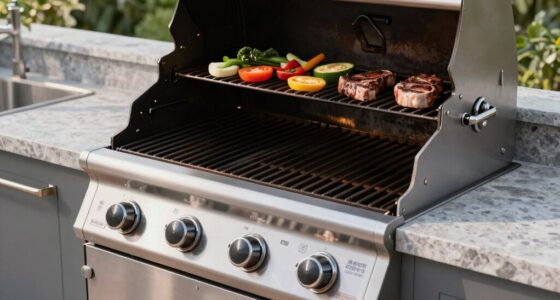
When choosing between propane and natural gas for your outdoor kitchen, consider your efficiency needs, installation options, safety, and fuel access. Propane offers portability and quick heating, making it ideal for flexible setups and high-heat cooking. Natural gas tends to be more energy-efficient and cost-effective long-term if your home already has a gas line. Understanding these factors helps you pick the best fuel for your space and lifestyle—exploring further will give you even more insight.

Get garden gear delivered free with Prime
- Fast, free delivery on millions of items
- Prime Video, Amazon Music and more included
- Member-only deals all year
Key Takeaways
- Natural gas offers higher energy efficiency and lower long-term fuel costs, ideal for frequent outdoor cooking.
- Propane provides portability and easier installation, suitable where natural gas lines are unavailable.
- Propane tanks require regular refilling and proper storage, while natural gas needs a permanent connection.
- Natural gas installation involves higher upfront costs but can be more economical over time.
- Safety depends on proper installation and maintenance for both fuel types, with natural gas being safer in storage.

Are you deciding between propane and natural gas for your outdoor kitchen? This choice can substantially influence your cooking experience, cost, and overall convenience. One of the first factors to weigh is energy efficiency. Natural gas tends to be more energy-efficient than propane, meaning it provides more heat per unit of fuel. If you’re looking to minimize fuel costs and get the most heat out of your setup, natural gas could be the better option. However, propane offers higher energy density, which means it can produce more heat in a shorter amount of time, making it ideal for high-heat grilling and quick cooking. Your specific cooking needs will help determine which fuel aligns best with your outdoor kitchen plans.
Installation considerations are equally important. Propane appliances usually require a tank that you need to refill periodically, which means you’ll need space for the tank and a safe location for its placement. Propane tanks are portable, so if you plan to move your outdoor kitchen or change its layout, propane might offer more flexibility. On the other hand, natural gas requires a connection to your home’s existing gas line, which can involve more complex installation procedures. You’ll want to evaluate whether your property already has the necessary infrastructure or if extending a gas line is feasible. Installing a natural gas line can be more costly upfront but may save you effort and expense over time, especially if you cook frequently. Additionally, consider local regulations and permits, as connecting to a natural gas line often involves compliance with safety codes. Proper installation is essential to ensure both safety and efficiency.
Another installation consideration is safety. Propane tanks pose a risk if not handled properly—they can leak or explode if damaged. Proper storage and regular maintenance are essential. Natural gas, being piped directly from your home, tends to be safer in terms of storage, but a leak in the line can still be hazardous. Regular inspections and professional installations are recommended for both fuel types to ensure safety.
Finally, think about availability and convenience. Propane tanks are widely available at hardware stores and can be refilled or exchanged easily. Natural gas, however, requires a connection to your home’s gas supply, which might not be possible in all locations. If you’re in an area without easy access to natural gas, propane becomes the more practical choice.
As an affiliate, we earn on qualifying purchases.
Frequently Asked Questions
Can I Switch Between Propane and Natural Gas Easily?
Yes, you can switch between propane and natural gas, but it requires a proper fuel conversion kit for your appliances. Check if your outdoor kitchen appliances are compatible with both fuels—some are designed for dual-fuel use, while others aren’t. You’ll need to follow the manufacturer’s instructions carefully, and it’s best to hire a professional to guarantee safe appliance compatibility and a seamless fuel conversion process.
Which Fuel Type Is More Environmentally Friendly?
Did you know natural gas produces about 20% less CO2 emissions than propane? If you’re eco-conscious, natural gas offers better eco-friendly benefits due to lower emissions. When comparing emissions, natural gas burns cleaner, reducing your carbon footprint. Propane, while efficient, releases more greenhouse gases. So, for a greener outdoor kitchen, natural gas is generally the more environmentally friendly choice, helping you enjoy your space sustainably.
Are There Safety Concerns With Outdoor Gas Appliances?
Yes, there are safety concerns with outdoor gas appliances. You should always prioritize fire safety by keeping the area clear of flammable materials and installing proper ventilation. Be vigilant about potential gas leaks; regularly check connections and hoses for damage or leaks using soapy water. If you smell gas or suspect a leak, turn off the appliance immediately and contact a professional. Proper maintenance and cautious usage help prevent accidents.
How Does the Cost of Installation Compare for Both Fuels?
The installation costs for propane and natural gas vary based on your setup. Propane typically requires a tank, which adds to initial expenses, while natural gas needs a connection to your home’s main line, possibly increasing installation costs if no line exists. Fuel conversion kits can help switch between fuels later, but initial costs depend on your chosen fuel. Overall, natural gas can be more cost-effective long-term if your home already has a line.
Will Switching Fuels Affect My Outdoor Appliance Warranty?
Switching fuels can impact your outdoor appliance warranty, so you should verify appliance compatibility and warranty considerations first. Many manufacturers specify which fuel type is suitable, and using a different one might void your warranty. Before making the switch, consult your appliance’s manual or contact the manufacturer to ensure your outdoor kitchen components remain covered. This helps avoid unexpected costs and keeps your warranty intact.
natural gas outdoor kitchen appliances
As an affiliate, we earn on qualifying purchases.
As an affiliate, we earn on qualifying purchases.
Conclusion
Ultimately, your choice between propane and natural gas depends on your outdoor cooking needs. Did you know that propane tanks can store enough fuel for about 20 hours of grilling, making them perfect for occasional use? Natural gas, on the other hand, offers a continuous supply if you have a connection. Consider your usage habits and setup options—either way, you’ll enjoy delicious outdoor meals with the right fuel choice tailored to your lifestyle.
As an affiliate, we earn on qualifying purchases.
natural gas line installation kit
As an affiliate, we earn on qualifying purchases.
As an affiliate, we earn on qualifying purchases.
Halloween Picks
halloween
As an affiliate, we earn on qualifying purchases.