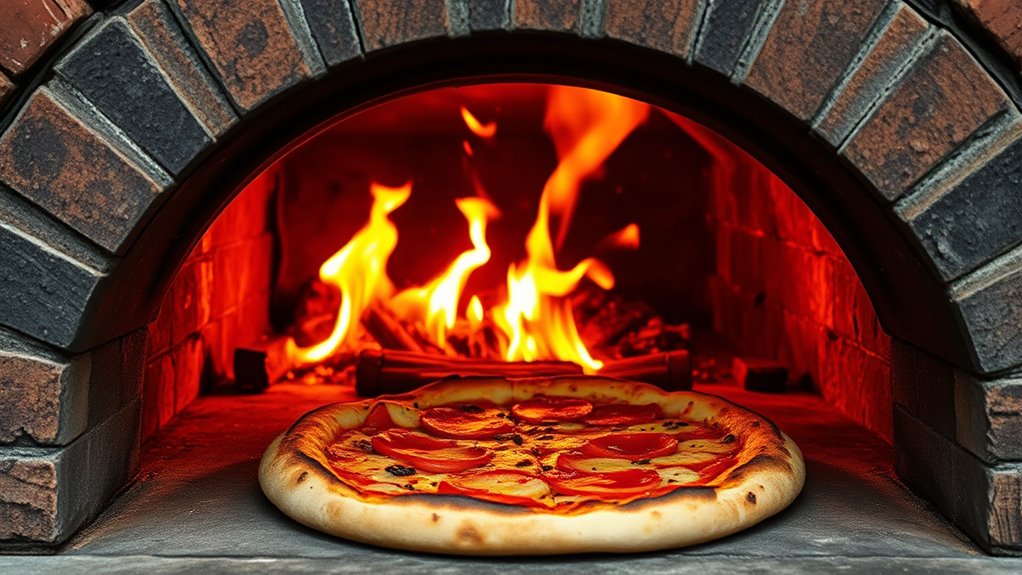
To optimize your wood-fired pizza oven, choose seasoned hardwoods like oak or hickory for maximum heat, longer burn time, and better flavor. guarantee your chimney design promotes good draft and heat retention by balancing height, shape, and insulation. Proper airflow and consistent fuel quality are essential for efficient combustion and even heat. Mastering these elements helps you achieve authentic taste and perfect crusts—keep exploring to uncover more tips for excellent performance.
Key Takeaways
- Using seasoned hardwood maximizes heat output, burn time, and flavor while reducing smoke and soot.
- Proper chimney design and height optimize draft, heat retention, and smoke removal for consistent oven temperatures.
- Insulation around the dome and chimney minimizes heat loss, improving fuel efficiency and heat management.
- Balancing chimney features with fuel type enhances airflow, combustion efficiency, and overall oven performance.
- The combination of high-quality fuel and well-designed chimney ensures optimal heat, flavor development, and eco-friendly operation.
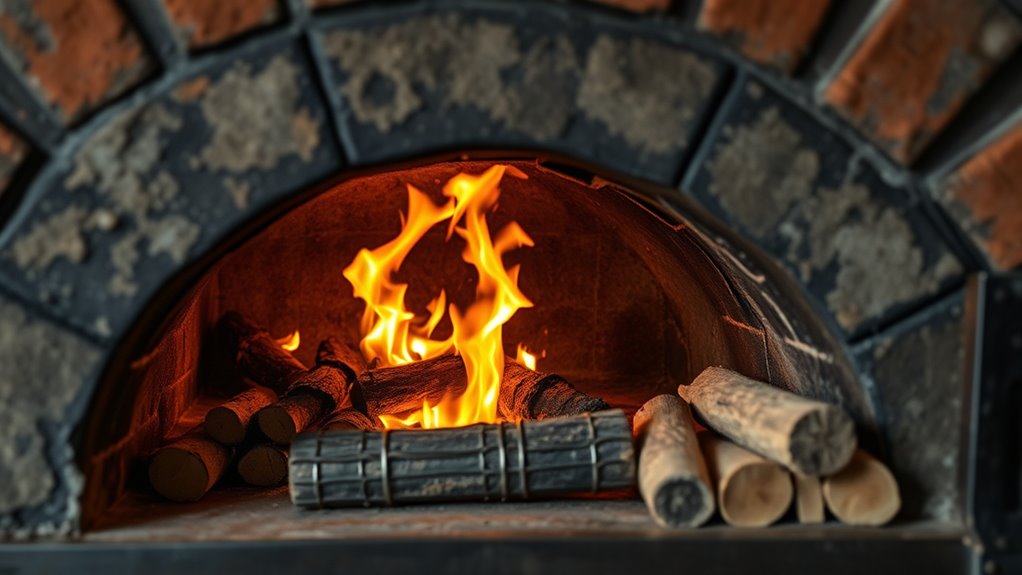
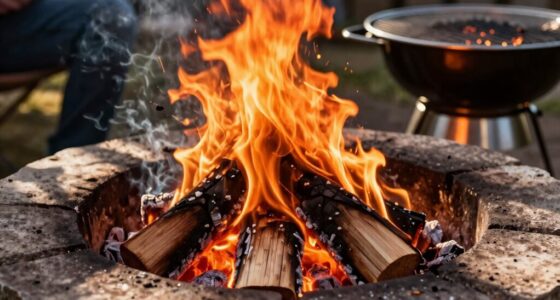
A wood-fired pizza oven transforms ordinary pizza nights into authentic culinary experiences. When you choose to cook with one, understanding how fuel efficiency and chimney design impact your oven’s performance becomes essential. Fuel efficiency isn’t just about saving money; it also influences how well you maintain consistent heat and how environmentally friendly your cooking process is. Using seasoned hardwoods like oak or hickory ensures that you get the most heat from your fuel, as these woods burn longer and produce less smoke and soot. This means you’ll need less wood overall, making your cooking more economical and eco-conscious. Efficient fuel use also helps maintain a stable fire, which is critical for achieving the perfect pizza crust—hot enough to create that desirable smoky flavor and crispy texture.
Using seasoned hardwoods maximizes heat and efficiency for perfect, eco-friendly pizza baking.
Chimney design plays a vital role in optimizing your oven’s heat management and fuel efficiency. A well-designed chimney directs smoke upward and out of the cooking chamber, ensuring proper airflow and combustion. When the chimney is positioned correctly, it creates a draft that pulls fresh oxygen into the fire, helping the wood burn more completely and efficiently. This not only reduces waste but also minimizes excess smoke, keeping your cooking environment cleaner. Some ovens feature adjustable chimney vents, allowing you to control the airflow and, consequently, the heat levels inside the oven. Fine-tuning this airflow is essential for maintaining the high temperatures needed for authentic Neapolitan-style pizzas or for more moderate cooking for other dishes.
In addition, the chimney’s height and shape influence how effectively heat circulates within the oven. A taller chimney can improve draft but might also cause heat loss if not properly insulated. Conversely, a shorter chimney may retain more heat but could lead to smoke buildup if not carefully managed. When designing or choosing your oven, look for one with a chimney that balances efficient smoke removal and heat retention. Proper insulation around the oven’s dome and chimney further enhances fuel efficiency by reducing heat loss, meaning you need less wood to reach and sustain the desired cooking temperature. Optimal chimney design can significantly improve overall oven performance and fuel economy.
Ultimately, your choice of fuel and the design of your chimney are interconnected factors that determine the overall success of your wood-fired pizza oven. Prioritizing fuel efficiency through the right wood and a well-engineered chimney ensures you cook delicious, authentic pizzas with less waste and fuss. With these considerations in mind, you’ll enjoy consistent heat, richer flavors, and a more sustainable cooking experience every time you fire up your oven.

Giantex Outdoor Pizza Oven Wood Fired, Pizza Maker on Wheels
- Authentic Homemade Pizza: Creates flavor-rich pizzas with cordierite stone
- Quick Preheat: Preheat in 3-5 minutes at 550°F
- Wood or Charcoal Cooking: Elevates flavors with wood or charcoal
As an affiliate, we earn on qualifying purchases.
As an affiliate, we earn on qualifying purchases.
Frequently Asked Questions
How Long Does It Take to Preheat a Wood-Fired Pizza Oven?
It typically takes about 45 minutes to preheat a wood-fired pizza oven. During this time, you’ll want to focus on fuel efficiency by using the right amount of wood and maintaining good oven insulation. Proper insulation helps retain heat, reducing the time needed to reach ideal cooking temperatures. Keep adding small, well-stoked fires to maintain consistent heat, ensuring your oven is ready quickly and efficiently for perfect pizzas.
Can I Use Different Wood Types Simultaneously?
Yes, you can use different wood types simultaneously. Mixing woods, or a wood combination, offers mixed wood benefits like varied flavor and improved burning. Just ensure the woods have similar moisture levels and burn evenly. Combining hardwoods for heat and fruitwoods for aroma can enhance your pizza experience. Experimenting with mixed wood benefits helps you achieve ideal heat and flavor, making your pizza even more delicious.
What Are the Safety Precautions for Operating a Wood-Fired Oven?
To operate your wood-fired oven safely, prioritize fire safety by keeping a fire extinguisher nearby and never leave it unattended while in use. Guarantee proper ventilation to prevent smoke buildup, opening vents as needed. Wear heat-resistant gloves, handle tools carefully, and keep flammable materials away from the oven. Regularly check for cracks or damage, and always follow manufacturer guidelines to maintain safe operation.
How Do I Control the Oven’s Temperature During Cooking?
Think of your oven as a delicate orchestra, with temperature regulation as the conductor. To control it, you’ll adjust the fire by adding or removing fuel, like tuning instruments. Move coals to the side to reduce heat or build the fire for more heat. Keep an eye on the thermometer, and use air vents to fine-tune the heat adjustment, ensuring your pizza cooks perfectly every time.
Is Insulation Necessary for Maintaining Consistent Heat?
Yes, insulation is necessary for maintaining consistent heat in your oven. Proper insulation enhances insulation effectiveness by reducing heat loss, allowing you to retain heat longer and achieve stable cooking temperatures. Without good insulation, your oven will struggle to maintain the desired heat, making it harder to cook evenly. Investing in quality insulation ensures better heat retention, so your pizzas cook perfectly every time, with less fuel needed.

Heritage Smoke Wood Oak Pizza Oven Wood, 6" Kiln-Dried Oak Hardwood
- Box Content: 6 lb of ready-to-use pizza wood
- Wood Type: Kiln-dried oak hardwood logs
- Ease of Use: No soaking required, easy to light
As an affiliate, we earn on qualifying purchases.
As an affiliate, we earn on qualifying purchases.
Conclusion
Now that you understand the different fuel types and heat management techniques, you’re ready to craft authentic, mouthwatering pizzas. Remember, managing your oven’s heat is like tending a trusty steed—patience and attention pay off. So, fire up your wood-fired oven and channel your inner medieval artisan. With a little practice, you’ll be creating culinary masterpieces that even the most discerning of knights would gladly battle for. Happy baking!

Commercial Pizza Oven, 500℃ Dome Pizza Oven with Insulated Ceramic Liner, High Efficiency Stone Bake Oven for Restaurant, Pizzeria, Café and Catering Events
- Customizable Design: Fully customizable to your needs
- High-Temperature Baking: Reaches up to 950°F for authentic Neapolitan pizza
- Fast Cooking Time: Cooks pizza in 60-90 seconds
As an affiliate, we earn on qualifying purchases.
As an affiliate, we earn on qualifying purchases.

AllFuel HST Chimney Pipe, 6" x 36", 304 Stainless Steel
- Brand Compatibility: Compatible with AllFuel HST chimney pipe
- Material Quality: 304 stainless steel construction with laser welds
- Insulation Design: Ceramic fiber insulation for safety and draft
As an affiliate, we earn on qualifying purchases.
As an affiliate, we earn on qualifying purchases.