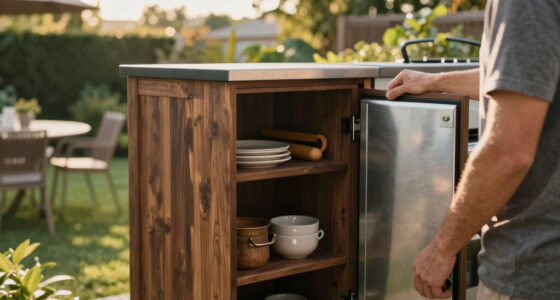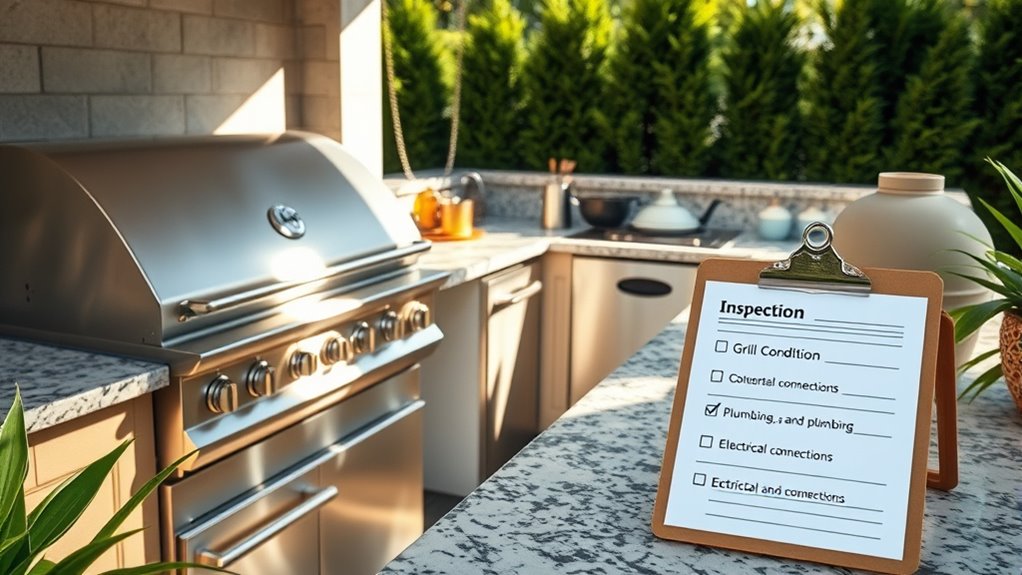

To keep your outdoor kitchen safe and functional, perform an annual inspection by checking your grill and fuel sources for leaks or damage, ensuring burners ignite properly and flames stay steady. examine countertops, tiles, and furniture for damage or loose parts. Inspect electrical wiring and lighting for safety, and clear debris, leaves, or standing water that could attract pests. Regularly clean surfaces and address rust or structural issues promptly. Continuing will help you master a thorough checklist to protect your investment.

Get garden gear delivered free — and shop member deals
- Fast, free delivery on millions of items
- Access to Prime Big Deal Days deals on October 6–7
- Prime Video, Amazon Music and more included
Key Takeaways
- Conduct comprehensive safety checks on grills, including propane leaks, flame stability, and ventilation.
- Inspect for pests by sealing entry points, cleaning debris, and removing standing water around the area.
- Examine structural components such as tiles, countertops, and furniture for damage or instability.
- Perform routine cleaning and maintenance of surfaces, appliances, and electrical systems regularly.
- Schedule annual inspections to identify rust, corrosion, and potential hazards, ensuring longevity and safety.

Regularly inspecting your outdoor kitchen guarantees it stays safe, functional, and ready for use. One of the most important aspects of this is ensuring your grill is operating safely. Start by checking the propane tank or fuel source for leaks or damage. You can do this by applying a soap and water solution to the connections—bubbles will form if there’s a leak. Always make sure the burners ignite properly and that there’s no irregular flame, which could indicate a clog or other malfunction. Keep the grill’s ventilation clear, and clean grease and debris regularly to prevent flare-ups. Proper grill safety isn’t just about avoiding fires; it also means making certain that the grill is stable and free from rust or corrosion that could weaken its structure over time. Regular maintenance reduces the risk of accidents and prolongs the lifespan of your equipment. Additionally, inspecting your outdoor kitchen for structural integrity ensures that the entire space remains safe and durable over time.
Pest prevention is another critical part of your outdoor kitchen inspection. Over time, pests like ants, bees, or rodents might find their way into your cooking area, especially if food debris or standing water is present. Check all the nooks and crannies around your grill, countertops, and storage cabinets for signs of pests or nests. Seal any cracks or gaps in the structure, including around vents, pipes, or vents, to keep unwanted critters out. Keep your cooking area clean by promptly cleaning up spills, crumbs, and leftover food, which can attract pests. Consider installing screens on vents or using natural repellents to deter insects. Regularly clearing away leaves, debris, and standing water from the surrounding area also minimizes pest habitats. Pest prevention is essential not only for maintaining hygiene but also for protecting your outdoor kitchen from damage and making certain a safe, pest-free environment for cooking and dining.
In addition to focusing on grill safety and pest prevention, you should routinely inspect the structural integrity of your outdoor kitchen. Check for loose or damaged tiles, cracked countertops, or unstable furniture that could cause accidents. Look at your electrical wiring and outlets to ensure they’re in good condition, avoiding potential electrical hazards. Regularly clean all surfaces and appliances, and ensure your outdoor lighting is functioning properly to prevent accidents after dark. Keeping your outdoor kitchen in top shape requires attention to these details, so you can enjoy your cooking space without concerns. By incorporating these routine checks into your annual inspection, you’ll maintain a safe, clean, and efficient outdoor kitchen that’s always ready for your next gathering.
Frequently Asked Questions
How Often Should Outdoor Kitchen Inspections Be Performed?
You should inspect your outdoor kitchen at least once a year, especially considering weather conditions that can cause wear and damage. After harsh seasons like winter or heavy rains, check for rust, loose fittings, and damage to outdoor furniture and appliances. Regular inspections help catch issues early, ensuring safety and longevity. Don’t forget to clean surfaces and cover equipment when not in use to protect your outdoor kitchen from the elements.
What Safety Precautions Are Recommended During Inspections?
Imagine inspecting your outdoor kitchen when a spark from faulty wiring ignites nearby debris. To prevent this, always wear protective gloves and safety goggles. Confirm fire safety by having a fire extinguisher nearby. Check for electrical hazards, like exposed wiring or damaged outlets, before starting. Turn off power supplies and disconnect appliances if needed. Staying alert and cautious minimizes risks and keeps your outdoor space safe for everyone.
Are There Specific Tools Needed for Inspection?
You’ll need several inspection tools and maintenance equipment to assess your outdoor kitchen effectively. A flashlight helps you see hidden areas, while a screwdriver and pliers assist in checking connections and fittings. A moisture meter can detect leaks or water damage, and a level guarantees surfaces are even. Don’t forget gloves for safety, and a camera or smartphone to document issues. These tools make inspections thorough and efficient.
How to Identify Hidden Mold or Pest Issues?
To detect hidden mold or pest problems, you should scrutinize surfaces for subtle signs like musty odors, discolored patches, or tiny pest tracks. Use a flashlight to shine into corners and crevices where moisture may hide, aiding mold detection. Regularly inspect for pest prevention issues like gnaw marks or nests. Staying vigilant helps uncover covert concerns early, ensuring your outdoor kitchen remains safe, sanitary, and pest-free.
What Are Signs of Warranty Coverage for Repairs?
You should review your warranty terms carefully to determine repair eligibility. Look for coverage details related to structural damage, appliance malfunction, or workmanship issues, as these often qualify for repairs. Check if there are specific conditions or exclusions that might limit coverage. If you notice signs like leaks, rust, or faulty components, contact your provider promptly to confirm if repairs are covered under your warranty, ensuring you get the necessary support.
Conclusion
Regularly inspecting your outdoor kitchen guarantees it stays safe, functional, and ready for any gathering. By following this checklist annually, you catch potential issues early and extend the life of your setup. Isn’t investing a little time now worth avoiding costly repairs later? Keep your outdoor space in top shape so you can enjoy worry-free cooking and entertaining year-round. After all, a well-maintained kitchen is the heart of your outdoor living experience.
Fall Picks
fall essentials
As an affiliate, we earn on qualifying purchases.