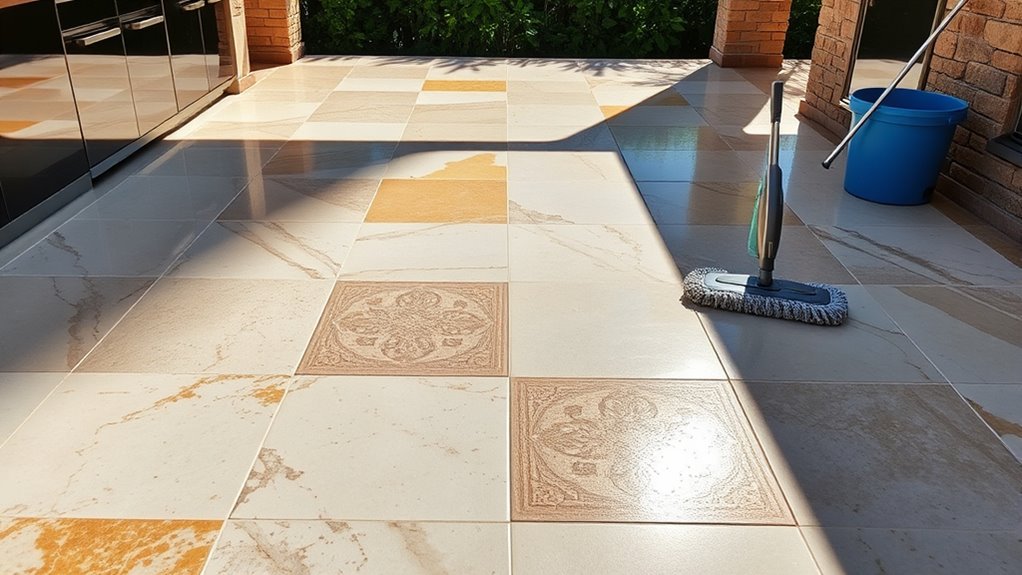

To keep your outdoor kitchen floors clean, sweep regularly to remove dirt and debris, then mop with a suitable cleaner for tile, stone, or concrete surfaces. For tile, focus on grout lines and consider sealing annually to prevent stains and pests. With stone, use a pH-neutral cleaner and a penetrating sealer to protect against moisture. For concrete, apply a sealant after cleaning and reseal as needed. Continuing will reveal more tips to maintain your floors and keep pests at bay.
Key Takeaways
- Sweep floors thoroughly to remove loose dirt and debris before mopping or scrubbing.
- Use appropriate cleaning solutions: mild detergent for tile, pH-neutral cleaner for stone, and concrete-safe cleaner for concrete surfaces.
- Pay special attention to grout lines and porous areas to prevent dirt buildup and mold growth.
- Apply and regularly reapply suitable sealants to protect surfaces from moisture, stains, and pests.
- Maintain routine cleaning and sealing to extend the lifespan and keep outdoor kitchen floors hygienic and inviting.
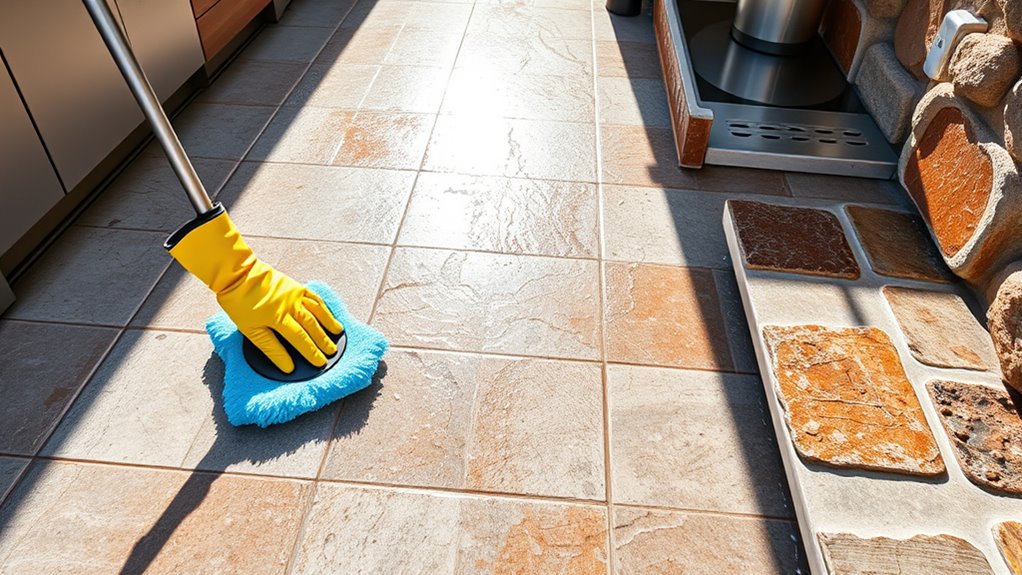
Cleaning outdoor kitchen floors is vital to maintain a fresh and inviting space for cooking and entertaining. When you keep your floors clean, you not only enhance the overall look but also prevent pests from taking up residence. Dirt, food crumbs, and spills can attract insects and rodents, making pest prevention a key reason to stay on top of your cleaning routine. Regular sweeping and mopping help remove these attractants, but applying sealing techniques can provide an extra layer of protection. Sealing tile, stone, or concrete surfaces creates a barrier against moisture, stains, and pests, making it harder for unwanted critters to hide and breed.
For tile floors, start by sweeping thoroughly to clear away loose debris. Use a mild detergent mixed with warm water to mop the surface, paying attention to grout lines where dirt and grime tend to accumulate. Once the floor is clean, consider applying a high-quality sealant specifically designed for tiles and grout. This sealing technique prevents moisture from seeping into porous materials, which can lead to mold and pest issues over time. Reapplying the sealant every year or as recommended by the manufacturer keeps your floors protected. When you seal your tile floors properly, you make it less hospitable for pests, reducing the chances of infestation.
Stone floors require similar care but often need more delicate handling. Use a soft-bristled brush or mop with pH-neutral cleaner to clean the surface without damaging the natural stone. After cleaning, applying a penetrating sealer designed for stone surfaces is vital. This sealing technique helps lock out moisture and stains, which could otherwise lead to mold growth and attract pests. Keep in mind that some natural stones are more porous than others, so follow the manufacturer’s instructions closely to ensure you choose the right sealer. Regular maintenance and sealing will extend the life of your stone flooring while minimizing pest-related problems. Maintaining proper sealing techniques enhances the durability and pest resistance of your outdoor surfaces.
Concrete floors are typically durable and easier to clean but still benefit from sealing. Sweep regularly to remove debris and mop with a concrete-safe cleaner. Once the surface is dry, applying a concrete sealer is a smart move. This sealing technique creates a protective barrier that prevents water, stains, and pests from penetrating the surface. For maximum results, reseal concrete floors every few years or as needed, especially in high-traffic outdoor kitchens. By sealing your concrete, you not only preserve its appearance but also make pest prevention more manageable, as pests find it harder to hide in sealed and clean surfaces.
Top picks for "clean outdoor kitchen"
Open Amazon search results for this keyword.
As an affiliate, we earn on qualifying purchases.
Frequently Asked Questions
How Often Should Outdoor Kitchen Floors Be Cleaned?
You should clean your outdoor kitchen floors at least once a week to prevent stains and maintain their appearance. During seasonal cleaning, give them a thorough scrub to remove dirt, grime, and debris. Regular cleaning helps with stain prevention and keeps the surface safe and attractive. If you notice spills or dirt buildup, clean immediately to preserve your flooring’s condition and prolong its lifespan.
What Is the Best Stain Remover for Outdoor Tiles?
Don’t let stubborn stains ruin your outdoor space. For effective stain removal on outdoor tiles, use a mix of baking soda and water or a commercial tile cleaner designed for outdoor surfaces. These cleaning techniques help lift dirt without damaging your tiles. You might worry about harsh chemicals, but natural solutions are safe and effective, giving you peace of mind while restoring your outdoor kitchen’s beauty.
Can I Use Bleach on Outdoor Stone Surfaces?
You can use bleach on outdoor stone surfaces, but you need to prioritize bleach safety and proper stone surface care. Dilute the bleach properly and test it on a small area first to avoid damage or discoloration. Avoid using full-strength bleach, and rinse thoroughly afterward. Remember, regular cleaning and gentle treatments help preserve your stone’s appearance, so use bleach sparingly and always follow manufacturer guidelines for the best results.
How Do I Prevent Mold and Mildew Buildup?
Think of your outdoor kitchen floor as a garden that needs tending. To prevent mold buildup and control mildew, you keep it dry and well-ventilated, like watering plants only when needed. Regularly sweep away debris and wash with a mild detergent or vinegar solution. Applying a sealant can also act as a barrier, helping with mold prevention and mildew control, ensuring your outdoor space stays fresh and inviting.
Are There Eco-Friendly Cleaning Options for Outdoor Floors?
Yes, you can use eco-friendly cleaning options like biodegradable cleaners and natural disinfectants for your outdoor floors. These products effectively clean without harmful chemicals, protecting your family and the environment. Mix vinegar and water for a natural disinfectant or choose biodegradable cleaners specifically designed for outdoor surfaces. Regularly sweeping and rinsing with water also helps maintain cleanliness and reduces the need for harsh chemicals.
Conclusion
Keeping your outdoor kitchen floors pristine isn’t just about appearance; it’s about creating a welcoming space where memories are made. With a little effort, you can gently restore their natural beauty and invite warmth back into your outdoor oasis. Embrace the process as a caring gesture for your home and loved ones. After all, a spotless floor softly whispers that every meal and moment shared here is truly valued.