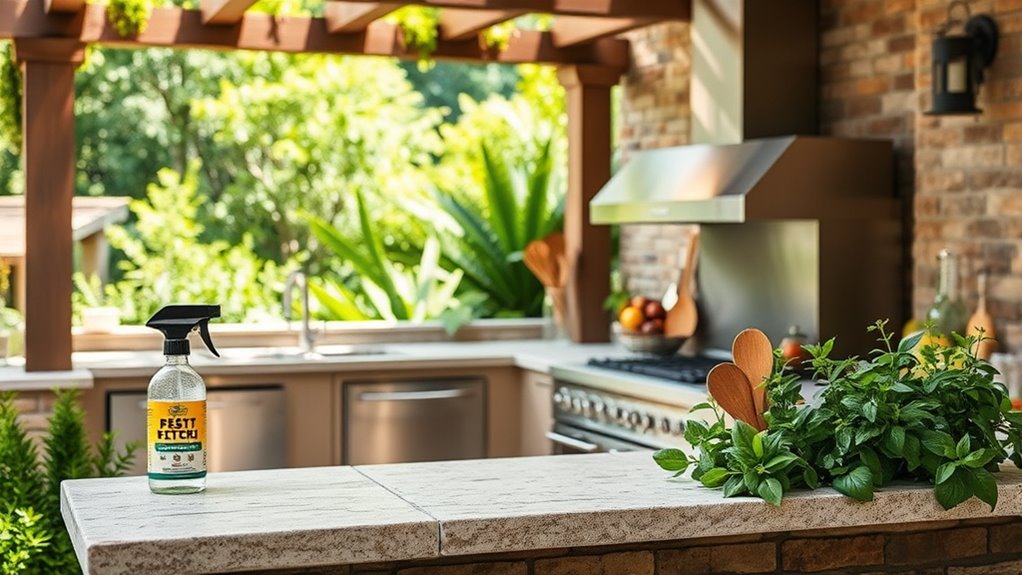

To manage pests in your outdoor kitchen, keep the area clean by promptly washing dishes, storing food in sealed containers, and removing clutter. Install physical barriers like fine-mesh screens and rodent-proof trash cans. Use pest-repellent plants and strategic landscaping to deter pests naturally. Select easy-to-clean materials for surfaces and lighting that attracts fewer insects. Regularly inspect your space for damage or pests—by adopting these steps, you’ll create a pest-free outdoor cooking area that’s enjoyable and safe.

Get garden gear delivered free with Prime
- Fast, free delivery on millions of items
- Prime Video, Amazon Music and more included
- Member-only deals all year
Key Takeaways
- Keep outdoor kitchen areas clean by promptly washing dishes, sweeping crumbs, and storing food in sealed containers.
- Install physical barriers like fine-mesh screens and rodent-proof trash containers to prevent pest entry.
- Incorporate pest-repellent plants and maintain trimmed landscaping to eliminate hiding spots for pests.
- Use pest-reducing lighting such as yellow bulbs and position lights away from food zones to lessen insect attraction.
- Regularly inspect and repair barriers, screens, and landscaping to maintain an effective pest management system.

Outdoor kitchens offer a wonderful way to enjoy cooking and dining al fresco, but pests can quickly become a problem if you’re not prepared. To keep your space comfortable and hygienic, effective garden pest control is essential. You want to prevent insects, rodents, and other unwanted guests from invading your cooking area, and that starts with understanding how pests find their way in. Many pests are attracted to food scraps, standing water, or clutter, so keeping the area clean is your first line of defense. Regularly sweep crumbs, wash dishes promptly, and store food in sealed containers. Removing attractants reduces the likelihood of pests setting up shop near your outdoor kitchen.
Creating a barrier between your outdoor space and pests is equally important. Outdoor pest barriers—such as mesh screens, netting, or physical shields—are excellent tools for blocking insects from entering your cooking area. Installing fine-mesh screens around dining and cooking zones can considerably cut down on flying pests like flies, mosquitoes, and moths. If you’re dealing with rodents or larger pests, consider barriers like concrete or stone edging along the perimeter or using rodent-proof trash containers. These physical barriers act as a frontline defense, preventing pests from sneaking in when you’re enjoying your meals.
Another effective strategy involves landscaping and garden pest control. Keep plants trimmed and away from the edges of your outdoor kitchen to eliminate hiding spots for pests. Avoid overgrown shrubbery or dense foliage close to your cooking area, as these can harbor insects and rodents. Incorporate plants that naturally repel pests, such as basil, mint, or marigolds, into your garden near the outdoor kitchen. These plants can serve as natural deterrents, reducing the need for chemical pest control methods.
Lighting also plays a role in pest control. Many insects are attracted to bright lights, so use yellow or sodium vapor bulbs that are less appealing to pests. Position lights away from food prep and dining areas to minimize attracting bugs. Additionally, consider using outdoor fans, which make it harder for flying insects to land and settle near your cooking space.
Consistent maintenance is key. Regularly inspect screens, barriers, and the surrounding landscape for signs of pest activity. Promptly repair any tears in screens or damage to barriers to prevent pests from slipping through. Furthermore, choosing materials such as metal or ceramic for your outdoor tableware can be easier to clean and less attractive to pests. By combining garden pest control practices, installing outdoor pest barriers, and maintaining a tidy environment, you can enjoy your outdoor kitchen without constantly battling pests. This proactive approach ensures your al fresco dining experience remains enjoyable, hygienic, and pest-free.
Frequently Asked Questions
What Natural Remedies Effectively Repel Outdoor Kitchen Pests?
You can effectively repel outdoor kitchen pests with herbal repellents like basil, mint, and citronella, which emit strong scents that pests dislike. Companion planting also helps; plant marigolds, garlic, or nasturtiums nearby to deter bugs naturally. These methods are safe, eco-friendly, and work together to create a pest-resistant environment, reducing the need for chemical pesticides and making your outdoor kitchen more enjoyable.
How Often Should Outdoor Kitchen Pest Inspections Be Conducted?
Think of your outdoor kitchen like a garden—regular inspections keep pests at bay. You should conduct pest inspections at least monthly, especially during peak pest seasons. Seasonal checks help catch issues early, preventing infestations from multiplying. Like tending plants, consistent inspection frequency guarantees your outdoor space stays pest-free and enjoyable. Don’t wait for pests to spoil the fun—stay proactive with routine checks!
Are There Specific Plants That Deter Pests From Outdoor Kitchens?
You can use specific plants to deter pests in your outdoor kitchen through companion planting and pest repellent flora. Marigolds, basil, and mint are excellent choices because they naturally repel insects like mosquitoes and flies. Plant these around your kitchen area or containers to create a pest-resistant environment. Regularly maintaining and strategically placing these plants helps keep pests at bay, making your outdoor cooking experience more enjoyable and pest-free.
How Can I Safely Dispose of Pest-Infested Food Waste?
You should safely dispose of pest-infested food waste by sealing it tightly in pest-proof trash bins to prevent pests from spreading. Avoid composting contaminated food waste directly, as it can attract pests; if you do practice food waste composting, make sure it’s done in a secure, contained system. Always wash your hands afterward and regularly clean the bins to maintain a pest-free outdoor kitchen environment.
What Are the Signs of Pest Infestation in Outdoor Kitchen Structures?
You’ll notice signs of infestation like small droppings, gnaw marks, or chewed wires around your outdoor kitchen structures. Look for unusual holes or structural damage in cabinets, counters, or walls, which pests often cause. You might also detect a musty smell or see pests themselves—ants, termites, or rodents. Address these signs promptly to prevent further damage and protect your outdoor space from pests.
Conclusion
By staying vigilant and practicing good sanitation, you can keep pests at bay and enjoy your outdoor kitchen like the good old days of backyard barbecues. Remember, a clean space is your best defense—don’t let pests turn your paradise into a pestilence. With a little effort and some old-fashioned know-how, you’ll preserve your outdoor oasis and savor every moment, just like the pioneers of outdoor living once did. Stay proactive, and pests won’t stand a chance!
Halloween Picks
halloween
As an affiliate, we earn on qualifying purchases.