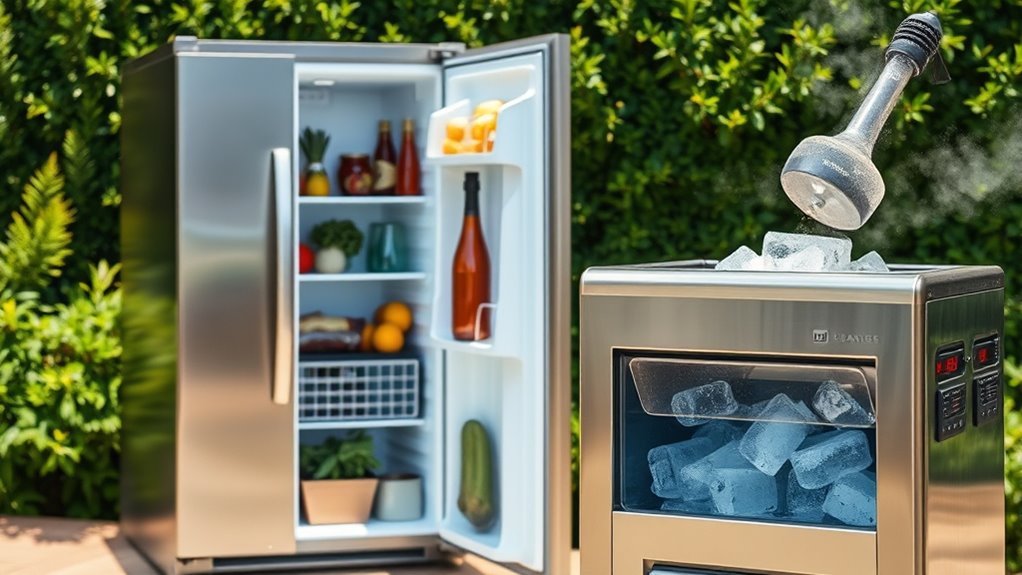

To maintain your outdoor refrigerators and ice makers, regularly inspect and clean all electrical cords and connections for damage or corrosion. Guarantee they are protected with weatherproof covers and positioned in shaded, sheltered areas to prevent overheating and moisture intrusion. Elevate units on sturdy platforms and use outdoor-rated covers for extra protection. Drain water lines during winter and check for leaks or blockages. Proper upkeep extends appliance lifespan and keeps them functioning safely—if you continue, you’ll learn more tips to keep them in top shape.

Get garden gear delivered free — and shop member deals
- Fast, free delivery on millions of items
- Access to Prime Big Deal Days deals on October 6–7
- Prime Video, Amazon Music and more included
Key Takeaways
- Use weatherproof outdoor-rated outlets and sealed covers to protect appliances from moisture and weather damage.
- Position refrigerators and ice makers in shaded, sheltered areas to minimize heat buildup and weather exposure.
- Elevate appliances on sturdy, weather-resistant platforms to prevent contact with standing water, snow, or dirt.
- Regularly inspect and replace damaged cords, seals, and weatherproofing materials to maintain protection against elements.
- Cover appliances with breathable, custom-fit outdoor covers and drain water during winter to prevent freezing and deterioration.
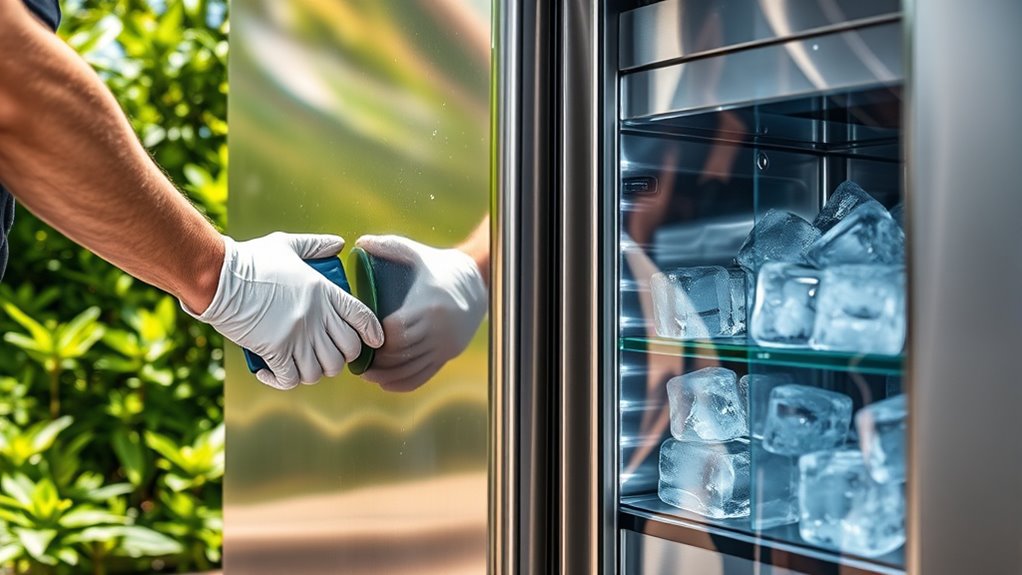
Keeping your refrigerator and ice maker in top shape is vital to guarantee they run efficiently and last longer. When these appliances are placed outdoors, you face unique challenges that indoor units don’t encounter. One key aspect is managing outdoor power sources. You need a reliable, weatherproofed electrical connection to prevent power interruptions or damage caused by moisture, rain, or snow. Using outdoor-rated extension cords and power outlets designed for weather exposure ensures your appliances stay powered safely. Avoid connecting them directly to indoor outlets, as this can pose electrical hazards and increase the risk of short circuits. Instead, install outdoor outlets with proper weatherproofing techniques, like sealed covers or enclosures, so they remain protected during storms or heavy rain.
Ensure outdoor appliances have weatherproof power sources to prevent damage and ensure safety.
Weatherproofing techniques are vital for outdoor appliance maintenance. You should start by positioning your refrigerator and ice maker in shaded areas, away from direct sunlight, to reduce heat buildup. This helps them operate more efficiently and prevents overheating of internal components. Applying weatherproofing measures, such as sealing gaps around doors with weatherstripping, keeps out moisture, dirt, and pests that could damage the seals or internal parts. Elevating the appliances on sturdy, weather-resistant platforms prevents contact with standing water and soil, which can cause rust or electrical problems over time. Covering the units with custom-fit, breathable outdoor covers adds an extra layer of protection against rain, snow, and debris, while still allowing air circulation to prevent moisture buildup inside. Regularly inspecting and maintaining the units ensures that weatherproofing remains effective and that no new issues develop.
Consistent maintenance involves inspecting the appliances regularly for signs of wear or damage. Check electrical cords and outlets for cracks or corrosion, replacing any damaged parts immediately. Keep the units clean and free of dirt, leaves, and other debris that might block vents or cause overheating. When cleaning, use gentle, non-abrasive cleaners and avoid harsh chemicals that could degrade weatherproofing materials. For ice makers, ensure the water supply line remains free of leaks or blockages, and drain any excess water during winter to prevent freezing and damage. Additionally, understanding pool terminology and proper water chemistry can help you better care for appliances connected to water sources outdoors.
In colder climates, consider additional weatherproofing techniques such as insulating the exterior and using heating cables to prevent freezing of water lines. Maintaining outdoor refrigerators and ice makers requires a proactive approach—by ensuring proper outdoor power sources and applying effective weatherproofing techniques, you can extend their lifespan and keep them functioning at their best. Regular inspections and protective measures will save you time and money in the long run, ensuring your outdoor appliances are always ready when you need them.
outdoor weatherproof refrigerator cover
As an affiliate, we earn on qualifying purchases.
As an affiliate, we earn on qualifying purchases.
Frequently Asked Questions
How Often Should Outdoor Refrigerators Be Serviced?
You should service your outdoor refrigerator every 3 to 6 months. Regular refrigerator cleaning helps prevent dirt buildup, while compressor maintenance ensures it runs efficiently. Check and clean the condenser coils and door seals during each service. If you notice strange noises or temperature issues, it’s best to service it sooner. Proper maintenance prolongs its lifespan and keeps your outdoor setup running smoothly.
Can Outdoor Ice Makers Operate in Freezing Temperatures?
Outdoor ice makers generally won’t operate well in freezing temperatures because their outdoor power sources and temperature regulation systems aren’t designed for extreme cold. When temperatures drop below freezing, the ice maker’s internal components can freeze or malfunction. To keep it working properly, you should either bring it indoors during cold weather or use a heater kit to prevent freezing. Proper temperature regulation is essential for reliable outdoor ice production.
What Are Signs of Outdoor Refrigerator Compressor Failure?
You might notice your outdoor refrigerator’s compressor acting differently, like unusual noises or a soft hum that’s gone quiet. These are signs of potential failure. Keep an eye out for compressor noise that’s louder or irregular, and refrigerant leaks that cause damp patches or frost buildup around the unit. Ignoring these signs can lead to complete breakdown, so address these issues promptly to keep your outdoor setup cool and functional.
Is It Necessary to Cover Outdoor Refrigerators During Winter?
Yes, you should cover outdoor refrigerators during winter to provide winter protection. Using insulation measures, like weatherproof covers, helps prevent damage from snow, ice, and freezing temperatures. These covers shield the unit from moisture and harsh elements, ensuring it stays in good condition. Proper winter protection extends your refrigerator’s lifespan and maintains its efficiency. Make sure the cover is breathable to avoid trapped moisture, which can cause rust or mold.
How Do I Prevent Outdoor Ice Makers From Freezing Over?
To prevent your outdoor ice maker from freezing over, regularly check for ice buildup inside and clear it promptly. Make certain proper drainage maintenance around the unit to avoid water pooling, which can freeze and cause issues. Keep the temperature stable and consider using a cover during extremely cold weather, but only if it allows for adequate airflow. These steps help maintain efficient operation and prevent unwanted freezing.
outdoor-rated extension cord for refrigerator
As an affiliate, we earn on qualifying purchases.
As an affiliate, we earn on qualifying purchases.
Conclusion
By regularly maintaining your outdoor refrigerator and ice maker, you guarantee they operate efficiently and last longer. Some might think outdoor appliances require less care, but neglecting maintenance can lead to costly repairs and reduced performance. Taking a few simple steps keeps your appliances in top shape, even in harsh weather. With consistent upkeep, you’ll enjoy reliable ice and chilled beverages year-round without the hassle or expense of premature replacement.
outdoor ice maker weatherproof enclosure
As an affiliate, we earn on qualifying purchases.
As an affiliate, we earn on qualifying purchases.
sturdy outdoor appliance platform
As an affiliate, we earn on qualifying purchases.
As an affiliate, we earn on qualifying purchases.
Fall Picks
fall essentials
As an affiliate, we earn on qualifying purchases.